When the Mailmen Rebelled
In 1970, postal workers went on strike and provoked a national crisis for the United States government. Their rebellion holds lessons for labor today.
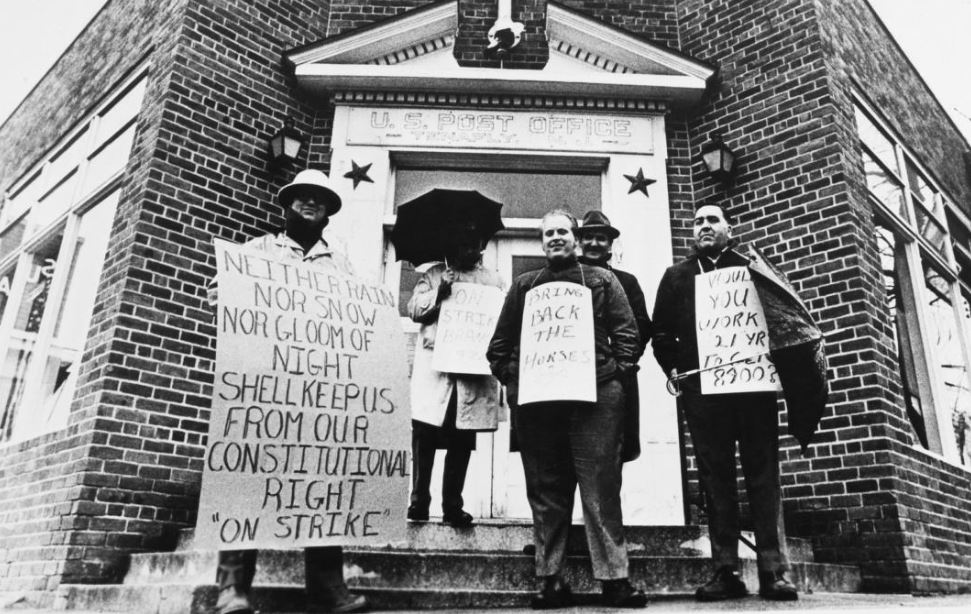
Post office workers on strike in 1970. (US National Archives)
For eight days in March 1970 the country was rocked by an unprecedented and shocking national strike by postal service workers. Starting in New York City, the strike spread quickly and affected thirteen states, two hundred cities and towns, two hundred thousand workers, and 671 stations across the country. This action by seemingly docile and harmless federal workers provoked a crisis so severe that President Nixon sent twenty-two thousand National Guard troops to New York City to somehow move the mail and restore order.
Time magazine concluded that the strike “ . . . underscores the helplessness of government in the face of organized, even if nonviolent, lawlessness.” It went on to warn that it “could set a pattern of ruinous civil service strikes.” In his speech authorizing the deployment of the National Guard, Nixon went as far as to claim that, “What is at issue is the survival of a government based upon law.”
The government was indeed helpless, and the postal workers achieved an overwhelming victory amid a broader political climate of protest and working-class militancy around the country. A look back at the strike is instructive for grasping the current eruption of teacher strikes, as well as the dilemmas of dealing with hostile labor law.