The “Smart Imperialism” Crowd
A new diplomatic memoir makes a "national interest" case for warmer relations with Cuba.
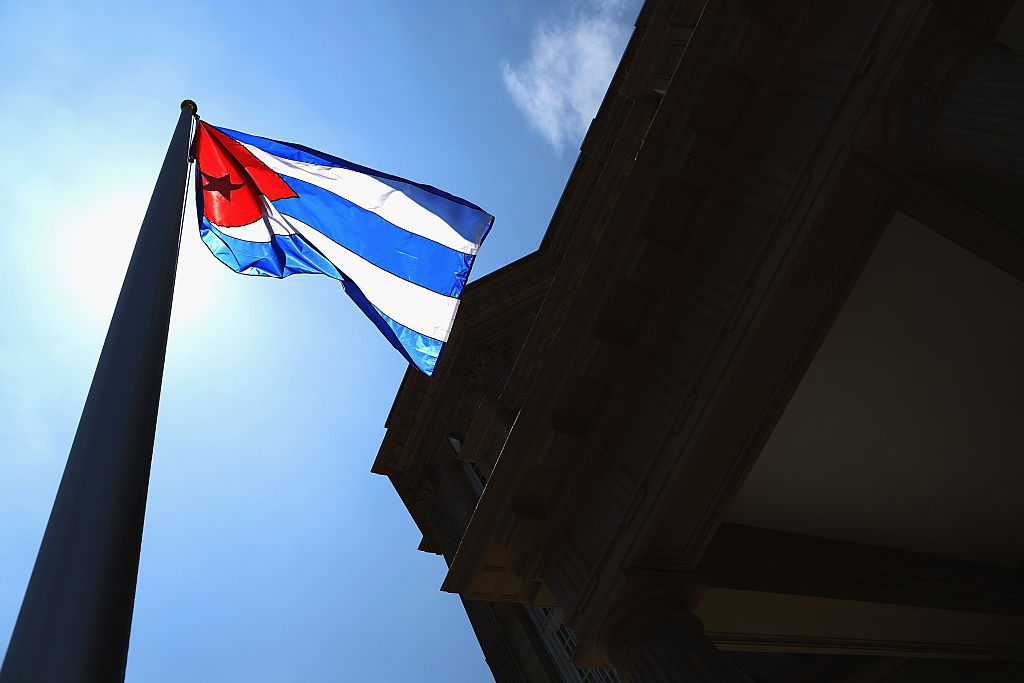
The Cuban Embassy in Washington, DC. Getty Images
Our Woman in Havana is the new nearly three-hundred page memoir by career diplomat Vicki Huddleston, focusing on periods in her career where she played a role on crafting or implementing American foreign policy towards Cuba. Like most memoirs of this kind, it is best understood as half-diary, half-pamphlet, with reminiscences of her time in office bookended by her views on the present and future of US policy towards Cuba. Diplomatic memoirs of this kind have a long history of informing US policy towards Cuba. Former diplomat Wayne Smith’s The Closest of Enemies: A Personal and Diplomatic History of the Castro Years is one of the better known examples. As for Huddleston, she uses her book to make the liberal case for engagement with Cuba, highlighting the ways in which Republicans have undermined the normalization of relations, the counterproductive nature of the embargo, and the numerous potential benefits of better relations between the two countries.
While not devoting a significant part of her book to it, Huddleston does acknowledge the rapacious and colonialist bent of past American policy towards Cuba. Fairly early on, she notes that “the contradiction that haunts our relationship with Cuba is that the United States has always coveted the island. And perhaps this foundational contradiction is what makes the US-Cuba relationship so fractious.” As she acknowledges towards the end of the book, “the United States still wants to be the preeminent foreign power in Cuba.” While these sections by no means constitute a complete catalogue of Cuba’s grievances, it is noteworthy that she pushes back against the false historical memory of the United States as benefactor and patron which still exists on the American right and among a fair number of those in the center.
It is therefore puzzling that in several other sections of the text she tries to frame American foreign policy as the victim of an intra-familial squabble between Cubans, Cuban exiles, and Cuban Americans. Time and again in her memoir, she argues that US policy toward Cuba has been “principally designed to help Cuban Americans regain the country they lost.” Much of the world, she says, is confused by American policy towards Cuba, but “what they fail to understand is that our Cuba policy is actually domestic policy, not foreign policy.” “American presidents,” she argues in a later chapter, “for domestic political gain, have allowed themselves to become entangled in a family feud” between Cuban American exiles and the Cuban government.