Disaster Capitalism and Vulture Charters
Striking teachers in Puerto Rico are battling austerity, drawing on a rich tradition of anti-colonial workers' resistance.
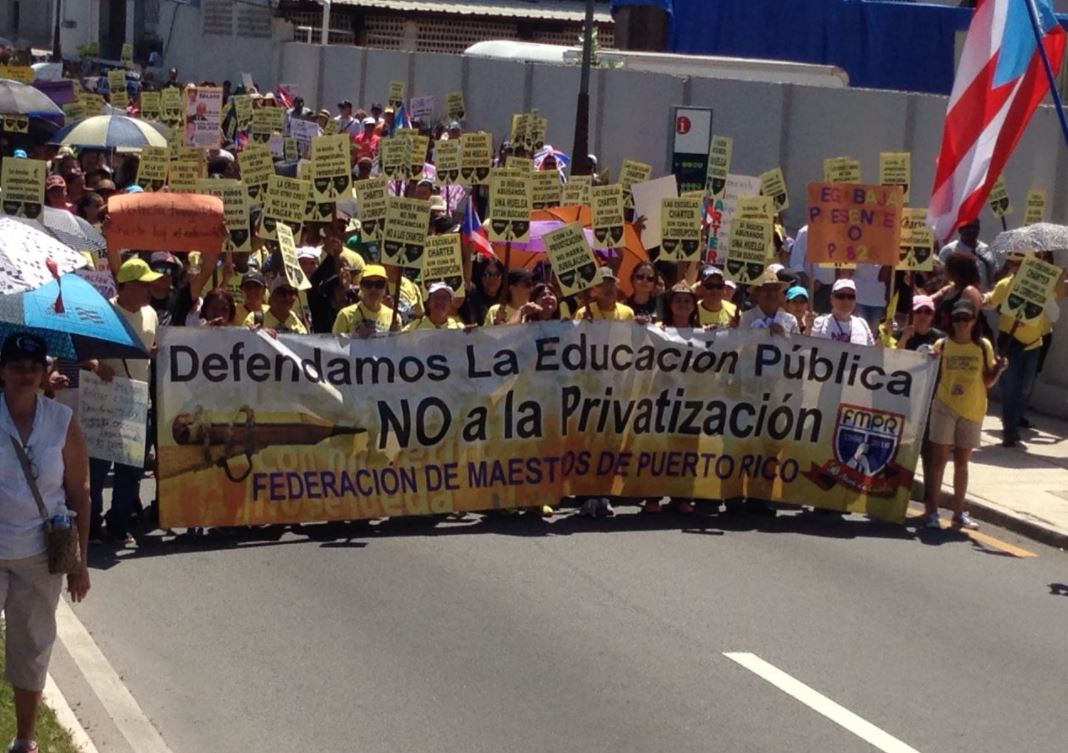
The Federation of Puerto Rican teachers marching in San Juan last week. FMPR/ Twitter
Last Monday, hundreds of Puerto Rican teachers marched past San Juan’s Capitol building to La Fortaleza, the governor’s mansion, holding signs reading “Defendemos la educación pública” (We defend public education) and “No a los charters buitres!” (No to the vulture charters!). Thousands of students and parents joined the march or held signs in front of their schools in solidarity, all across the island and as far away as East Harlem, New York. While the secretary of education downplayed the event, tweeting photos of classrooms with students and reporting misleading school opening numbers, most news outlets and social media commentators declared the strike a significant disruption.
In the wake of twin disasters — one man-made in the form of a vulture fund-fueled debt crisis, and one natural in the form of last September’s Hurricane María — Puerto Rican leaders are attempting to implement a vast austerity program, claiming it will solve the island’s economic woes. In the eyes of many Puerto Ricans, however, this is textbook “disaster capitalism”: capitalizing on a moment of crisis, when the population is weak and unable to mobilize, to ram through pro-market austerity measures.
Although the government has slowly been rolling out austerity measures since the debt crisis began, post-hurricane, it’s doubled down. And the island’s public school system is one of the leading targets.