What’s Left in Puerto Rico?
Progressive forces in Puerto Rico must link social justice to national determination if they want to lead the island out of precarity.
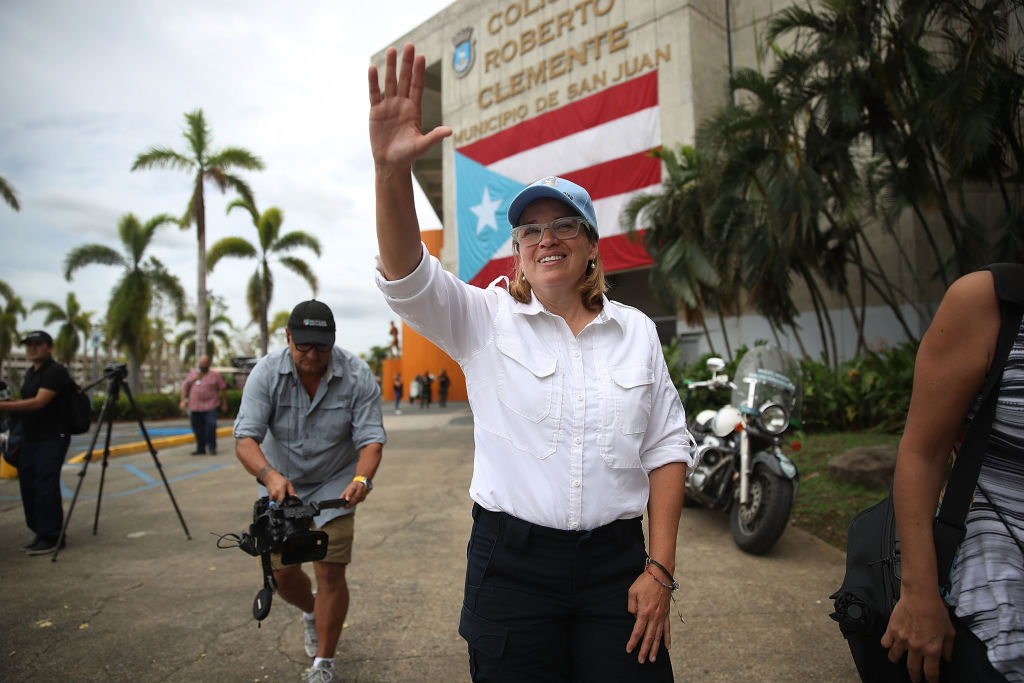
San Juan mayor Carmen Yulin Cruz on September 30, 2017 in San Juan, Puerto Rico. Joe Raedle / Getty Images
At the founding general assembly of Puerto Rico’s Popular Democratic Party (PDP) in July 1940, Luis Muñoz Marín made a momentous decision. Long an advocate for independence from the United States, Muñoz also recognized that many rural poor viewed the PDP’s position on the island’s political status suspiciously. In a party meeting just days earlier, a militant asked him how the party would demand independence if it won the elections. Muñoz answered: “Political status is not an issue in these elections. The votes for the party will not be counted in favor or against any political status.”
The militant turned away, disheartened — a feeling the then-senator shared: “And I, still an independentista [pro-independence advocate], understood the desolation in his spirit,” he recounted in his autobiography. But this offhand remark would soon turn into party dogma. Muñoz had found the slogan at the heart of his upcoming senatorial campaign, one he repeated thousands of times: “Status is not at issue.”
At the time, many of Muñoz’s colleagues condemned his remark. While his counterparts in the PDP leadership understood the electoral considerations that motivated his pragmatic turn — independence remained an unpopular, even terrifying, prospect for the peasantry in Puerto Rico’s mountainous interior — many were unconvinced.