Germany’s Groundhog Day
Die Linke MP Fabio de Masi on Germany’s coalition negotiations, the revolt in the SPD, and what it all means for the country’s left.
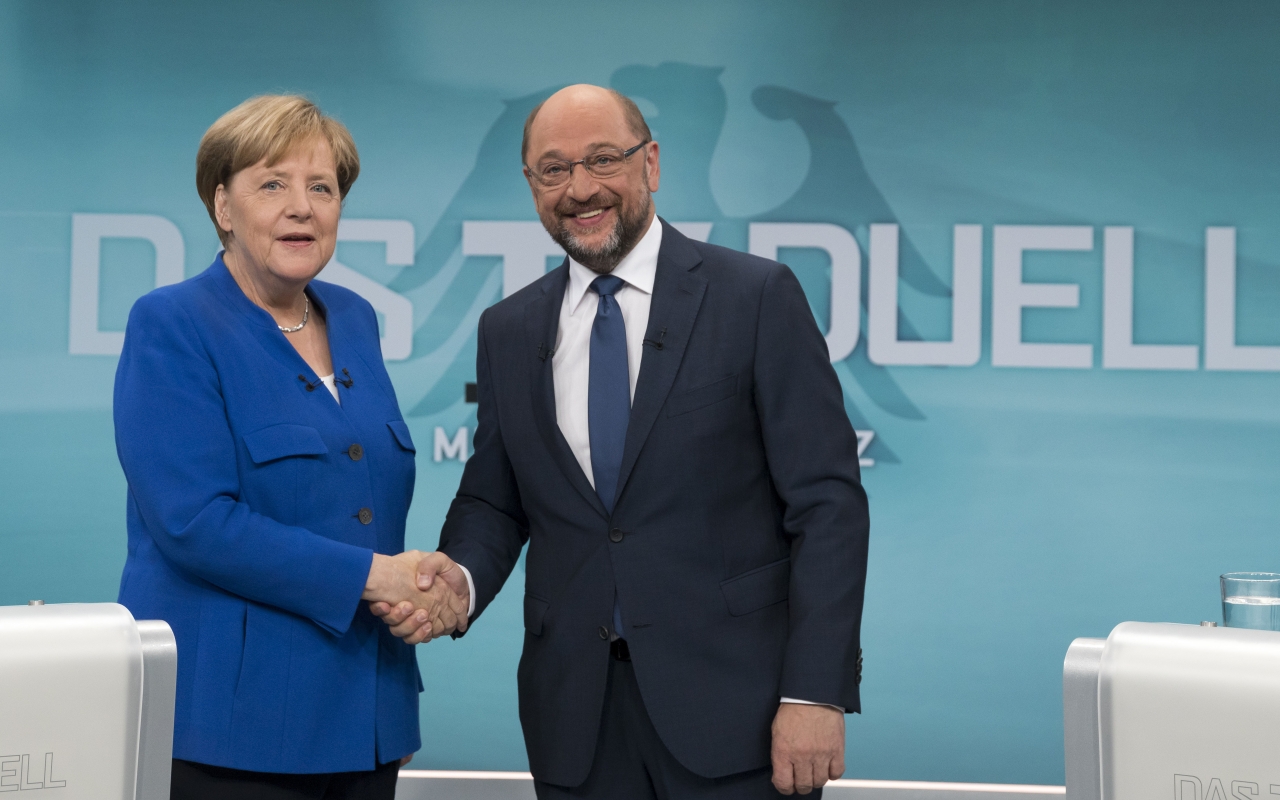
German Chancellor Angela Merkel squares off against the SPD’s Martin Schulz in a pre-election debate. Herbert Sachs / DPA
Four months after Germany’s federal election, the eurozone’s most powerful state remains without a government. In September, both members of its grand coalition — Angela Merkel’s Christian Democratic Union (CDU) and Martin Schulz’s Social Democratic Party (SPD) — lost a significant numbers of seats. This opened a path of increased political influence for the far-right Alternative for Germany (AfD).
Initially the SPD responded to these results by insisting it would not govern with the center-right again. But, as the months have worn on, and other coalition formations have fallen by the wayside, that determination has waned. Now the grand coalition (known as GroKo, short for Große Koalition) is back on the table, with an SPD convention voting narrowly to open negotiations.
But this time around there appears to be significant resistance within the party to a deal, with its youth wing JUSOS leading a campaign to reject it. Their cause has been boosted by the latest polls in Germany, which show the SPD falling even farther and only four points ahead of the far-right.