Last Chance, SPD
- Julia Damphouse
Only a left-wing revival can save Germany’s Social Democratic Party (SPD) from political extinction. But leaders like Andrea Nahles and Olaf Scholz are not up to the task.
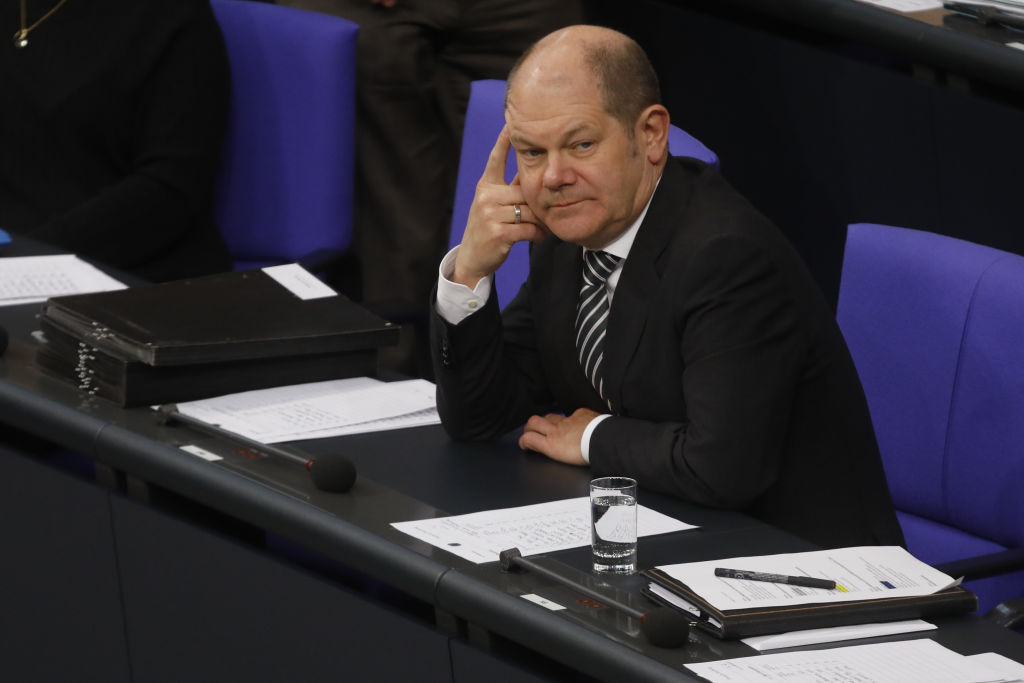
Olaf Scholz, sits after the first government declaration of the new government to outline the government’s policy course for the next four years at the Bundestag on March 21, 2018 in Berlin, Germany.Michele Tantussi / Getty
Germany’s federal elections in September 2017 saw the Social Democrats, under the leadership of Martin Schulz, achieve their worst result since World War II. Before stepping down as party leader, Schulz (in an uncharacteristically bold move) commissioned a group of experts to assess the party’s crisis. Published in June, the report was one hundred pages long and surprisingly straightforward.
The report concluded that the SPD is no longer perceived as a credible voice on issues of social and economic justice. It argued that Martin Schulz’s election as leader had been a small step in the right direction, but that the many compromises among the party leadership (whose main goal seems to be avoiding having to distance themselves from the neoliberal reforms they imposed in government in the mid-2000s) meant that his election slogans about social justice rang hollow. Above all, the report emphasized a “collective failure of leadership” — not only were Schulz and his predecessor Sigmar Gabriel at fault, but the entire leadership which had set the party’s agenda for years. Despite these blunt truths, and earlier announcements that the party would be seeking to renew itself, the SPD has made an almost pathological choice to continue with more of the same.
For a while, SPD supporters hoped that the party could renew itself from the Left, mirroring the path of the Labour Party under Jeremy Corbyn whose unabashedly left-wing platform was especially popular among young and newly politicized people. The energy around the campaign mounted by the Social Democrats’ youth wing (the “Jusos”) to encourage SPD members to vote against rejoining Angela Merkel’s CDU in a grand-coalition government fostered hopes that a shift to the Left was possible. But what actually took place was something else entirely: the party joined a new coalition with Merkel’s party, as failing to do so would have meant new elections.