Germany Is Not an Island
Germany's elections show that the country is not insulated from a crisis-prone Europe, but part and parcel of it.
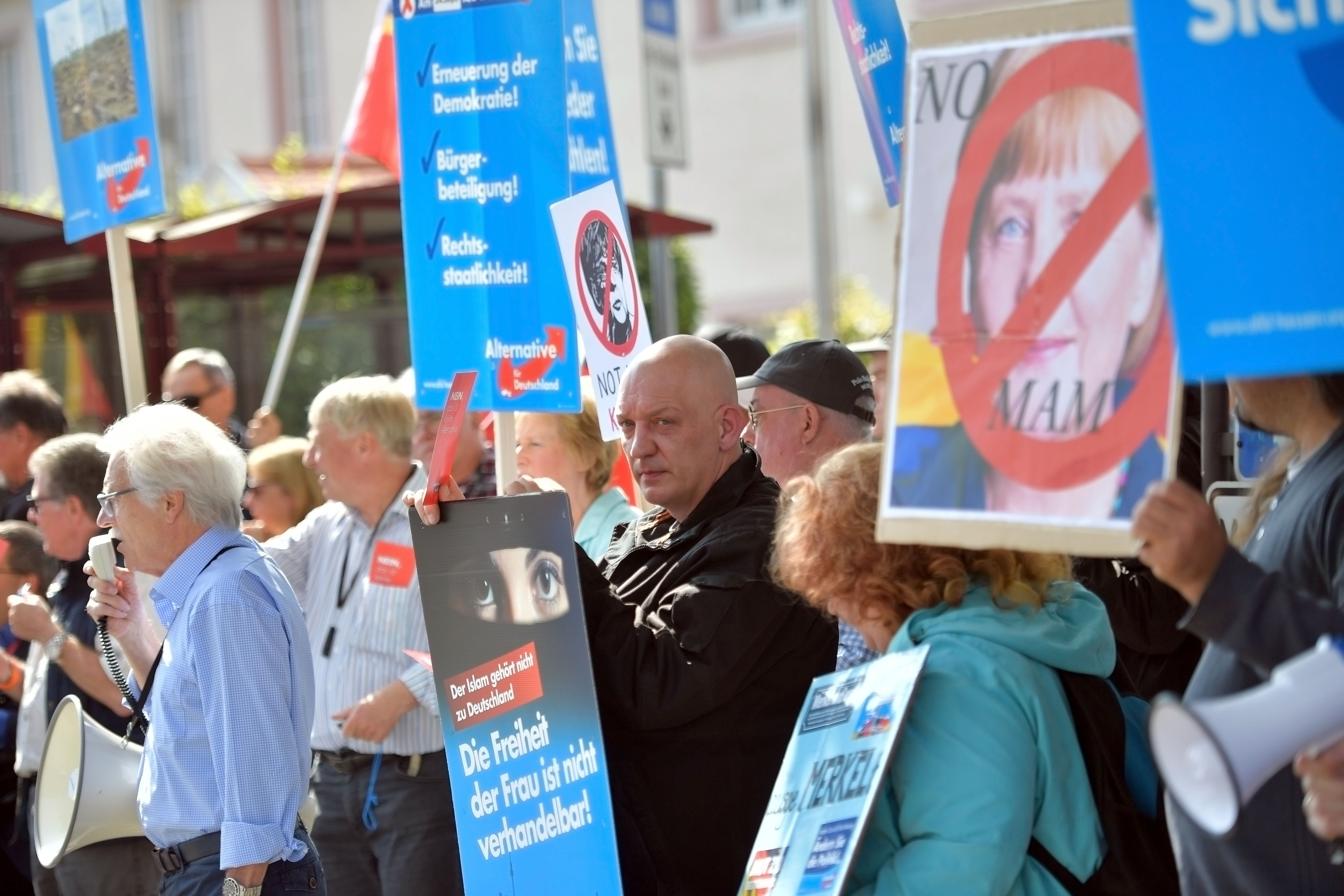
AfD supporters demonstrate in Heppenheim, Germany on September 22, 2017. Getty Images
Germany has voted, and though the results are troubling, they aren’t particularly surprising. Angela Merkel will continue to lead Germany and with it the European Union, albeit likely with a new coalition.
Her strongest parliamentary opposition, however, is no longer the left-wing Die Linke, but rather the far-right Alternative für Deutschland (AfD). The AfD’s 12.6 percent is the biggest story of Sunday’s election, making it the third largest party and the most visible anti-establishment force in the country. The presence of far right, even fascist, MPs in the German parliament marks a first in postwar history, and shows that the polarization sweeping Europe has taken root in the continent’s core.
The other big story, and the precondition for the AfD’s surge, is the ongoing erosion of the political center. Germany has yet to witness a spectacular implosion of the center-left like in France or Greece, but the Social Democratic Party (SPD) ended the night with 20.5 percent, its worst postwar result and a humiliating defeat for its renewal candidate Martin Schulz.