Germany’s 28-Hour Workweek
Last month German metal workers won the right to a 28-hour workweek — after going on strike to demand a better work-life balance.
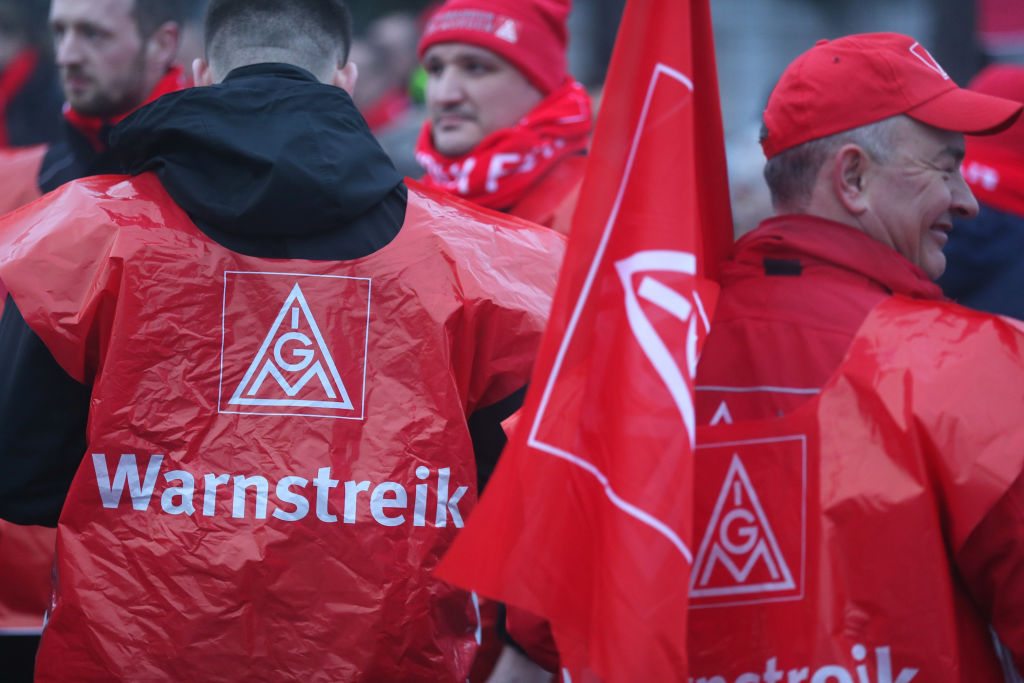
Workers from nearby Mercedes Benz and General Electric production plants participate in a warning strike in demands for better pay and more flexible working conditions in Marienfelde district on January 10, 2018 in Berlin, Germany.Sean Gallup / Getty
German metalworkers’ union IG Metall made international headlines last month after a twenty-four-hour “warning strike” compelled employers to sign a deal with the union giving its members the right to a twenty-eight-hour workweek.
The deal — which covers 900,000 workers in the southwestern state of Baden-Württemberg — is seen as a landmark in European labor relations, granting workers who want to reduce their working hours the right to do so for a two-year period. It came after 15,000 workers in eighty companies downed tools as part of a campaign for a better work-life balance and also included a substantial pay raise.
But is it too good be true? Jacobin’s Loren Balhorn sat down with German labor sociologist Klaus Dörre to find out more about the strike, what the workers really gained, and what it might say about the German labor movement’s future.