Building a Catalan Republic
Lluc Salellas of the Catalan leftist party CUP discusses the events that led up to Catalonia’s declaration of independence — and what happens next.
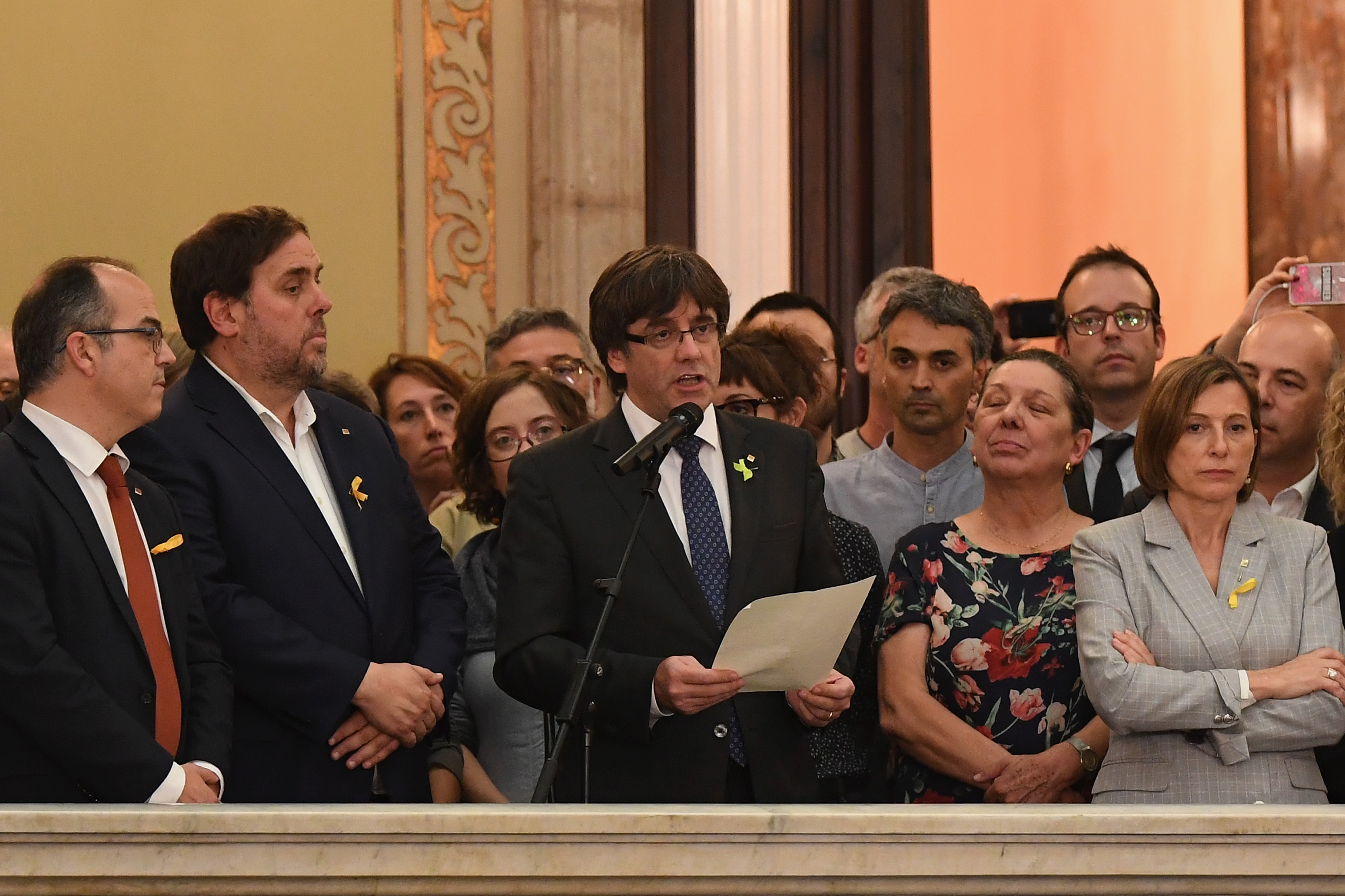
Catalan President Carles Puigdemont makes an official statement after the news that the Catalan Parliament voted in favor of independence from Spain.David Ramos / Getty Images
On Friday, after a prolonged standoff with the Spanish state, Catalonia’s parliament finally voted to declare independence. The vote, which followed October 1’s repressed referendum, was supported 70 of the 135 legislators with most of the opposition choosing to boycott.
In response, Spanish Prime Minister Mariano Rajoy announced he was moving to dissolve Catalonia’s institutions, sack its government, and impose direct rule until elections in December. It was the first time Article 155 of the Spanish constitution, which allows for the suspension of a region’s autonomy, has been used since its inception in 1978.
Today, Spain’s chief prosecutor has called for all fourteen members of the Catalan government to face charges of rebellion, sedition, and misuse of public funds. This follows the imprisonment of two leading civil society figures from the independence movement pending similar charges two weeks ago.