The Rise and Fall of the Second International
On July 14, 1889, the Second International was born to unite the workers of the world. What happened to that dream?
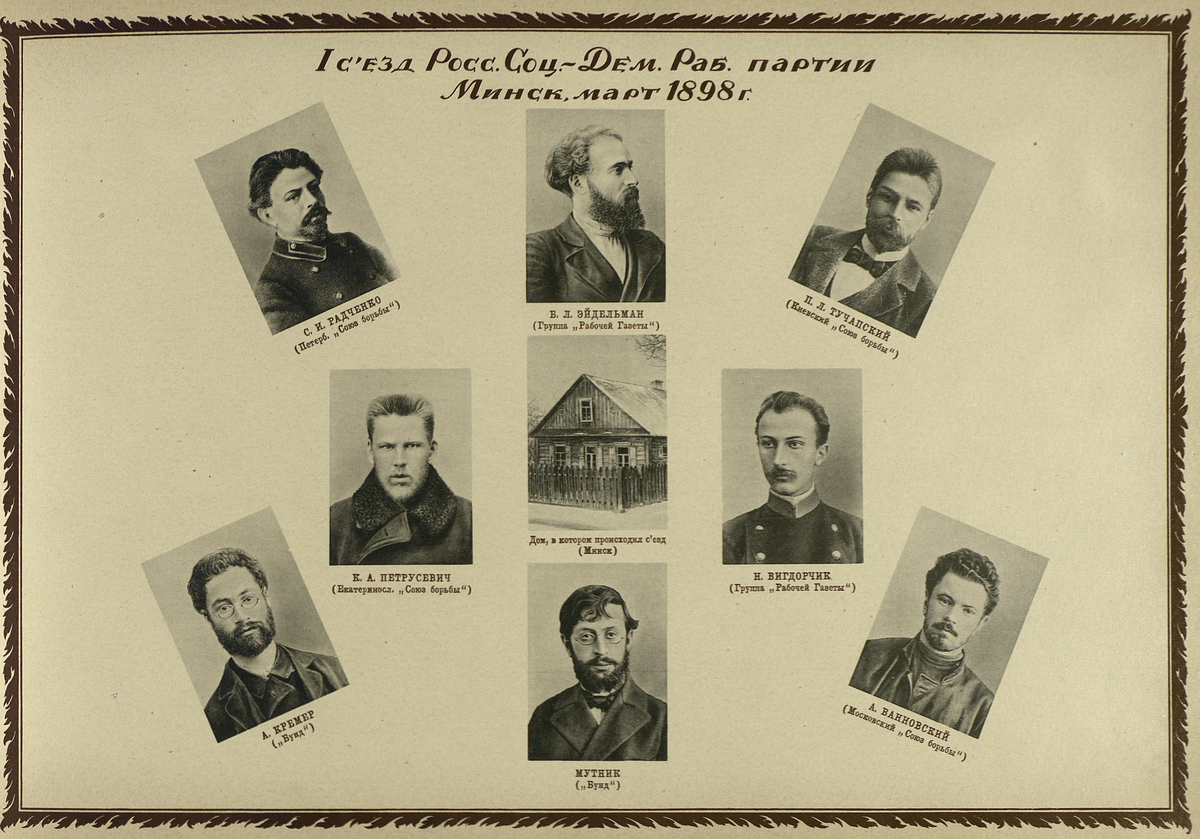
Delegates of the first congress of the Russian Social Democratic Labor Party, 1898. Wikimedia Commons
In the aftermath of the Paris Commune’s blood-soaked suppression, Marx’s International Workingmen’s Association dissolved amid factional disputes between socialists and anarchists. For the next quarter century, socialists were deprived of their highest form of organization.
But on Bastille Day, 1889, one hundred years after the French Revolution, workers’ leaders reforged the International. A massive red banner emblazoned with the golden words “Workers of the World, Unite!” hung in an overfilled Paris ballroom. Paul Lafargue, Marx’s son-in-law, welcomed representatives from twenty-four countries to the opening congress of the Second International, extending a special welcome to the many German delegates and celebrating the absence of nationalism:
We gather here not under the banner of the tricolor or any other national colors, we gather here under the banner of the red flag, the flag of the international proletariat. Here you are not in capitalist France, in the Paris of the bourgeoisie. Here in this room you are in one of the capitals of the international proletariat, of international socialism.