The Fall of Working-Class New York
The history of the 1970s New York City fiscal crisis shows how power under capitalism is ultimately located outside electoral politics — and must be defeated at its source.
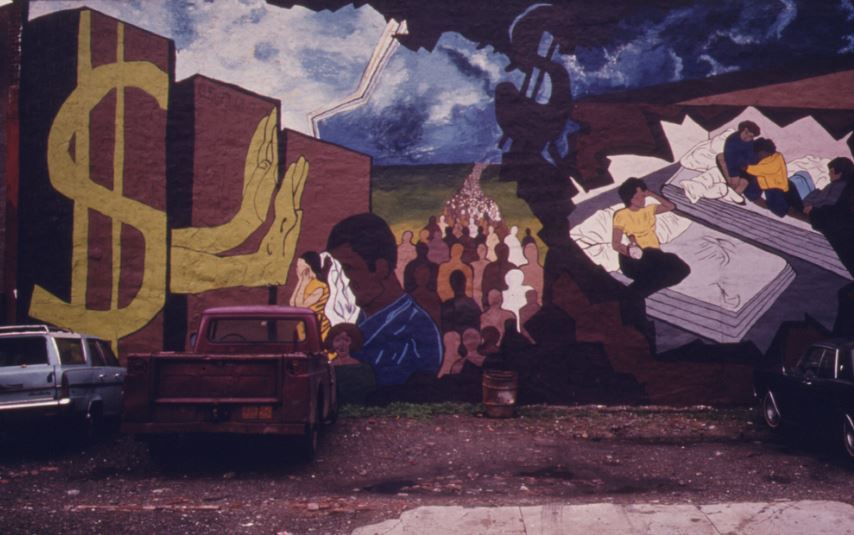
A mural in Lower Manhattan, New York, 1974. Danny Lyons / US National Archives
It’s impossible to read Fear City: New York’s Fiscal Crisis and the Rise of Austerity Politics, the excellent new book on the 1970s New York City fiscal crisis by Kim Phillips-Fein, without recalling the lamentations of longtime Democratic strategist James Carville: “I used to think that if there was reincarnation, I wanted to come back as the president or the pope or as a .400 baseball hitter. But now I would like to come back as the bond market. You can intimidate everybody.”
The New York City fiscal crisis was a turning point not just for the city, but the subsequent development of global capitalism. It sounded the death knell for the golden age of postwar liberalism, and heralded the emergence of finance as the leading edge of capital’s dynamism and power. With the city’s balance sheet in shambles, the banks that funded much of New York’s sprawling municipal budget used their financial leverage to foster a major political crisis — and Wall Street’s leading figures wasted little time in taking advantage of it.
The fiscal crisis served as the battering ram for a ruling-class agenda that sought to disempower local elected officials, bring public-sector unions to heel, and justify a brutal austerity program that became the template not just for domestic Reaganism, but for neoliberal “structural adjustment” measures in Latin America and around the world.