The Dark Side of Local
There's nothing ethical about "buying local" and supporting small farms when the workers on them are brutally exploited.
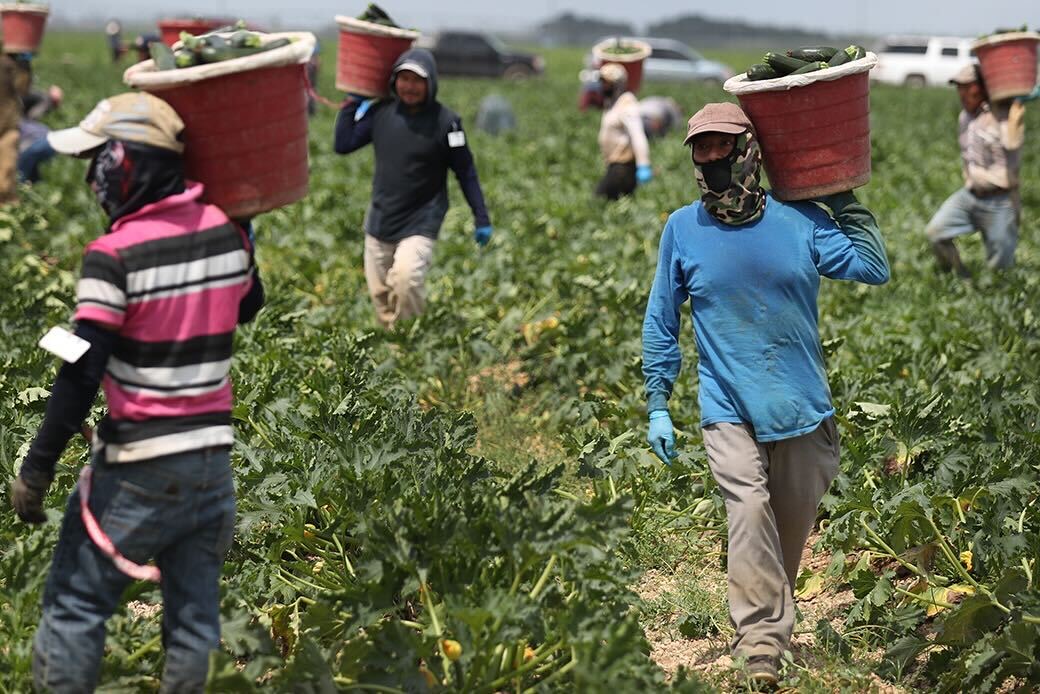
Farmworkers harvest zucchini on a farm, April 1, 2020, in Florida (Getty/Joe Raedle)
“We live in the shadows,” explained Javier, a Hudson Valley farmworker, while describing his life to me. “We are treated like unknown people . . . We are not paid well and cannot ask for more.” A worker on another farm said, “They treat us like nothing; they only want the work . . . Whether we like it or not, we have to like it.”
Some of today’s liveliest political conversations concern agricultural production and distribution. But these discussions are also among the most confused.
Exploitative conditions on factory farms have rightly drawn the attention of academics, activists, and journalists. Indeed, the vast majority of research on farmworkers focuses on the largest farming sites. Consumers are offered countless reasons to avoid produce from them — but few alternatives other than to “buy local.”