From Class to Special Interest
Why are US unions less powerful than their Canadian counterparts?
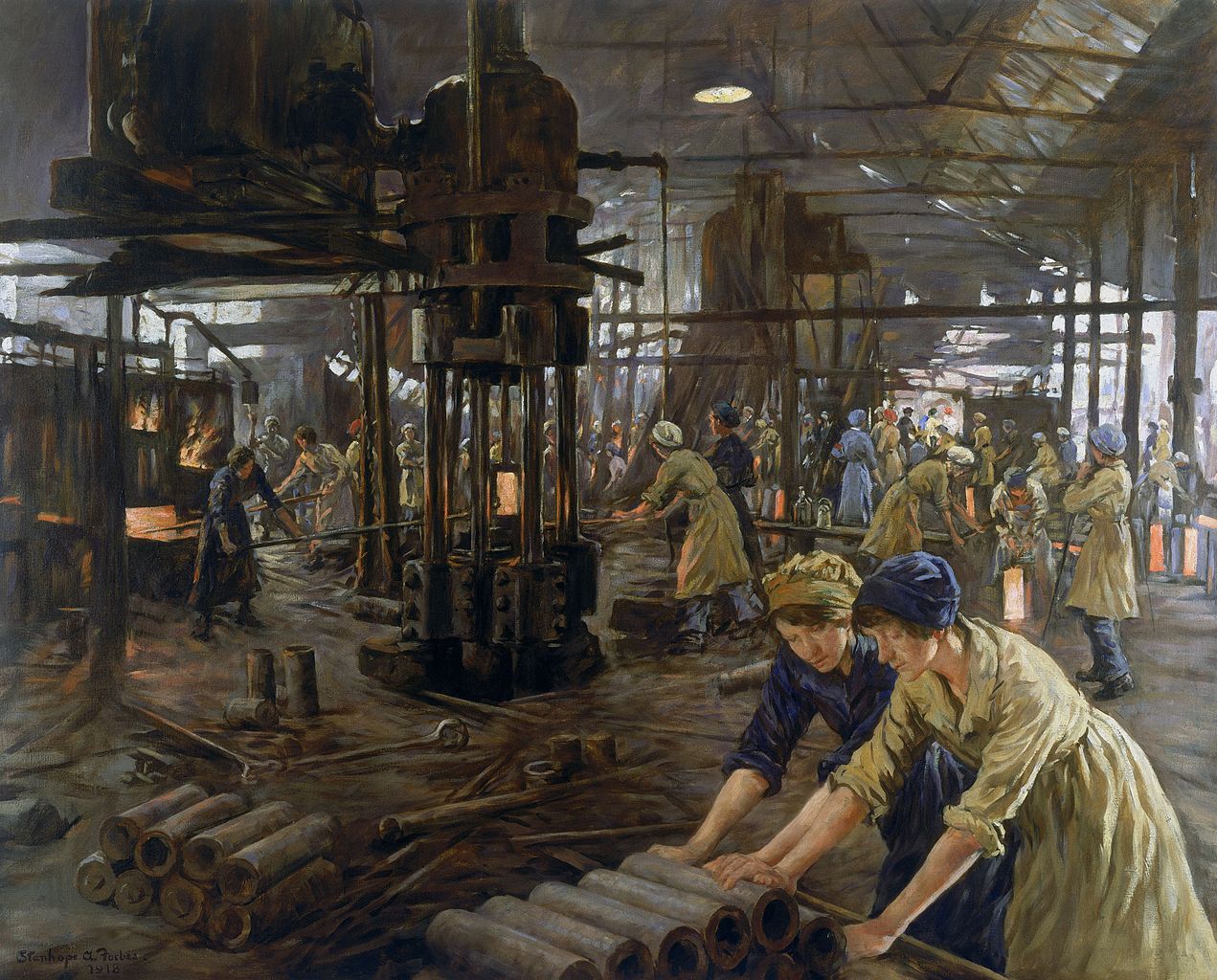
“The Munitions Girls” by Stanhope Forbes, 1918.Wellcome Images / Wikimedia
Writing in the Washington Post last September, the unimpeachably mainstream economist Larry Summers proclaimed, “We . . . know that stronger unions are not just good for their members, they are good for our country and our descendants. Strengthening collective worker voice has to be an important component of any realistic American inclusive growth agenda.”
His record as one of the leading architects of business-friendly Clintonomics notwithstanding, Summers’s call for stronger unions was a welcome change from the “more education and training” nostrums and tax-policy fixes usually on offer from mainstream liberalism. Summers’s focus on unions highlighted the real problem underlying growing inequality: the vast power imbalance between labor and capital.
But the fact that even someone like Summers is concerned about labor’s weakness shows how dire the situation has become. After forty years of relentless attacks, union ranks have dwindled from a peak of one-third of workers in the 1950s to just over one-tenth today (including 6 percent in the private sector).