Long Live the Picket Line
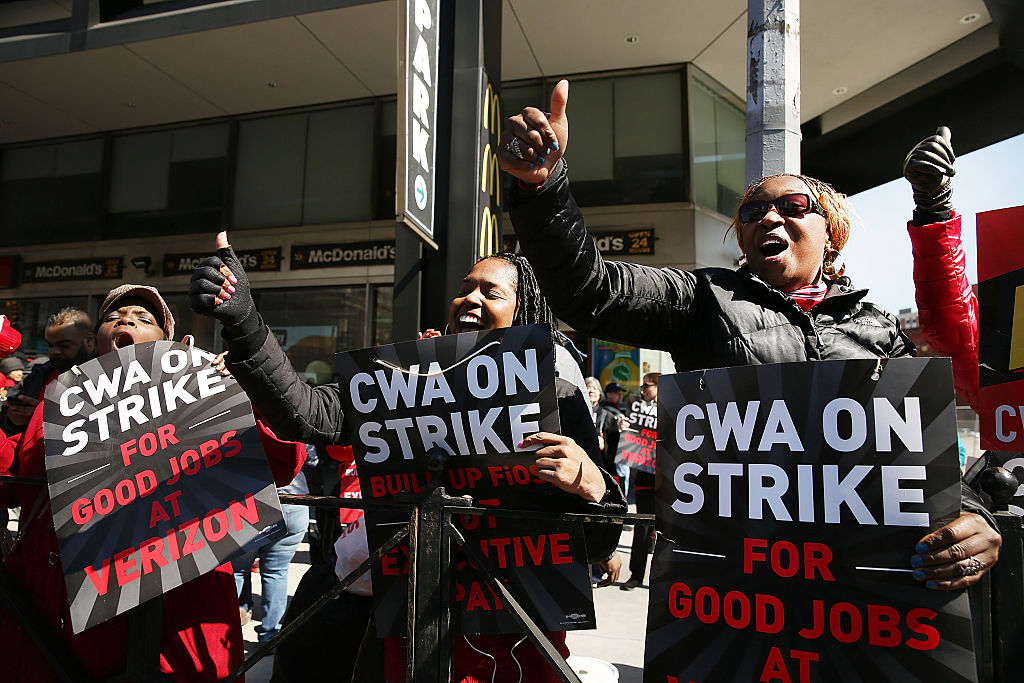
Hundreds of Verizon workers strike outside of the telecommunications company’s Brooklyn offices on April 13, 2016 in New York City. Spencer Platt / Getty Images
On Tuesday, news broke that Verizon would return to the bargaining table with the Communications Workers of America (CWA) and the International Brotherhood of Electrical Workers (IBEW). The renewed negotiations could bring to a close the largest US strike in five years, which has seen nearly forty thousand workers — mostly landline technicians but also some call-center and retail employees — walk out for more than a month.
At stake are the potential outsourcing of call-center jobs to the Philippines and Mexico, the implementation of forced overtime, the assignment of employees to other cities for months at a time, and the increased use of non-union contractors.
But beyond specific contract issues, the strike is drawing out the distinct paths forward for a labor movement that faces a strategic fork in the road.