Atari Democrats
As organized labor lost strength, the Democratic Party turned to professional-class voters to shore up its base.
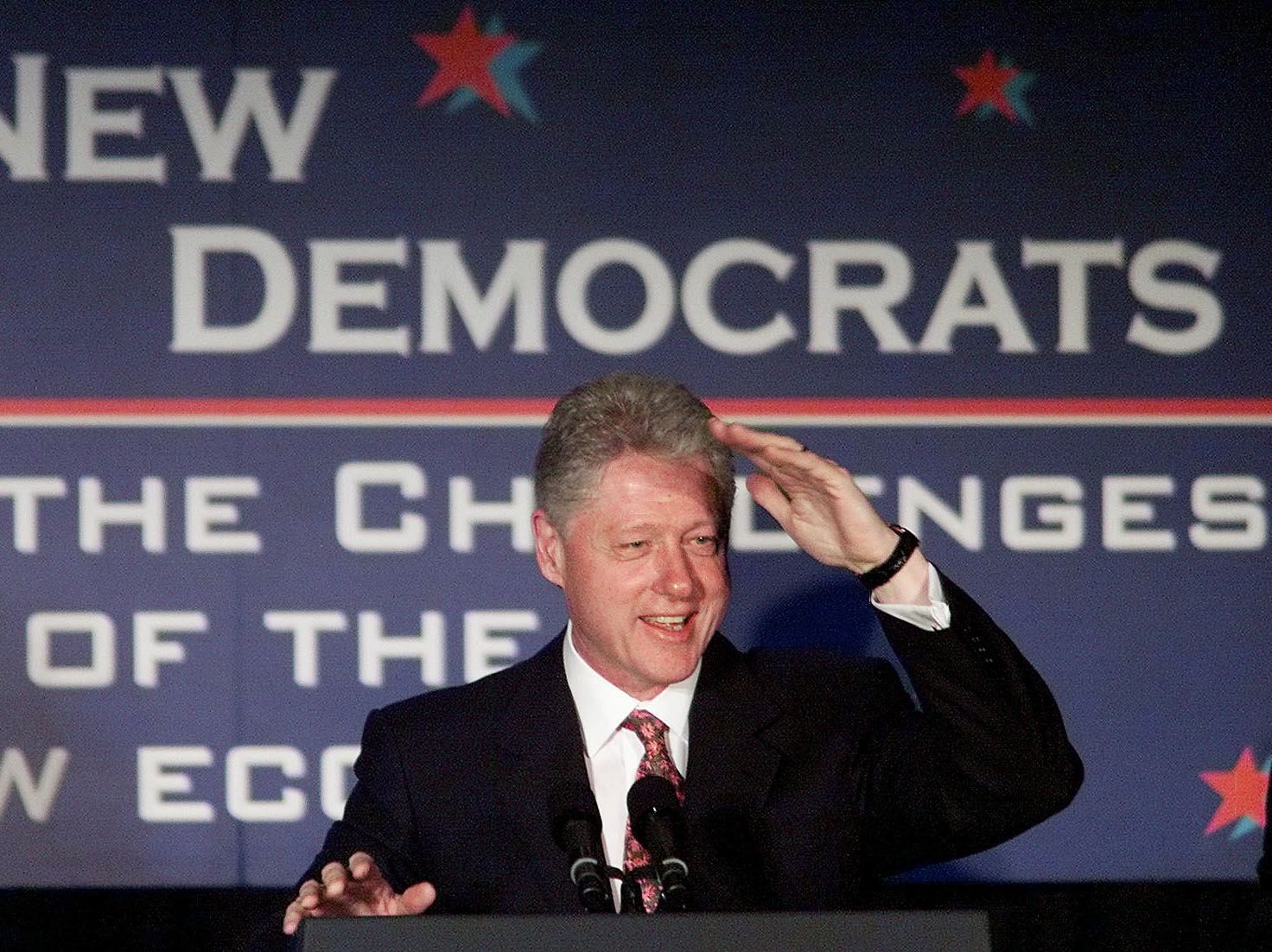
Bill Clinton addresses a Democratic Leadership Council conference in 2000. Luke Frazza / AFP / Getty Images
In late 1992, the Democratic Leadership Council (DLC) published a “blueprint for a new America” entitled Mandate for Change. Issued as the group’s former chair prepared to assume the presidency, the document was intended as a “guide to the progressive ideas and themes that energized Bill Clinton’s winning campaign” and an outline of “a new governing agenda for a new era in American politics.”
Animating that agenda were several core principles: “economic growth generated in free markets as the prerequisite for opportunity for all,” “equality in terms of opportunity, not results,” and a rejection of both the “liberal emphasis on redistribution in favor of pro-growth policies that generate broad prosperity” and the “Right’s notion that wealthy investors drive the economy.”
Clinton himself blurbed the book, praising the authors’ “new governing philosophy based on opportunity, responsibility, and community.” At last, the president-elect declared, the Democratic Party was moving “beyond the old Left-Right debates of the past.”