In Defense of Soviet Waiters
Sometimes bad service is class struggle.
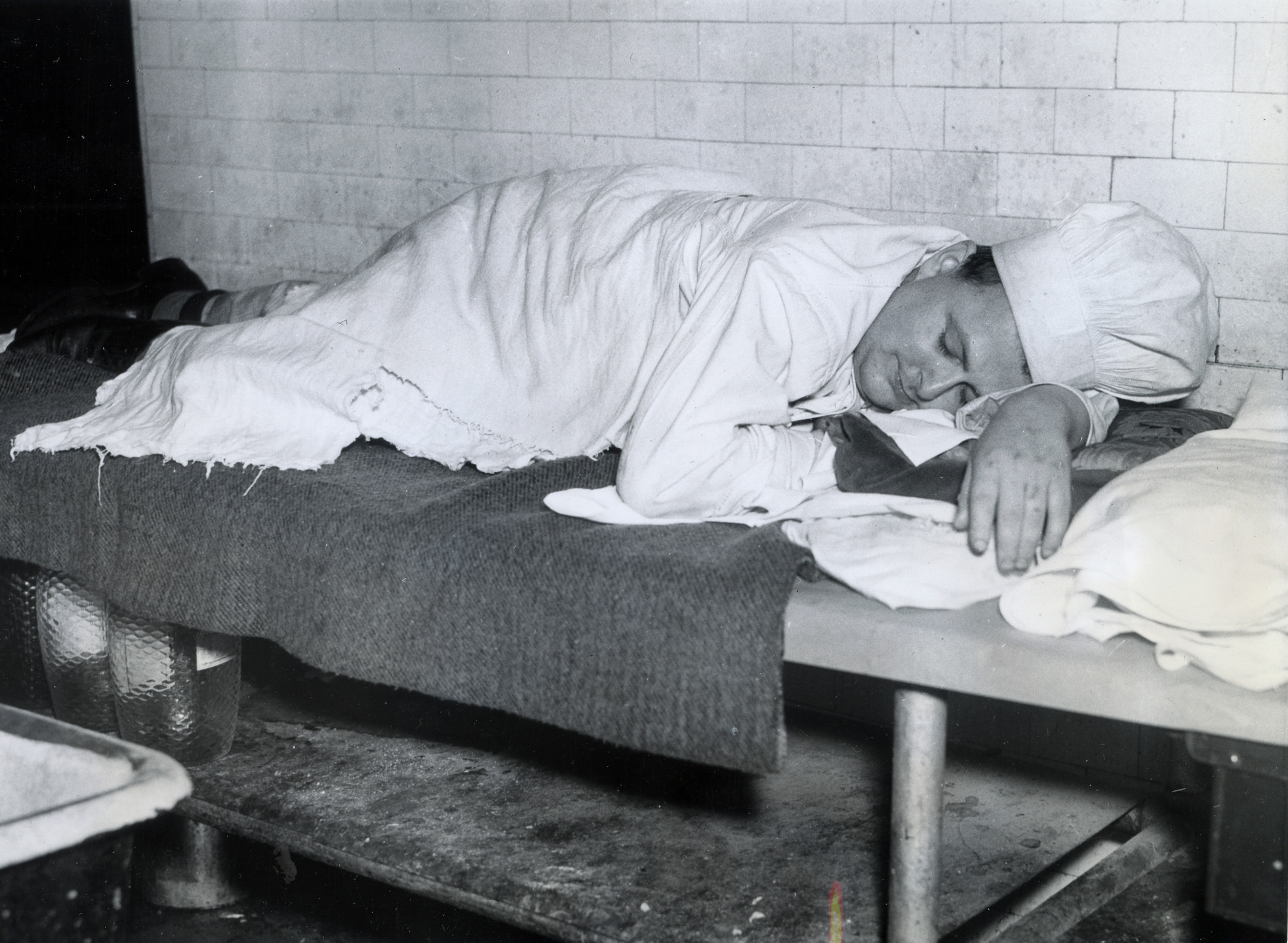
A worker on the kitchen staff at the Willard Hotel in Washington DC takes a break during a 1937 sit-down strike. Washington Area Spark / Flickr
There’s been a bit of a discussion about affective labor going around. Paul Myerscough in the London Review of Books describes the elaborate code with which the Pret a Manger chain enforces an ersatz cheerfulness and dedication on the part of its employees, who are expected to be “smiling, reacting to each other, happy, engaged.” Echoing a remark of Giraudoux and George Burns, the most important thing to fake is sincerity: “authenticity of being happy is important.”
Tim Noah and Josh Eidelson elaborate on this theme, and Sarah Jaffe makes the point that this has always been an extremely gendered aspect of labor (waged and otherwise). She notes that “women have been fighting for decades to make the point that they don’t do their work for the love of it; they do it because women are expected to do it.” Employers, of course, would prefer equality to be established by imposing the love of work on both genders.
Noah describes the way Pret a Manger keeps “its sales clerks in a state of enforced rapture through policies vaguely reminiscent of the old East German Stasi.” I was reminded of the Soviet model too, but in a different way. I’m just old enough to remember when people talked about the Communist world as a really existing place rather than a vaguely defined bogeyman.