The Dollar’s Power Never Came From Oil
The emergence of the dollar as the world’s currency was the result of the rise of the US as the preeminent global power. But the slow erosion of US economic and political power will not automatically spell the end of the dollar system.
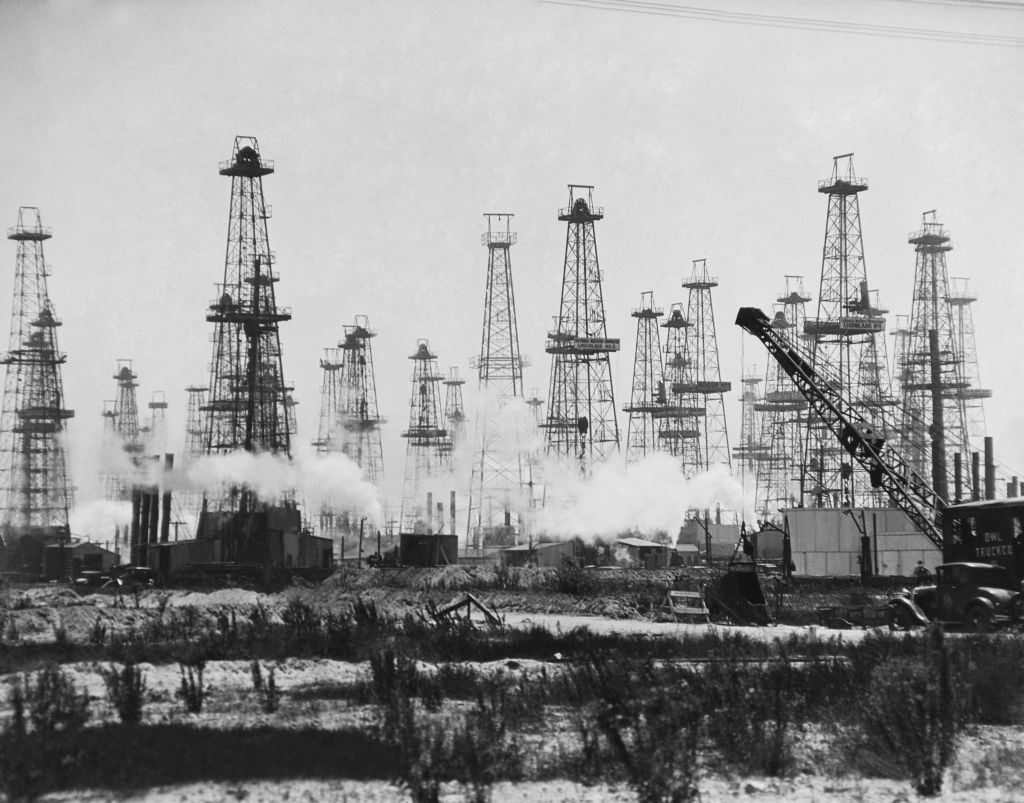
As America’s productivity lead and political legitimacy erode, it has leaned harder on sanctions and financial exclusion. Relative decline does not spell the dollar’s imminent collapse, but we should prepare for its increasingly coercive use. (Keystone-France / Gamma-Keystone via Getty Images)
The war in Iran and the disruption of shipping through the Strait of Hormuz have renewed an old debate about the foundations of American global power. Oil has been central to the geopolitical order dominated by the United States since World War II. The dollar is the principal international currency, oil is overwhelmingly priced in dollars, and American military power has been essential to controlling access to petroleum, particularly in the Middle East. The question raised by some analysts is whether the erosion of this arrangement, accelerated by the transition to cleaner sources of energy, signals the end of American hegemony and of the privileged position of the dollar.
There are good reasons to take this possibility seriously. China has become the leading producer of solar panels, batteries, electric vehicles, and many of the technologies essential to the transition away from fossil fuels. The transition to new energy technologies could therefore profoundly reshape the distribution of global economic power at a time when American military superiority is being questioned.
But there is a problem with moving directly from the decline of petroleum to the decline of the dollar. International monetary hegemony does not depend primarily on which commodities are traded, and only secondarily on which country possesses technological superiority in the industries of the future. It rests on a broader structure of fiscal, financial, productive, and military power that has historically developed over centuries. Understanding that distinction requires looking beyond oil to the historical relationship between money and empire.