Does Dollar Supremacy Help Americans?
The primacy of the dollar is considered one of the pillars of American might, conferring exorbitant financial privileges and coercive power. But what maintains the global dollar system is in fact inseparable from what’s driving American domestic decline.
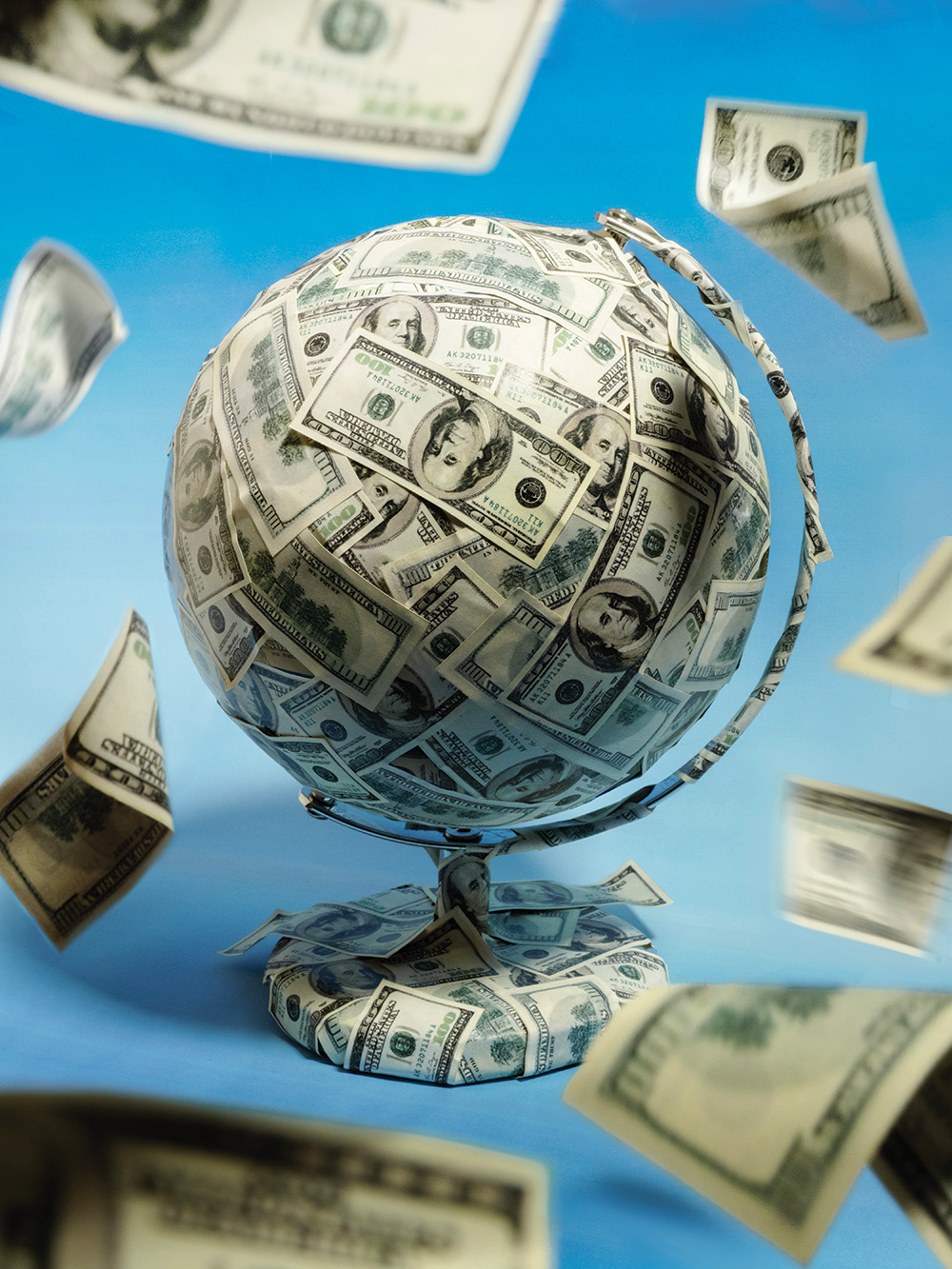
Illustration by Ben Denzer
It is scarcely possible to explain the convulsions of the twenty-first century without accounting for the pivotal role of the global dollar system. The financial crisis, the emergence of a new global monied elite, and the rise of China are inseparable from the dollar’s status as the world’s preeminent currency and the benefits and burdens it confers on different actors. The Trump administration has made maintaining the dollar’s primacy a central plank of its policy ambitions. “If we lost the world standard dollar,” said the president last year, “that would be like losing a war, a major world war.”
Donald Trump’s fears about the dollar have proven unfounded. The United States is experiencing undeniable geopolitical decline. Its ability to economically and militarily coerce both its allies and its enemies is foundering: Europe is slowly uncoupling, China won the trade standoff, and Iran has thwarted US-Israeli war efforts. And yet the dollar’s role at the center of the global economy remains undiminished.
This seems like a paradox. But what maintains the global dollar system is in fact precisely what is driving American decline from the inside out: an increasingly unequal domestic political economy characterized by rent extraction and high corporate profits. The dominance of the dollar is exacting an ever-higher price, paid largely by Americans themselves.