The Democratic Coalition Still Has a Class Problem
The blue wave was undeniable. But early survey data suggest the party rode on a backlash against Donald Trump and a midterm electorate tilted toward college graduates, not a return of the working-class voters the party will need in 2028.
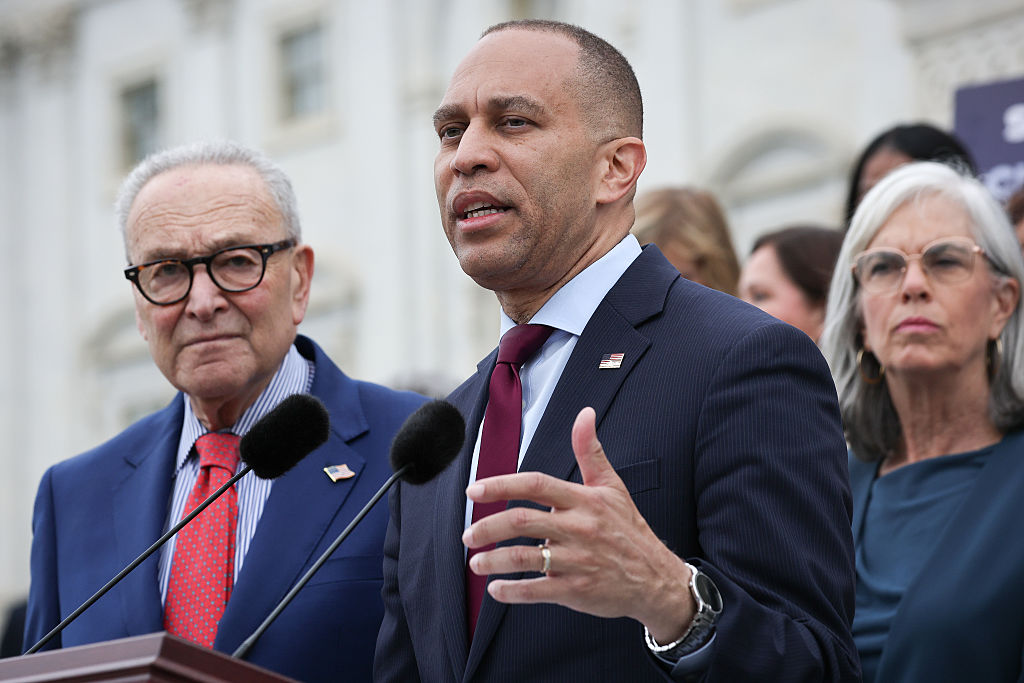
Measured against 2018, the Democratic Party is still deep in the hole with working-class voters, and its coalition is more lopsided by class than ever. That leaves Democrats exposed to another 2024-style loss in 2028. (Win McNamee / Getty Images)
Democrats won a massive victory in the 2026 midterms, performing so well that Republicans’ best-laid gerrymandering plans actually backfired in a number of states, most notably Texas and North Carolina. There, Democrats held most of the seats Republicans had targeted and even flipped some districts drawn to be safely Republican. Democrats flipped Senate seats in places like Texas, Kansas, and South Carolina that were considered virtually unimaginable reaches in the very recent past.
That’s of course excellent news for the party, and, I would hasten to add, for our fight against the ever-present threat of the far right. But Democrats’ stunning upset also brings a strong temptation for moderates and progressives alike: to read the result as proof that the party has finally turned the corner with working-class voters and can ride carefree into the 2028 sunset.
But provisional data suggest otherwise. Our first look at the 2026 electorate comes from three sources. The New York Times’s Voter Trends estimates combine Times/Siena polling, reinterviews with voters after they voted, precinct-level results, and validated turnout records for about half of all voters. The AP Voter Poll is a large survey of voters conducted for the Associated Press around Election Day, and its predecessor, AP VoteCast, covered earlier elections. For longer-term trends, I rely mainly on Catalist’s validated-voter data for 2012–2024. I note instances where the Times and AP disagree, and unless noted, other 2026 survey figures, such as voters’ views of Trump, the economy, and the parties, come from the AP Voter Poll. We won’t know the true shape of the 2026 electorate for months, until validated voter data becomes available, but these sources give us a helpful initial look. Both show Democrats gaining real ground since 2024 with college graduates and voters without degrees alike.