In the Midterms, America Rebuked Trump’s Authoritarianism
The reaction of the bulk of the American people to the cruelty and authoritarianism they’ve seen in the last two years has been abject disgust. They voted like it in the midterms.
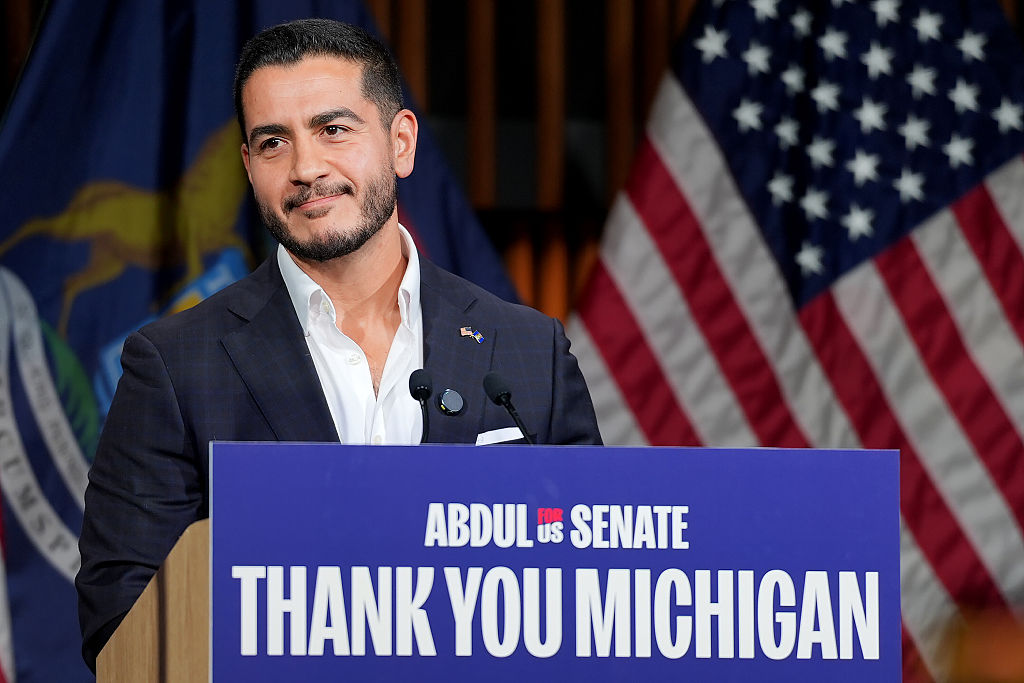
Trumpism wasn’t a random eruption of bigotry from our collective national psyche’s toxic depths. It was a demagogic response to a profoundly unequal society. Last night’s results suggest it’s best fought with a pro-worker economic message. (Salwan Georges / Getty Images)
Perhaps a more competent would-be despot than Donald Trump could have pulled it off. He could have consolidated his power gradually, choosing his battles against immigrants and the Left and imagined foreign adversaries wisely and making sure he didn’t alienate his existing base of support by keeping his finger on the pulse of American sentiment and staying in tune with the struggles of average people, like the high cost of living and the exhaustion with illegal foreign wars. We’ll never know.
The reaction of the bulk of the American people to the cruelty and authoritarianism they’ve seen in the last two years has been abject disgust. And they have reacted positively to the pro-worker rhetoric of Bernie Sanders and the rising Left he has inspired. Candidate after candidate seemed to have finally gotten the memo to steer clear of culture war and rhetorically emphasize affordability. What it all added up to was a “blue wave” so powerful that Republicans lost in states like Texas and South Carolina and Kansas.
For those who despaired at the electorate’s handing the presidency to Trump for a second time in 2024, last night was deeply heartening: the American people decisively rejected what Trump has to offer them.
First Time Farce, Second Time Tragedy
Donald Trump’s first turn at the presidency was more bark than bite. He did a tremendous amount of harm, but mostly the kind of harm that a hypothetical President John McCain or President Mitt Romney would have perpetrated: he lowered taxes for rich people, slashed benefits for poor people, undermined health and safety regulations, and busted unions. There were moments where he went beyond this consensus GOP agenda, usually in the direction of performative cruelty toward immigrants, but he tended to back down in the face of judicial pushback or public outrage. Often he and the constantly rotating cast of second-rate con men he surrounded himself with seemed unsure how to wield the levers of power.
There were portents of what an unleashed form of Trumpist authoritarianism might look like, particularly in his desperate attempts to overturn the results of the 2020 election. Ultimately, though, this too was a flop, and a reasonable argument could be made that Trump had simply tried to do a coarser, more “populist” version of what smarter Republicans had successfully pulled off when George W. Bush stole the 2000 election from Al Gore.
The second round of Trumpism has been so much worse. Reversing Karl Marx’s formula about what happens when history repeats itself, it has been “first time farce, second time tragedy.” Trump returned to power surrounded by true believers dedicated to carrying out the president’s will, and the result has been a sustained two-year assault on liberal democracy.
On his first day in office, Trump signed an executive order attempting to overturn the Fourteenth Amendment’s guarantee of birthright citizenship. He bullied universities across the country into harsher crackdowns on students who protested the genocide in Gaza. He had legal permanent residents arrested and tried to have them deported for attending protests or writing op-eds. He had migrants, some of whom had entered legally and broken no laws, imprisoned in a Salvadoran gulag because of guesswork about what their tattoos might mean. And he sent thousands of Immigration and Customs Enforcement and Border Patrol agents to occupy the city of Minneapolis as a swaggering show of force to intimidate his political opposition. When those agents murdered American citizens Alex Pretti and Renée Good, in broad daylight and on camera, the administration smeared the victims as “domestic terrorists” while their bodies were still warm.
Socialists, Liberal Democracy, and “Resistance Liberalism”
One important thing that “resistance liberal” types got right during and after the first Trump administration was that the president’s ambitions were more rabidly authoritarian than presidents of either party in America’s recent past. Part of what left-wing and socialist critics of “resistance liberalism” got right is that Trumpism was a natural outgrowth of that recent past, and attempts to “just get back to normal” in coalition with Never Trump Republicans very badly misread the moment.
Those of us who want to fight for a better, more materially egalitarian, and more authentically democratic society understand perfectly well that liberal democracy is an indispensable starting point from which we can wage that fight. It’s what gives us the room to agitate, organize, and maneuver. So democratic socialists have stood consistently against Trumpism, as we have against previous forms of authoritarianism. Even in the early months of the administration, when many establishment Democrats didn’t seem to know what had hit them, Bernie Sanders and Alexandria Ocasio-Cortez were crisscrossing the country building anti-Trump enthusiasm with their Fighting Oligarchy tour, which married a defense of democracy against authoritarianism with a critique of economic inequality.
This time around, many grassroots Democrats were ready to listen to that message. Enough were willing to support out-and-out socialists that a Democratic Socialists of America member is now the (wildly popular) mayor of the most important city in the capitalist world. And last night’s blue tidal wave more than doubled the number of socialists in Congress. Some degree of “Berniecrat”-style messaging crept into the rhetoric of Democratic candidates across the country. And Democrats in hotly contested states like Maine and Michigan openly championed substantive social democratic policies like Medicare for All.
All of this represents a belated recognition that Trumpism wasn’t just a random eruption of bigotry from some toxic depth of our collective national psyche. It was a demagogic response to the material realities of a profoundly unequal and increasingly precarious society. And it’s best fought by uniting a defense of liberal democracy with a pro-worker economic message.
Of course, campaign rhetoric and governance are two very different things, and the country is far from out of the woods. A profoundly dangerous authoritarian is still president — and will be for the next two years. And establishment Democrats are adept at finding creative new ways to turn even the most inspiring victories into fresh defeats.
For now, though, the fact remains that the American people just handed MAGA a historically massive rebuke. That’s well worth celebrating.