Anwar Shaikh (1945–2026)
Anwar Shaikh was the most brilliant Marxist economist of his generation. He leaves behind a legacy that has the potential to drive political economy forward for years to come.
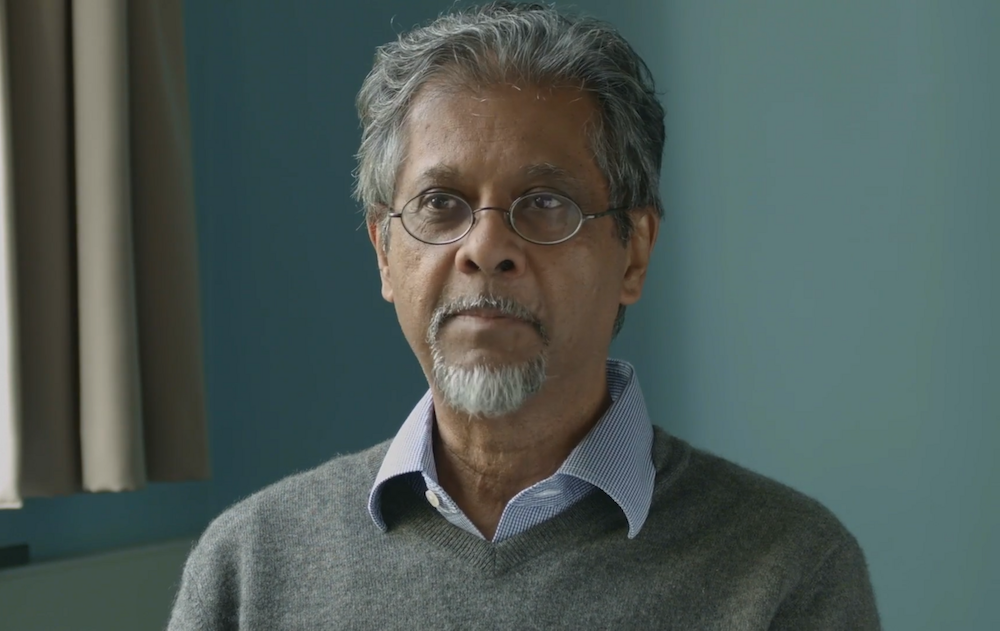
Anwar Shaikh leaves behind a body of work so ambitious, so rigorous, and so complete that it invited comparison with Marx’s Capital itself. The Left has lost one of its greatest minds. (The Rosa Luxemburg Stiftung / CC BY 3.0 [lightly cropped])
With the passing of Anwar Shaikh, the left intellectual community has lost one of its most dynamic and brilliant members. Anwar was not just a leading light among heterodox economists; he was the most brilliant Marxist economist of his generation and arguably the most important since Karl Marx himself. He did more than perhaps any other contemporary economist to revive the classical tradition in political economy, associated with Adam Smith, David Ricardo, and Marx. He then brought that framework to bear on the more short-term dynamics analyzed by the Keynesian tradition, showing that classical economic theory was capable of analyzing the same phenomena and integrating the two into one encompassing framework. And if that was not enough, he accomplished the herculean task of operationalizing Marxian categories to show how the empirical regularities of modern capitalism were governed by the mechanisms that Marx described in the volumes of Capital. In the history of Marxian economics, it is doubtful that there has been any other figure who did more to advance its agenda and put it on a secure footing.
Shaikh was born in Karachi, Pakistan, in 1945. But because his father was in the Pakistani Foreign Service, he spent many of his formative years in the Middle East, Southeast Asia, and Turkey. He completed his higher education in the United States with a degree in engineering from Princeton in 1965 and then an economics PhD from Columbia University in 1973. This meant, of course, that he was at the epicenter of the student movements of the time — antiwar, civil rights, and feminist. Like many of the most talented students of his generation, he was radicalized into Marxism and dedicated his singular talents to developing Marxist economic theory.
At the very heart of his research project was the proposition that capitalism is fueled by firms’ ceaseless search for profits. This may seem like an obvious proposition, but the reigning frameworks within heterodox economics in the late 1960s were not well suited to capturing capitalism’s core dynamics. In radical economics, the dominant theoretical framework had been inherited from Vladimir Lenin and Rudolf Hilferding and crystallized in the extremely influential work of Paul Sweezy and Paul Baran in their book, Monopoly Capital. In this account, competitive capitalism had given way to the rule of monopolies in the early twentieth century, so that the competitive dynamics that Marx had analyzed were no longer operative in modern capitalism. Marx’s theory was appropriate to a world of small firms and low fixed costs, the argument went, but the twentieth century firm was highly concentrated, required enormous economies of scale, and was therefore able to deter entry from potential rivals. This was a world in which firms were able to exercise great control over their markets, in contrast to the nineteenth century, when competitive forces subordinated firms to market pressures.
This theory of monopoly capital came under tremendous criticism in the 1970s and after, mostly from the Left, and very successfully. A large body of work questioned the empirical foundations for Sweezy and Baran’s book and proposed instead that competitive pressures were still very much alive, even in the era of large conglomerates. While many emerging Marxist economists developed these criticisms, it was Shaikh who most successfully showed that not only did the facts fail to line up with theory’s claims, but much of the data that Sweezy, Josef Steindl, and others took to be evidence for monopoly was in fact consistent with economic competition.
Shaikh realized what was at stake here. Marx’s entire economic framework rested on the idea that profit-maximizing firms move restlessly from one sector to the other seeking the best possible rates of return. This was the foundation of both the law of value and the ceaseless quest to extract labor at the socially necessary standards. In other words, competition and intersectoral mobility of capital not only created the long-period prices, but also produced the unrelenting pressure on firms to minimize their costs and thereby to wage constant war against their employees. The putative mutation into monopoly capitalism, if true, would undermine these arguments and signal the obsolescence of Marx’s economic theory.
The real bite of Shaikh’s criticism of the reigning theories of monopoly was that they took their understanding of a competitive market wholesale from mainstream economics. In other words, they failed to provide an alternative to bourgeois economics because they shared the same theoretical and even conceptual foundations. As an alternative, he excavated the understanding of competition that had guided the classical tradition from Smith through Ricardo to Marx himself — what he called “real competition,” as against the “perfect competition” of Walrasian and much of heterodox economics. At the heart of this account was that, far from being passive “price takers,” firms aggressively fought for increased market share by reducing unit costs, adopting best practice techniques, and trying to push their rivals to extinction. Competition was like war.
Once it was understood that the theory of monopoly capital had taken a wrong turn, it had grave implications for Marxist economics. Most of Marxist theorizing in the twentieth century came out of this very tradition, starting from Hilferding, through Lenin and Rosa Luxemburg, and then of course, Baran and Sweezy. And then, through the Communist parties across the capitalist world — whether Maoist or orthodox Soviet — it had become orthodoxy in much of the organized Left. But despite its influence, Shaikh demonstrated that the theory could not be sustained. He insisted that Marxian economics had to be rebuilt around a robust theory of competition, on which could be built a far more powerful political economy of capitalism.
By the early 1980s, Shaikh and a cluster of other radical economists had come to the view that the road to revitalizing Marxist economics ran through a new theory of competition that would be different from both the mainstream “perfect competition” as well as that of the monopoly school. But that was only the beginning. The whole point of excavating Marx’s account of competition was to show that upon it could be built an alternative macro- and microeconomics — not just the theory of crisis or the relationship between values and prices — though that was, of course, a central part of the challenge. But also the phenomena that were the focus of mainstream economic theory, like inflation, trade, exchange rates, monetary theory, and the like. In other words, the challenge was to show that the underlying long-period forces theorized by Marx in the volumes of Capital could explain the more surface-level phenomena that mainstream economics was preoccupied with.
Shaikh threw himself into this task in the 1980s. In my conversations with him long after, he said that, as he originally conceived it, he thought it would take no longer than a decade to present the alternative framework. But as the years wore on, and even as he published bits and pieces of the massive project, the promised mega-volume did not appear. Elements of the alternative theory became visible in the occasional articles that he published. And in 1994, he published a work coauthored with his student, E. Ahmet Tonak, Measuring the Wealth of Nations, which showed how national income accounts could be used to operationalize Marxist economic categories. But a fully integrated alternative to the rival frameworks was nowhere to be seen. Some of his students did publish work that was building directly on his framework — most prominently Howard Botwinick’s brilliant Persistent Inequalities, which used Shaikh’s framework to develop a theory of wage differentials. But as the years wore on, a certain pessimism set in among his admirers, myself included, as to whether it would ever see the light of day.
But the worry turned out to be unwarranted. Around 2014, Shaikh sent me the manuscript of his long-awaited work. When I opened the document, I nearly fell out of my chair. The ambition was staggering. Shaikh had delivered everything he had promised thirty years past, and even more. The manuscript ran to a thousand pages. It started with a massive empirical analysis of a century of observed regularities in the economy, proceeded to a theory of the firm, then to his account of “real competition,” which imposes the competitive threat on the firm, to a theory of profits, relative prices, money, inflation, exchange rates, trade, and even the stock market. It was not for the lay reader. But it was crystal clear and beautifully written, as with everything Shaikh ever wrote. It was the most ambitious piece of academic writing I had seen in my lifetime. Shaikh had achieved everything he had set out to do.
But 2015 was not 1985. Marxian economics had receded tremendously, and even heterodox economics was now a tiny little slipstream in the academic world. Political economy no longer interested the Left, as it had migrated to the wooly embrace of language, culture, and identity. So the question was: Would the book be noticed, even on the Left? Would it get the attention and accolades it deserved, or would it meet the fate of David Hume’s great work, A Treatise on Human Nature, which Hume had lamented “fell dead-born from the press, without reaching such distinction as even to excite a murmur among the zealots”?
As it turned out, Capitalism: Competition, Conflict, Crises was hailed an instant classic. The accolades were extraordinary, and it is striking how many compared it to Marx’s own great work. James K. Galbraith suggested that there hadn’t been any economic treatise so ambitious and so successful in 150 years (i.e., since Marx himself), Geoffrey Harcourt called it “possibly the most comprehensive structure since Marx’s Capital,” and John Grahl wrote in the New Left Review that “the scope and scale of Capitalism are such as to invite comparison with Marx’s Capital itself.” It was a staggering achievement, and the economics profession instantly realized it.
The publication of Anwar’s magnum opus was a watershed moment in the history of Marxian economics. There have been other works of great importance published in the past twenty-five years or so. But none with the ambition, the thoroughness, the extraordinary erudition, and sheer breadth of Anwar’s book. With it, Marxist political economy can be in conversation with mainstream economics at every level of abstraction and in every domain that the economic theory inhabits. Even though it has been a decade since it was published, its full significance has yet to be absorbed. Anwar spent his last years tirelessly lecturing on different aspects of the argument, trying to make it absorbable. But while a decade is a long time in biographical years, it is but a flicker in intellectual history. It will take some time for the full significance of the work to be appreciated. But then, it is rare for a book to even be worthy of such consideration.
Even though Anwar’s magnum opus appeared late in his life and toward the end of the New Left’s generational story, one can say that it was published at the very inception of a new era. I mean the era of the newly emergent Left today, the new generation of socialists, who are the first left unencumbered by the heavy hand of the Second and Third Internationals. The revitalized economics that Anwar was so central in developing will now need to displace the valuable but deeply flawed frameworks passed down by Hilferding, Lenin, and Luxemburg. In the long, dry years, when many of us were waiting for him to complete his project, legions of his dedicated students recorded Anwar’s lectures, legendary for their clarity and brilliance, and then transcribed them for study and discussion. These lectures circulated among the cognoscenti like samizdat writings in the Soviet Union, unpublished but very influential. I cut my teeth in Marxist economics with these brilliant disquisitions. In them, Anwar’s extraordinary knowledge and appreciation of classical Marxism was on full display. But so was his insistence that our admiration for the historical figures does not license a blind acceptance of their theoretical infirmities. Shaikh fully absorbed everything that the Marxists of the Second and Third Internationals had to give. He absorbed it and then produced a more sound, complete, and successful theory, which can provide a foundation for the emerging Left as it develops its own intellectual capacities.
There is much to learn from the intellectual contributions of Anwar Shaikh. But there is even more to learn from the values and the commitments that he embodied. There has never been another intellectual in the Marxist tradition who worked with such furious intensity, such stamina, such unrelenting dedication to a research program. As layer after layer of the New Left turned away from political economy, from Marxism, and even from materialism itself, Anwar stayed on. His capacity for work was prodigious. His refusal to settle for anything less than the finished product was so intense that it was almost self-defeating.
In an age when so many immigrant intellectuals fell back on their skin color, language, and ethnicity to package themselves in an increasingly frivolous radical culture, Anwar refused. He refused to be defined by his social background. He was motivated solely by his moral and political commitments. This was, of course, a stance that was taken for granted among Marxists of the generations preceding him. But it is nearly extinct today, while every two-bit academic tries to commodify whatever slivers of identity they can lay claim to. I used to tease him that if he sold himself as a “postcolonial economist,” he might win a bigger audience. It was worth a laugh but nothing more. The very idea was abhorrent to him. And we are richer for it. Shaikh was a remarkable man and a singular intellectual. We will not see a talent like him for a very long time to come.