The Video Game Industry’s Crisis Is a Crisis of Capitalism
Recurring layoffs reveal an industry organized around extracting value while workers bear the cost of crises. In Montreal, game workers are building solidarity and organizing for collective power.
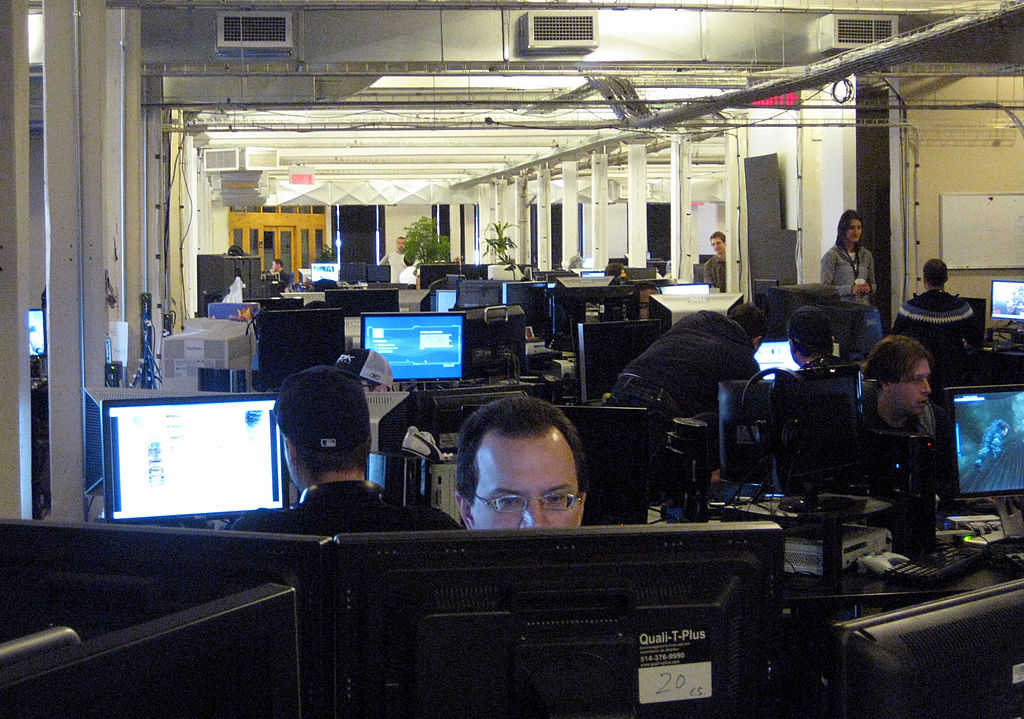
Game companies have long relied on workers’ love for their craft while treating jobs as disposable. Montreal game workers are organizing to demand more than a chance to engage in “passion work.” (Clément Sabourin / AFP via Getty Images)
Montreal has been touted as a major creative hub for the video game industry for over twenty years, leading the province of Quebec’s efforts to develop its digital creative sector. The industry reportedly generates CAD$1.4 billion in annual revenues within the province, yet game workers feel the lack of job security more than ever.
At the end of the summer, games workers rallied in Montreal to support the Bethesda employees affected by recent layoffs. Back in July, Microsoft announced it was eliminating 3,200 jobs within the Xbox division before the end of the year. Among the employees affected is Simon Préfontaine, a designer with over nine years under his belt at Bethesda Montreal. He explains that layoffs have become an annual occurrence across Xbox studios and the industry more broadly.
What does worker power look like in an industry where the people making the games often have little control over whether their jobs, studios, or projects survive? According to Préfontaine, “People are now much more motivated and radicalized. We are ready to strike. [These companies have] pissed these people off enough.” There seems to be a growing sentiment among game workers in Montreal that organizing themselves and unionizing their workplace is becoming necessary.