When Gas Diplomacy Sounds Like Regime Change
Kimberly Guilfoyle, Donald Trump’s ambassador to Greece, has resigned. Her farewell statement lays bare the bigger story: how American exporters and Greek capital collude to make ordinary households foot the bill for their new energy order.
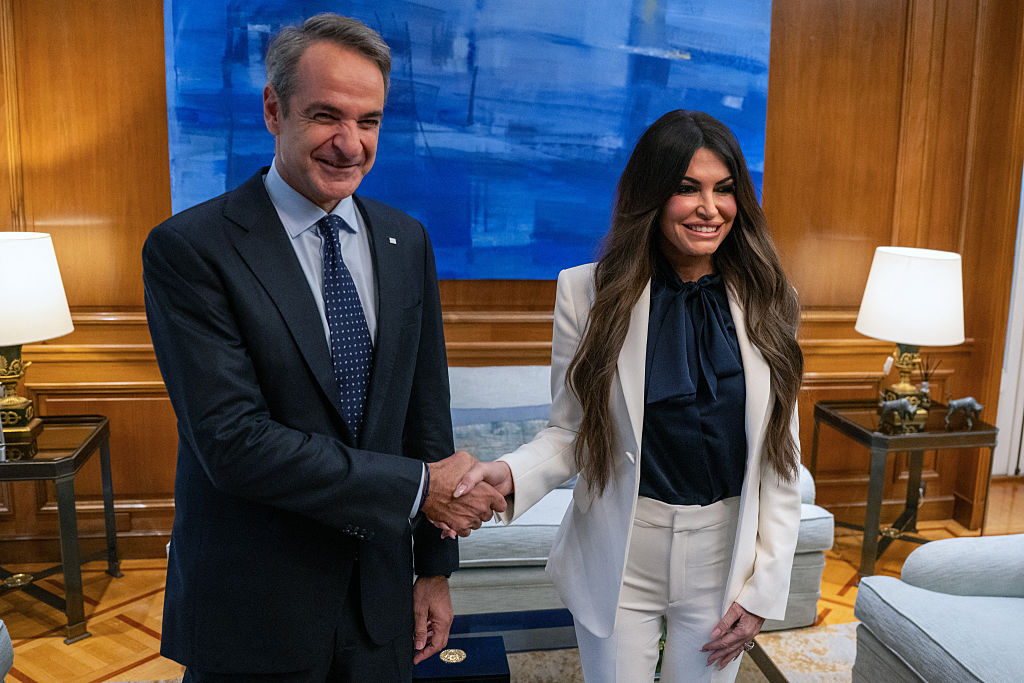
Greek Prime Minister Kyriakos Mitsotakis (L) welcomes newly appointed US Ambassador to Greece Kimberly Guilfoyle (R) prior to their meeting at the Maximos Mansion, in Athens on November 5, 2025. (Angelos Tzorttzinis / AFP via Getty Images)
“We can do this to any country we want. We can do it here too.” According to a Wall Street Journal investigation published on September 25, Kimberly Guilfoyle, Donald Trump’s ambassador to Greece, conveyed this message during a March dinner in Athens while discussing the expected fall of the Romanian government with Greek Minister for the Environment and Energy Stavros Papastavrou. Papastavrou replied that the United States could not replace a Greek government elected by the Greek people.
Although Guilfoyle’s lawyer disputes the newspaper’s description of the exchange, the report immediately caused political controversy in both Greece and Romania. In Greece, the alleged words landed on particularly sensitive ground. They sounded less like an eccentric diplomatic indiscretion than an updated, Trumpian version of a much older doctrine through which Washington decides how much sovereignty smaller countries are allowed to exercise.
The story has since taken another turn. On October 13, the White House asked Guilfoyle to resign amid a widening series of misconduct allegations, all of which she denies. These went well beyond the reported conversation about governments in Greece and Romania and included allegations involving gifts and favors, the use of official access, contacts with Greek business interests and lobbyists, and her conduct in office.