Interest Rate Increases Are About Disciplining Labor
The major factors bringing about the current, continuing inflation are unlikely to be much affected by the Fed’s recent interest rate increases. But those increases weaken labor’s bargaining power, so Washington welcomes them anyway.
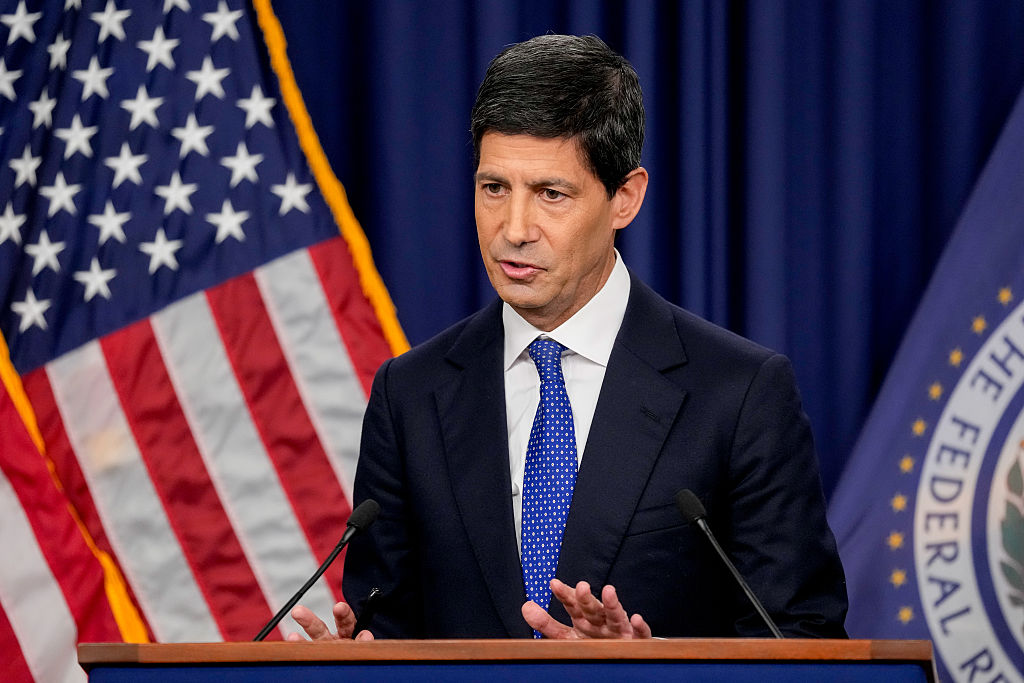
The main drivers of today’s inflation are out of bounds: the Federal Reserve can’t alter them, and the current administration in Washington won’t. So the Fed is raising interest rates to try to discipline labor. (Daniel Heuer / Bloomberg via Getty Images)
Using its favored policy in the face of inflation, the Federal Reserve Board, under its new chairman, Kevin Warsh, pushed up short-term interest rates in September. This action may have some impact on the rate of inflation, but probably not much. Raising interest rates may curtail inflation under some circumstances, but the major factors bringing about the current, continuing inflation are unlikely to be much affected by the Fed’s recent interest rate increases. But those other factors are out of bounds: the Fed can’t alter them, and the current administration in Washington won’t.
What Washington Has Done to Curtail Inflation
With the emergence of economic instability in the early 1970s, President Richard Nixon imposed wage-price controls that limited how much wages and prices could rise. To oversee wage-price controls, his administration established two agencies, a Pay Board and a Cost of Living Council. Economist Arnold Weber was the executive director of the Cost of Living Council and a member of the Pay Board. In 1974, Weber summed up the actions that these federal institutions had undertaken to contain inflation with this statement, “The goal here is to zap labor. That’s what we’re doing here. . . . We have to zap labor.”
Attempting to quell inflation in 2022 by pushing interest rates up, then–Chairman of the Federal Reserve Board Jerome Powell saw the problem this way: “ . . . look at the average hourly earnings number we got with the last payrolls report. You don’t really see much progress in terms of average hourly earnings coming down.”