Financial Capital Didn’t Make New York City Great
The latest installments in Ric Burns’s documentary New York look at Gotham’s recent decades through rose-colored glasses. They ignore the political choices that eroded the city’s industrial base and reduced democratic influence on the economy.
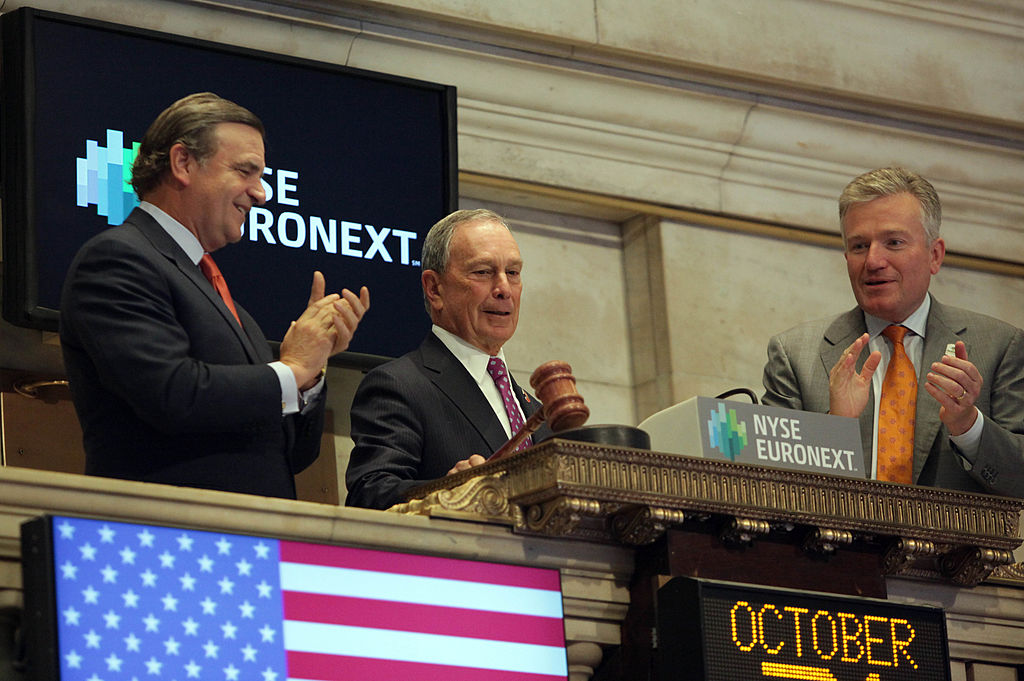
The latest episode of Ric Burns’s long-running documentary about New York City lionizes former Mayor Michael Bloomberg — despite the fact that he helped turn NYC into a monstrously unequal “luxury city.” (Allison Joyce / Getty Images)
It’s the beginning of the new Ric Burns documentary on New York City, and Adam Gopnik is choking up.
He’s talking about the diversity and tolerance that New York, at its best, embodies. He’s talking about the challenges the city has faced over the past fifty years. Above all, he’s talking about how it met those challenges: through its willingness to adapt. Cities are “self-emergent” and “self-sustaining” forms, Gopnik argues, but self-sustaining requires transformation.
Happily, New York has been up to the task. “We accept [New York’s] remaking of itself again and again,” he avers, and it is this tradition of demographic and developmental pluralism (“plural pluralisms,” in his inimitable phrasing) that allowed Gotham to transcend its postwar decay and become the beacon of cosmopolitan, progressive liberalism we adore today.