How Intelligence Agencies Bend Universities to Their Will
Intelligence agencies like the CIA have been cultivating ties with universities for decades. They use money and influence to co-opt research and foster a benign image of their role at the expense of academic independence and freedom.
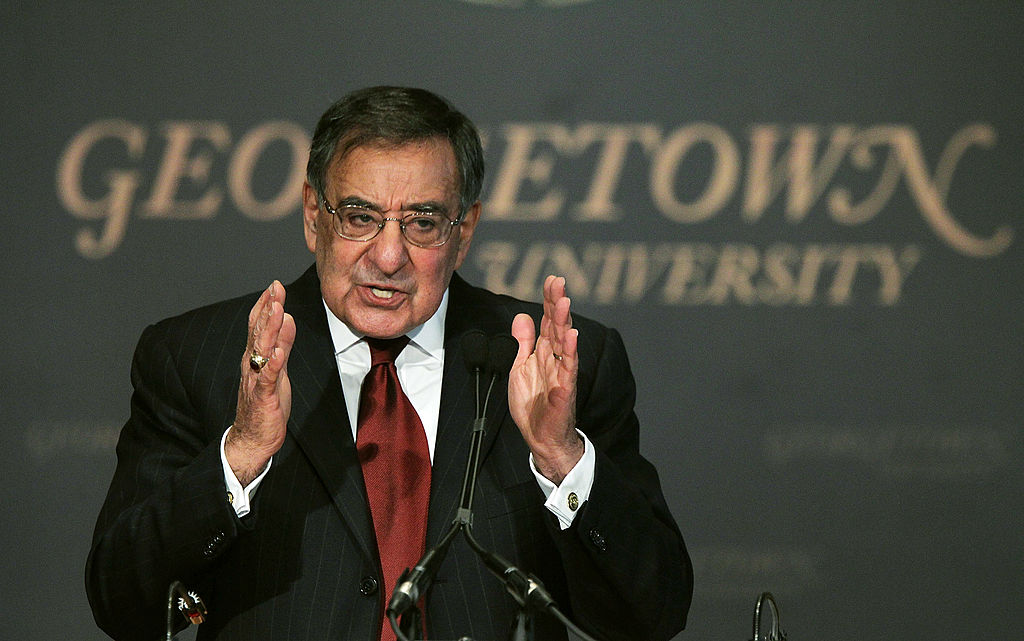
Former Director of the Central Intelligence Agency and then-Secretary of Defense Leon Panetta delivers remarks at Gaston Hall of Georgetown University on February 6, 2013. (Alex Wong / Getty Images)
With a series of US military operations underway over the past year, intelligence agencies have come under the spotlight again. Media coverage has tended to offer flattering narratives of their exploits, recounting the “critical role” played by the Central Intelligence Agency (CIA) in Nicolás Maduro’s kidnapping that makes it seem like a spy thriller. This fits into a wider tendency during the Trump era to repackage US power as a form of entertainment, drawing on action movies and video games to turn imperialist ventures into thrilling adventures.
At the same time, former intelligence practitioners and professional associations have lamented the politicization of intelligence under the Trump administration, warning of its disastrous consequences for US national security. Taken together, this combination of stories presents intelligence agencies in a sympathetic light, as highly capable institutions whose professionalism is being threatened by the executive power.
Reporting on Mossad’s pager operation against Hezbollah or the reputation of Britain’s MI6 follows a similar pattern. Such accounts steer clear of a more serious reckoning with the forms of violence that make up a large part of intelligence work: the expansive surveillance of suspect populations and other abuses that fit less neatly into the heroic storytelling.