Their Internationalism and Ours
The real choice is not between globalization and deglobalization, free trade and tariff walls, but between empowering capital and empowering workers.
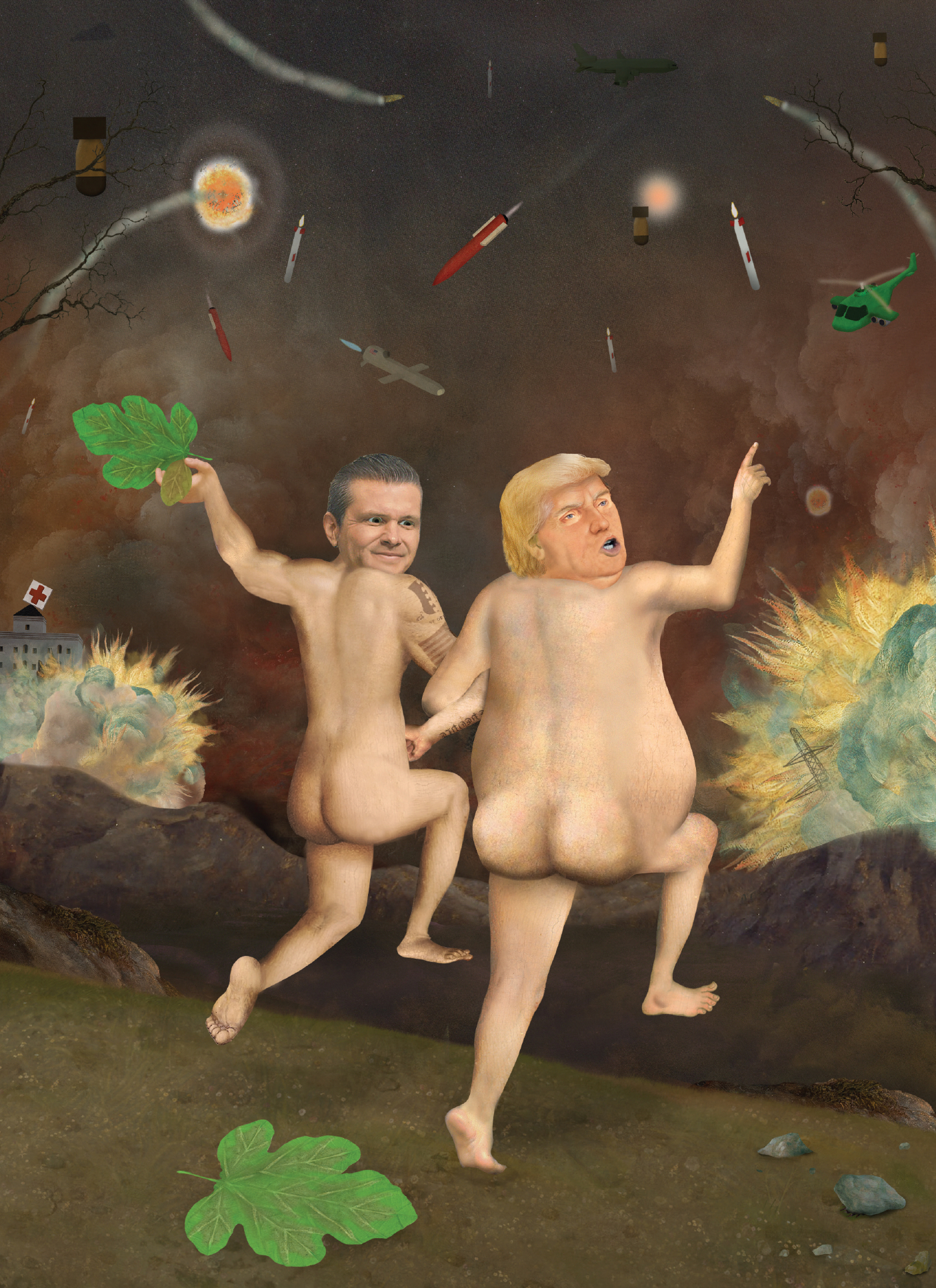
Illustration by James Kerr / Scorpion Dagger
It’s hard to believe that just twenty-five years ago, the global justice movement had to defend itself against the charge of parochial, narrow-minded nationalism. This was the accusation made by respectable, supposedly forward-looking outlets like The Economist and The New Republic. The protesters in Seattle and Genoa stressed that they had no problem with the idea of an interconnected world. What they objected to was the pressure to liberalize and privatize national economies. It was that particular form of globalization — the one being promoted through the World Trade Organization and the summits of the G8 powers — that they opposed.
Today the capitalist internationalism of the early 2000s is in headlong retreat. Members of the billionaire class who zoom around the world in private jets are embracing the nativist politics of the far right while the Trump administration is taking a sledgehammer to the idea of free trade. In these circles, “globalism” has become a dirty word, but capitalism is still beyond question. The Washington Consensus once stigmatized tariffs and trade unions as anachronistic barriers to the free movement of capital. Now tariffs are in vogue, while unions still face an uphill battle merely to survive.
At the same time, the US power elite has increasingly dropped the cosmopolitan rhetoric of nation-building and humanitarian intervention as it continues to wage war around the world. The rollback of globalization doesn’t mean a retreat from empire. On the contrary, it involves crude displays of imperial aggression without so much as a rhetorical fig leaf to conceal their naked rapacity. The “rules-based international order” was always a nice way for Washington to dress up the fact that it both made the rules and gave the orders. But even that veneer of multilateralism now seems to be too much of a burden for US leaders.