The Left Can’t Win Without an Internationalist Vision

The globalization hype of the early 2000s has given way to an intense focus on national borders and competition between states. But the Left can’t afford to abandon its own form of internationalism based on the idea of universal human emancipation.
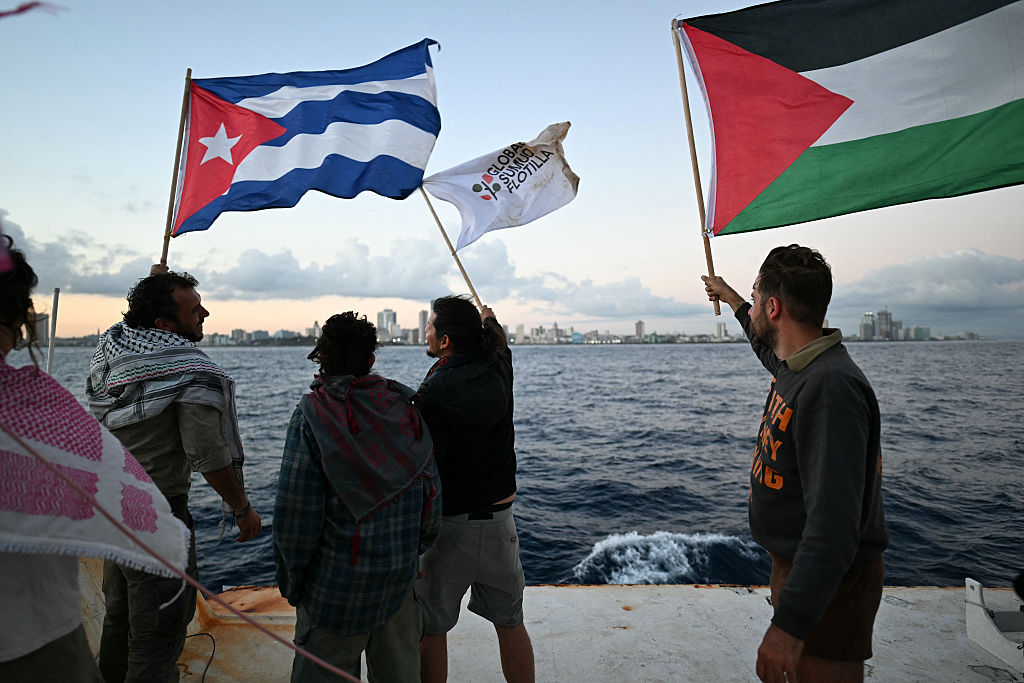
The aim of the Left is not simply to redistribute wealth or roll back racial discrimination in one’s own country; it is to abolish every form of oppression and domination everywhere. By definition, universal emancipation has to be global or not at all. (Yuri Cortez / AFP via Getty Images)


As we enter a new age of imperial wars, internationalism is very much back on the Left’s agenda. But what is internationalism? And why does it matter?

The Left’s preoccupation with “internationalism” stems from the fact that its political project has always been tied in some way to what might be called universal emancipation. To emancipate is to free someone or something from a power, and universal emancipation stands for the liberation of everyone from all domination.

The aim of the Left, in other words, is not simply to redistribute wealth, expand state services, or roll back racial discrimination in one’s own country; it is to abolish every form of oppression and domination everywhere. By definition, universal emancipation has to be global or not at all.

A World of States

But the globe is not a single, smooth, uniform space. The people of the world are not subject to a single administrative entity, set of laws, or police force. Nor are they under the authority of an undifferentiated class of rulers.

The planet is instead divided into many distinct political units that have largely taken the form of nation-states. It is precisely these independent nation-states that have assumed primary responsibility for maintaining domination in the world today. This doesn’t mean that the state is the only source of domination, but rather that states are the main enforcers in this inegalitarian world.

Whether one fights racism, patriarchy, or capitalism, one will ultimately have to confront the laws, police, courts, and prisons of the state. Since state power is distributed across so many different nation-states, the fight for emancipation takes the form of a multiplicity of different struggles within and against each of the many different nation-states across the globe.

This is one of the reasons why the Left has historically tended to speak of “internationalism” rather than, for example, “cosmopolitanism.” The term is a reminder that the ambition to remake the world has to take into account the unavoidable reality that the main political units of the existing world order are nation-states. Even in today’s supposedly globalized world, replete as it is with NGOs, military pacts, transnational corporations, and international institutions, the path to the planetary has to pass through a confrontation with the nation-state.

Internationalism is not a moral injunction to help those in need, and neither is it a single ready-made strategy for freeing the world. It instead names the wide range of political problems that emerge from the tension between needing to make change on a global scale and having to strategically take the many nation-states of the world as the primary battlefields.

Border Crossings

No nation-state has ever governed a single coherent populace. This is largely because states were historically imposed on already heterogeneous populations. These people did not cross into the new nation-states; the recently invented borders of these nation-states “crossed” them.

These nation-states can never be hermetically sealed: millions of people regularly traverse their borders, and many countries are home to immigrants from other states. This adds to the fundamental heterogeneity at the heart of every nation-state. Quite a few countries are now largely composed of people whose ancestors were born in other parts of the world.

Since every state is home to a diverse population, meaningful emancipatory change depends on finding ways to bring different people together in common struggle — people who were born in different nation-states, who speak different languages, reside in different places, live in different communities, and care about different issues.

Yet the ruling bloc in every country always strives to prevent that unity from being forged. Division is how rulers maintain their domination, and the most effective way to accomplish disunity is to mobilize invented political categories such as race, nationality, or especially citizenship to transform these real differences into insurmountable divisions.

Today the ruling blocs that govern the countries of the world are attempting to neutralize popular discontent by channeling political anger into xenophobic nativism. This strategy can even turn immigrants against one another, including those from the same country. The United States is probably the best example of this, but it is by no means unique.

In this way, one can say that internationalism begins within the nation-state itself. Each nation-state governs a heterogeneous population and legally recodes these differences as ones of nationality. Since these “national” divisions are used to turn people against one another within a fundamentally “multinational” state, effective political work within a nation-state is always already international.

Global Solutions

In addition to impeding unification within a given nation-state, the partition of the globe into national borders, national identities, and nation-states make it much harder to organize a unified movement across borders. Although these sharp divisions do not turn everyone into a xenophobe, they tend to narrow the political horizon in a way that encourages people in any given country to prioritize domestic issues over international ones.

This is especially true in the heartlands of insulated imperialist countries such as the United States, where the political system is designed to cultivate a culture of ruthless individualism. If people in these countries do become politicized, it is often — though of course not always — because developments within their own nation-state have had a direct impact on their lives. Gas prices are increasing, groceries are becoming too expensive, employers are monitoring their social media accounts, unprecedented floods are damaging their home, or immigration police are disrupting their neighborhoods.

These are all legitimate reasons to turn to leftist politics, and they are deeply entangled with global processes. But the internationalist dimensions of these grievances are deliberately obscured. The challenge is to connect the dots.

Those who care about emancipation have to explain that local issues are rooted in a global context, and therefore can only be solved globally. They have to convince people that what happens abroad does affect them, and so their fate is bound up with millions of people they will never meet.

A Plurality of Struggles

Once people choose to concern themselves with struggles elsewhere, there is a great deal they can do to help. In almost every case, those who fight oppression and domination will find themselves sorely outgunned by the ruling bloc in their state. This bloc controls vast arsenals, trained police forces, overflowing war chests, and extensive media apparatuses.

Solidarity can shift the balance of power. It can help comrades fighting in other countries feel that they are not alone. It can spread the word about their struggles, focus the international spotlight on the injustices that they face, and prevent other states from intervening. It can supply them with funds, information, equipment, training, bases, advisers, even volunteers.

The best way to help struggles abroad, however, is not just to provide aid, but also to wage struggles at home. When antiwar activists in the 1960s asked what they could do to help the people of Vietnam, Vietnamese revolutionaries used to say: make revolution in your own country. Che Guevara famously translated this idea as creating “two, three, many Vietnams.” Solidarity is not simply about lending a hand to people struggling elsewhere but multiplying struggles at home.

If the only way to change the world is to wage struggles in the many different nation-states that make up the globe, then the question is how to coordinate this plurality of struggles. Different countries have different laws, histories, popular cultures, intellectual traditions, state systems, organizations, institutions, economies, and political forces. Each country, in other words, has its own distinct terrain of struggle, which in turn informs how struggles there will develop.

This is not to say that struggles in different countries are completely closed off from one another. Those involved in such struggles are almost always aware of one another, and sometimes in touch. But the unification of these heterogenous struggles on so many distinct national terrains into a common international movement is never a given. How can the Left coordinate them?

Internationalism From Above

Leftists are not the only ones who have organized across borders. The ruling blocs of the various states have also historically coordinated their efforts, especially when faced with revolutionary threats.

The challenge of communism after World War II, for instance, compelled the many different ruling blocs of the world to put aside their differences and assist one another. To contain the common threat, they established a number of interstate economic, financial, diplomatic, and military alliances coordinated by the United States.

Many of these rulers willingly accepted US leadership as the primary guardian of the inegalitarian capitalist world order. The United States not only created the conditions for the endless expansion of capitalism, but also propped up vulnerable states fending off liberation struggles, directly intervened against emancipatory movements, and overthrew revolutionaries after they seized power.

The United States is no longer as powerful as it once was, but it is still the dominant military force in the world, and it still has the ability, and will, to intervene anywhere in the world to crush emancipatory struggles. So long as this US-led imperialist alliance exists, emancipatory struggles everywhere will be imperiled.

Even if leftists succeed in bringing down a repressive state, they will still be menaced by coups, sanctions, sabotage, air strikes, and diplomatic isolation. The need to survive these threats will likely force them to adopt draconian measures, which will in turn undermine their emancipatory aims. This might lead them to restrict civil liberties to prevent subversion, reallocate limited resources into defense, and treat dissent as conspiracies organized from abroad.

What, then, must leftists across the world do to successfully hold off the inevitable onslaught of this US-led imperial alliance?

Interstate Rivalries

Although virtually every ruling bloc today is committed to preventing a future without domination, and although these blocs often coordinate to keep emancipatory movements everywhere at bay, this does not mean they are on the best of terms. One of the functions of the postwar US-led imperial alliance was to impose discipline on these constantly competing ruling blocs so that they could better resist the common menace of emancipatory movements. Today that alliance is fracturing, and wars between rival ruling blocs are becoming more frequent.

Moreover, there are some nation-states today that are capitalist, patriarchal, inegalitarian, and in some cases authoritarian but which nevertheless oppose the United States and its imperial alliance. This presents a dilemma for those committed to universal emancipation. On the one hand, the goal of ending all domination requires the overthrow of these inegalitarian states, even if they happen to reject US imperial hegemony. On the other hand, the United States remains the single greatest threat to emancipatory movements everywhere.

Although leftists are presently too weak to decisively intervene in these interstate rivalries, their internationalist commitments raise the question of how they should relate to such thorny political situations. Does supporting popular uprisings against states at odds with the United States inadvertently create pretexts for Washington to invade their countries? Does the need to resist the shared enemy of US imperialism end up giving succor to these inegalitarian anti-US regimes? Is there another way out?

The Problem of Internationalism

The nation-state is incompatible with emancipation. The state’s primary function is to maintain the inegalitarian status quo, which it does by sustaining the ruling bloc, absorbing internal challenges, repressing liberation struggles, dividing the populace, and extinguishing the space for political experimentation. Anyone who fights for emancipation must therefore find a way out of the nation-state.

Internationalism therefore points to a final fundamental strategic problem inherent to emancipatory politics today. As Richard Seymour summarizes: universal emancipation means overcoming the state, but the division of the world into sovereign nation-states means strategically taking those states as the principal site of struggle.