The Many Casualties of Precision Warfare
Behind the myth of surgical strikes lies a coalition architecture designed to ensure no single nation takes the blame when civilians die.
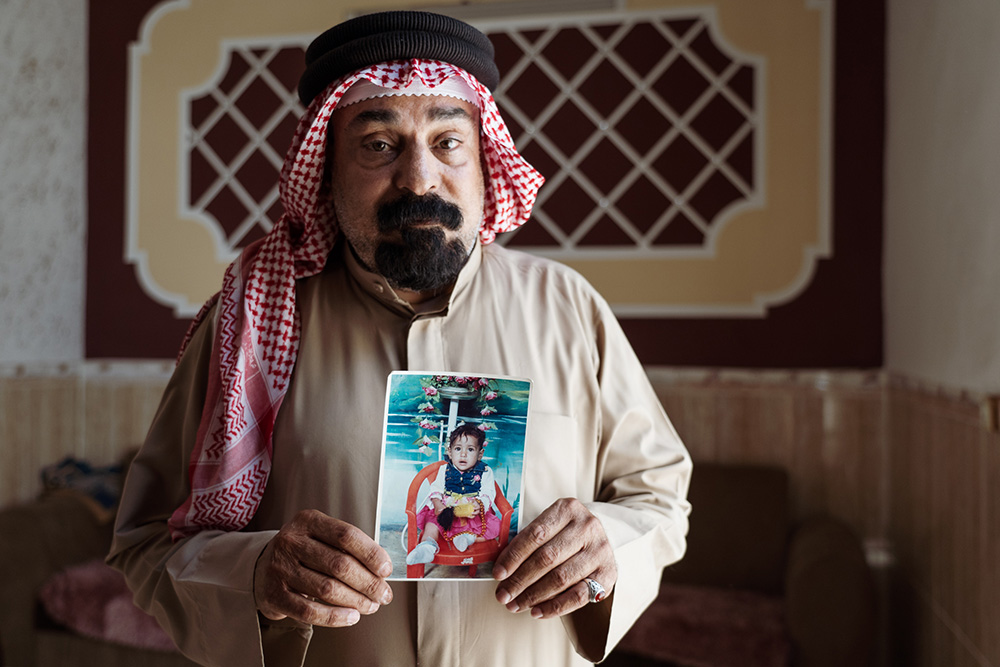
Photos by Jaclynn Ashly
Omar Ahmad Abdallah al-Jamili cannot fully open his mouth. His ear is deformed, and his face is a topography of surgical scars — skin grafted and stretched across bone in operations performed in Amsterdam, the capital of the country whose air force set him on fire.
Omar was four years old on the night of June 2, 2015, when Dutch F-16s — acting on US-supplied intelligence as part of the coalition against the Islamic State of Iraq and Syria (ISIS) — bombed an ISIS weapons factory in Hawija, a town in northern Iraq. A secondary explosion, triggered by tens of thousands of kilograms of homemade explosives in the factory’s sheds, sent a wall of fire across surrounding neighborhoods.
The strike killed at least eighty-five civilians and injured hundreds more, destroying or damaging six thousand buildings across a five-kilometer radius, flattening 1,200 businesses overnight.