India’s Gen Z Protests Are Breaking the Grip of Fear
The protest movement by young people in India has challenged the culture of fear that protects Narendra Modi’s Hindutva government. They are carving out the space for a future without Modi and his divisive authoritarian agenda.
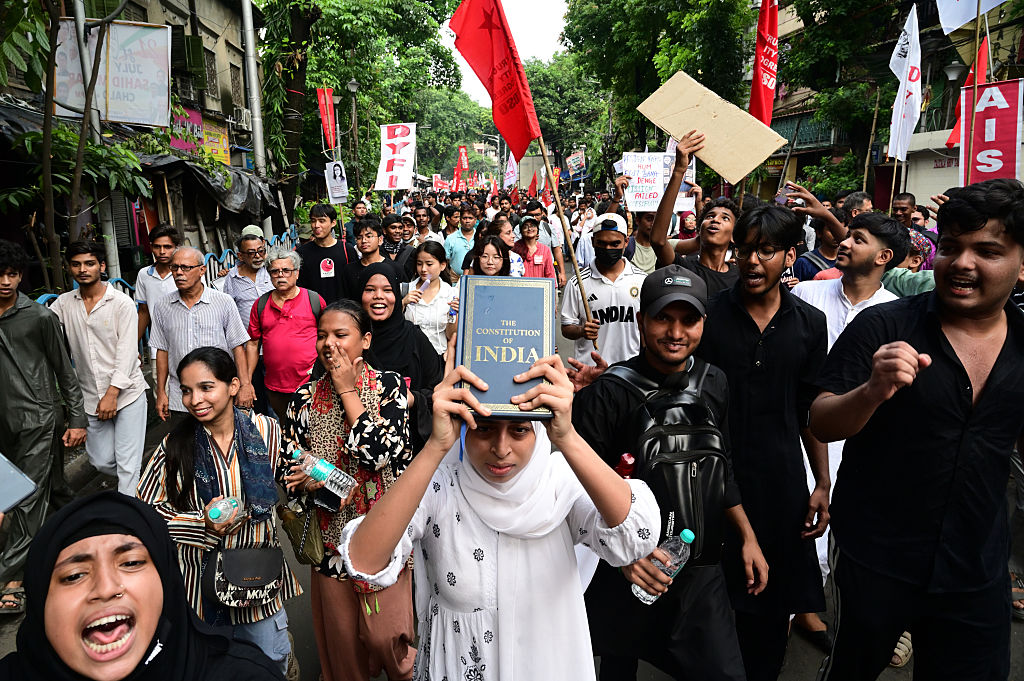
Young Indians who have grown up under Narendra Modi are refusing to treat power as sacred. By not only questioning it but ridiculing it, they are puncturing the aura of invincibility that Hindutva forces have constructed over the years. (Sumit Sanyal / Anadolu via Getty Images)
“I swear, I can die in peace now. I can die smiling.” Coming from the renowned writer and activist Arundhati Roy, these words are startling.
For more than three decades, Roy has stood alongside people fighting to protect their land, their homes, and their rights from destructive development projects, state repression, and policies imposed in the name of national growth. She has seen movements rise and victories won, but she has also seen resistance criminalized, promises broken, dreams crushed, and hopes worn down.
And yet watching India’s Gen Z take to the streets, Roy seemed to glimpse something she had almost stopped expecting: hope.