Who’s Afraid of Gen Z Socialism?
From France to India, young people have led the current wave of protests. Rather than deny the importance of generational politics, we can see it as a way that people make sense of their life chances and of the opportunities they are denied.
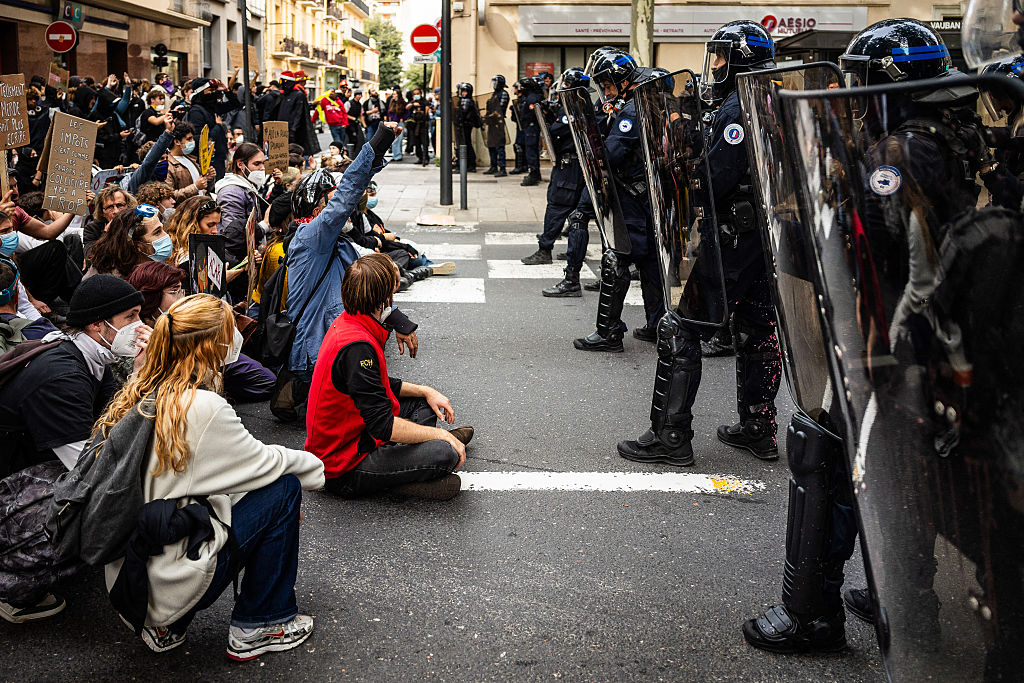
French high school student protesters sit facing police in downtown Perpignan in the Pyrénées-Orientales department in southern France on October 24, 2026. (JC Milhet / Hans Lucas via AFP / Getty Images)
What’s on the mind of the ruling class these days? If the pages of The Economist are a reliable indicator, it’s the specter of “Gen Z socialism”: the rising support among young people for taxing billionaires, socializing the economy, and stopping the genocide in Gaza, as evidenced by the popularity of politicians like New York Mayor Zohran Mamdani, England’s Green Party leader Zack Polanski, or French presidential candidate Jean-Luc Mélenchon. Earlier this summer, the magazine dedicated a whole issue to “fighting back” against this “threat to prosperity,” calling on fellow free-market liberals to “stop apologizing” and level a “punchier defense of capitalism.” The rage bait worked: the magazine’s mailbox was flooded with critical responses, a selection of which it later published in a section titled “Were we too quick to attack Gen Z socialism?”
The real pushback, however, has come from the streets. Around the world, Gen Z–led mass movements are decrying the rising cost of living and political corruption, as well as calling for better education, health care, and environmental protections. India is a case in point: on the very day that The Economist’s editorial was published, tens of thousands of angry young protesters flooded New Delhi, engaging in street battles with a disoriented and violent local police force and bringing the heart of the Indian capital to a standstill. The protests had been sparked by remarks made by Indian Chief Justice Surya Kant, who had compared unemployed young people to “cockroaches” and “parasites” during a Supreme Court hearing. Initially focused on educational accountability, the movement has since broadened its platform to include demands for electoral and economic reforms.