The New Canada-EU Deal Is More of the Devil We Know
Instead of fostering a more democratic path to development, Canada and the EU are strengthening alignment through fossil fuels, weapons production, and customary geopolitical maneuvering.
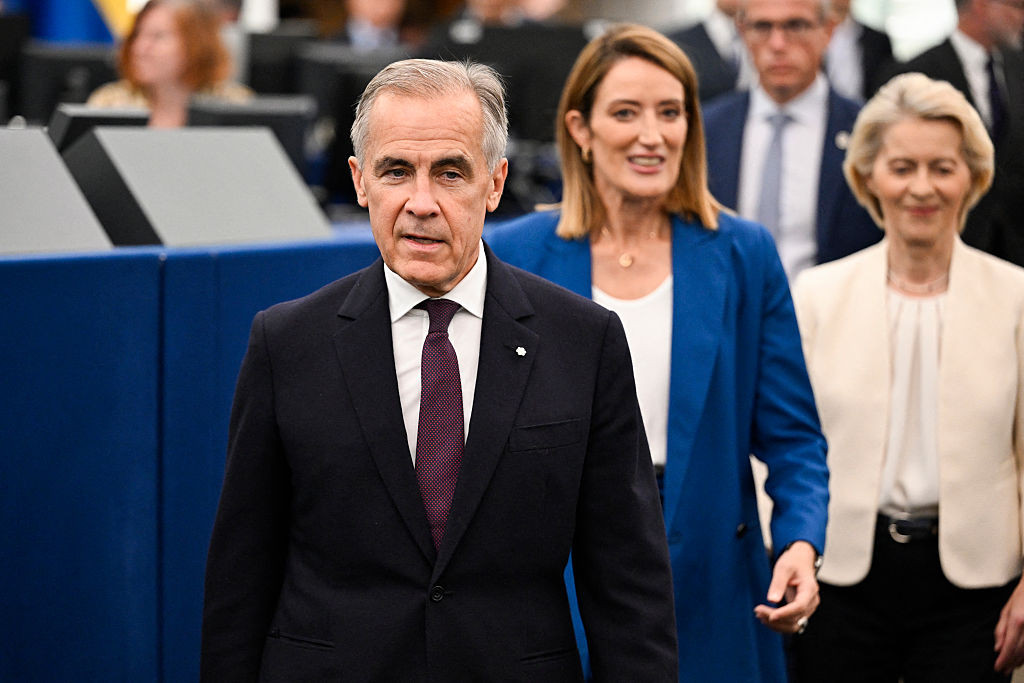
Canada and the EU are crowing about their new partnership. But the deal risks furthering reliance on arms and fossil fuels while mistaking militarism for a sustainable model of development. (Jean-Christophe Verhaegen / AFP via Getty Images)
European Commission President Ursula von der Leyen wants Canada to become the first “associate member” of the European Union. For Canadian Prime Minister Mark Carney, it is a deal that he can present to his country as reducing its economic dependence on the United States. For the EU, it will help show, by building bridges with a like-minded democracy, that the bloc will remain a major player in a world order of declining American power.
Creating a category of associate membership presents its own set of challenges, given the notorious difficulty of reforming the EU.
However one slices it, the devil will be in the details. As things stand, there is good reason to believe the deal will mostly be about fossil fuels and the arms industry. If this is the case, it will merely cement the direction that Canada-EU relations were already headed in. Canada has become increasingly integrated into Europe’s defense industry since Carney took office. Canada will also be hosting a first-of-its-kind global defense bank that is primarily European-backed.