Trump’s Art of the Bad Deal Comes to Canada
Donald Trump’s trade demands, which would have killed off whole sectors of the productive economy, like auto, were impossible to accept. The negotiations’ collapse could open space for democratic industrial strategy that rejects free trade.
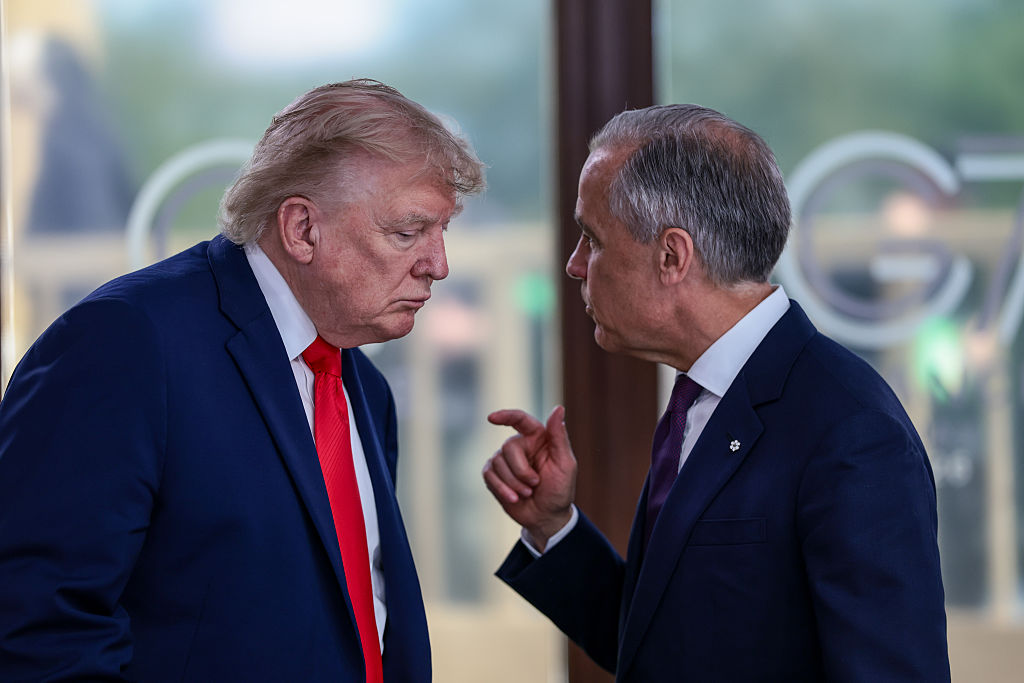
Canadian workers have no interest in undercutting their US counterparts, but they cannot accept a deal that wrecks their industrial base. Donald Trump wants not a deal but Canadian vassalage. Rejecting his terms will defend jobs and economic sovereignty. (Evelyn Hockstein / Pool / Getty Images)
Canadian Prime Minister Mark Carney’s decision to withdraw his trade negotiating team from Washington last Friday was surprising and refreshing. Surprising because Carney clearly wanted a deal and has a record of conceding to Donald Trump again and again, to no effect, in hopes of securing one. Refreshing because the deal on offer would have been terrible for Canadian workers.
The interests of labor and capital are not the same, and Carney’s position is not the Left’s. Canadian workers care about the health of their country’s productive base but have no interest in undercutting American workers in this trade war, which is doing the latter no favors in any case. The industries in Trump’s crosshairs support millions. Their destruction would devastate communities on both sides of the border, weaken the tax base for public services, and cede decision-making to forces outside Canada. Economic sovereignty may not in itself be a democratic economic program, but it is the precondition for one.
Keeping Trump off the Ice
Prime Minister Carney, a banker with few progressive inclinations and little time for public servants, now faces a political dilemma with intriguing possibilities for the Canadian left. Unable, because of public and political opinion, to sign a bad deal with Trump but facing imminent deindustrialization in a number of sectors, Carney’s government may be forced to consider developmentalist alternatives to the market-led growth and free trade model that has shaped North America since the late 1980s.