Dolly Parton Used Her Voice to Tell Working-Class Stories

For decades, Dolly Parton, who died yesterday at age 80, wrote about poverty, hard work, and the defiant pride of working-class women. The Left should steal a page from her songbook.
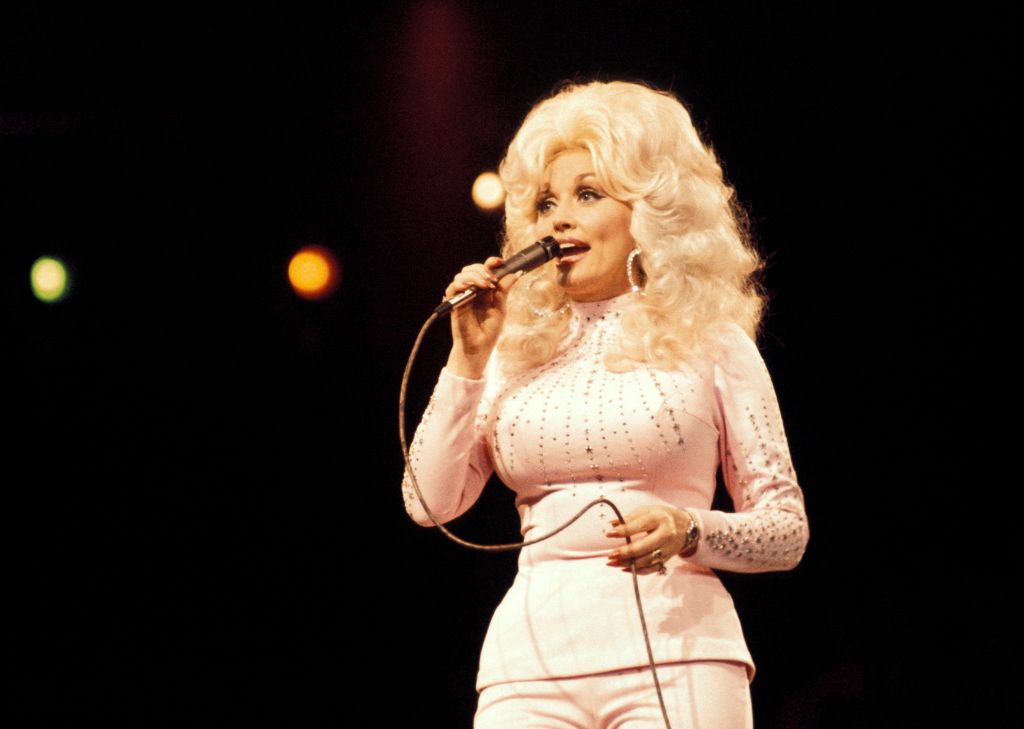
Country music legend Dolly Parton performs live onstage at the UK Country Music Festival.

There’s a reason Dolly Parton’s anthems have outlived every attempt to co-opt them: they are powerful depictions of the pain and defiance of working-class people. (Andrew Putler / Redferns via Getty Images)


Legendary singer, songwriter, and cultural icon Dolly Parton died on August 25 at age eighty. Her death immediately inspired a flood of praise from stars and public figures, as well as a flurry of chatter on social media.

Few public figures right now would attract such universal accolades. The Empire State Building was lit up in pink in her honor, and President Donald Trump ordered American flags lowered to half-staff for a week.

Indeed, Parton’s appeal transcends political divisions in a time when many cultural rifts seem beyond repair; Republican Speaker of the House Mike Johnson and his political opponent, Democrat Chuck Schumer, are only two of many politicians who expressed affection for the late star.

Parton endures above all for her triumphs as a musician: she sold a hundred million records, landed forty-four albums in the country music top ten, and crossed over into the Hot 100. Of the more than three thousand songs she wrote, several are among pop music’s most beloved, including “Jolene,” “9 to 5,” and “I Will Always Love You” — the latter made instantly recognizable by Whitney Houston’s immortal cover.

But Parton outgrew her humble origins as a Nashville songwriter, becoming a larger-than-life wisecracking icon in pop culture writ large. A March 2026 poll found that 70 percent of surveyed Americans had positive feelings about her, and many online commentators used her as a yardstick for likeability.

During her career, Parton won acclaim for her philanthropy and support for marginalized social groups — especially the LGBTQ community, who has always had a thing for her.

Even so, she explicitly refused to take a stand on current politics, saying, “I don’t do politics. I’m an entertainer.” Parton also had a series of gaffes later in life, including duetting with Kid Rock and rerecording “9 to 5” as a schlocky pro-business jingle for Squarespace.

That doesn’t matter. Regardless of her views, Parton was one of the most consistent voices for working-class people. She used her songs to tell stories of hard work, poverty, and defiance, transforming the lives of ordinary people into subject matter for heroic ballads.

Zohran Mamdani put it best when he characterized Parton as an “irreplaceable champion of the working class.”

Today, we mourn that great champion of the working class.

A Working-Class Voice

Throughout her career, Parton defied polite norms and smashed the stereotypes that were used to dismiss rural women’s concerns.

She was famous for self-deprecating quips like “it takes a lot of money to look this cheap,” embracing an aesthetic that was often dismissed because of its class origins. The singer often bragged that she modeled her look on her rural community’s “town tramp,” saying, “She was the prettiest thing I’d ever seen. When everybody would say, ‘Oh, she’s just trash,’ I’d say, ‘Well, trash is what I’m going to grow up to be.’”

This sensibility permeated Parton’s music, which cast tramps, widows, hungry children, divorcees, and other working-class women as narrators. Her songs told tales of poor families who nevertheless held their heads high and carried on even when the deck was stacked against them. She also wasn’t afraid to tackle difficult themes like women’s sexuality and marital infidelity.

These topics were central to her music during the 1960s and ’70s. For example, the title track from her 1969 In the Good Old Days (When Times Were Bad) captured the pain of farm workers who toil from sunup to sundown only to watch their crops get beaten down by hail. The song spoke of families too poor to go to the doctor as they watch their house fall into disrepair.

The record also featured covers of Tammy Wynette’s “D-I-V-O-R-C-E,” which candidly addressed the pain of marital separation, and Jeannie C. Riley’s beloved crossover hit “Harper Valley PTA,” which told the story of a widow who exposed the hypocritical scolds who called her an unfit mother.

These tracks directly linked Parton to an era of powerful women singers who tackled controversial issues. In addition to Wynette and Riley, that era saw some of the finest moments of singers like Bobbie Gentry, who boldly addressed women’s sexuality, suicide, and prostitution, as well as Loretta Lynn, who unapologetically spoke about gender inequality on tracks like “Don’t Come Home A-Drinkin’ (With Lovin’ on Your Mind)” (1966) and “The Pill” (1975) — the latter of which was explicitly about birth control.

This era also hosted men like Johnny Cash, John Prine, and Kris Kristofferson, singers who documented the ugly and beautiful things that were often ignored or pushed out of view. Parton was only one of many artists who treated country music as a space for telling the hard truths about a society that was often cast in a rosy light by its apologists.

She stands among the best of them for the power and passion that infused her treatment of her subject matter.

In the 1970s, Parton continued to expand her themes and grow her reputation. Even while breaking into television as a cohost alongside the rhinestone-clad Porter Wagoner, she continued to put out albums that dove into the dark and difficult side of life.

Her “Coat of Many Colors” (1971), for example, turns childhood poverty into quiet defiance. The track tells the story of a child who goes to school with patchwork clothes and worn-through shoes, ignoring the bullies because she knows her family is rich in spirit.

My Tennessee Mountain Home (1973), a concept album about her childhood in East Tennessee, features “Daddy’s Working Boots,” one of the greatest odes to the toil and sacrifice of working people.

And then there’s “Jolene,” from her 1974 album of the same name. It’s a potent story of a woman who fears she’ll be left behind for another woman.

Working 9 to 5

Parton’s most recognizable and powerful depiction of class is “9 to 5,” a story of a woman who is “trapped in a rich man’s game.” The song was penned for the 1980 film of the same name, which saw Parton star alongside Jane Fonda and Lily Tomlin as three exhausted women who turn the tables on their sexist, exploitative boss.

Parton wrote the track while working on the film. She drew inspiration from the clicking of her fingernails, imitating the clacking of a secretary’s typewriter. (Parton is credited on the track for performances on both lead vocals and “nails.”) The song landed at number one on three different Billboard charts — the Hot 100, Adult Contemporary, and Hot Country Songs.

This track has sometimes been criticized as a resilience narrative, a paean to sucking it up and getting it done. That theme is central to Parton’s 2021 Super Bowl commercial for Squarespace, featuring a reworked version of the song where she tells the listener to start a business and “be your own boss.”

This is unfortunate, given both the original track and the subject matter of the film.

Opening with the clacking of a typewriter-like rhythm, Parton’s lyrics chronicle the experiences of an overworked and underpaid woman. She sings about giving your boss “all your time” while he gets “all the credit,” critiquing a system of “all taking and no giving” where workers are “barely getting by.” While the cheeriness of the track left it open to feel-good co-optation, the original is rife with anger about the inequities it describes.

That’s further underscored by the film. Fed up with mistreatment, the three women contemplate murdering their boss and ultimately decide to kidnap him. While he’s hidden away, they take over the business, winning over their fellow employees by instituting reforms like fair pay, better hours, and on-site childcare.

The Squarespace commercial has become the stuff of ridicule — the New Statesman called the song a “sell-out to toxic ‘side hustle’ culture,” while David Sirota described it as “the most dystopian ad I’ve ever seen.”

But the original song is what people remember, a powerful testament to Parton’s working-class messaging at the high point of her career.

Borrowing Her Voice

In the end, Parton wasn’t the Left’s perfect hero. Her views were complex, often rooted in idealized images of resilience and entrepreneurship as much as in representations of a system that was never going to deliver success to everyone.

In that sense, she embodies a tension that is at the heart of country music itself, a genre that has often captured working-class life better than many other genres, yet just as often resolves that pain into status-quo traditionalism rather than confronting its causes.

But music doesn’t always have to double as a political sermon. Art isn’t just here to smuggle in orthodoxies like the textbook of a Marxist schoolmaster.

Parton addressed what people were waiting to hear about: poverty, injustice, labor exploitation, and working-class pride. She did so in a way that was as funny as it was heart-wrenching, producing music that endures long after its moment.

Those subjects are still too rare on the country and pop charts today, not to mention in the Left’s own conception of who its audience is.

Parton gave a voice to those who are all too often forgotten, both in culture and politics. It wouldn’t hurt the Left to steal a page from her songbook.