The Young Ho Chi Minh
Ho Chi Minh emerged from the world created by the Age of Revolution and demanded that republican ideals apply beyond Europe.
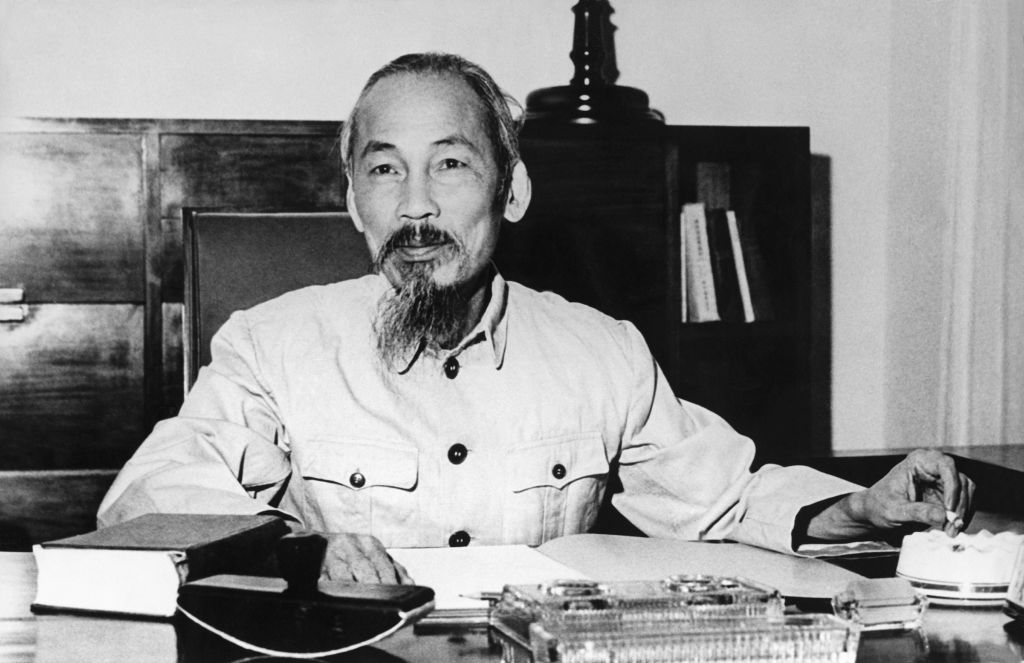
Before he was a global symbol of anti-imperialism, Ho Chi Minh was a young man who took the French Revolution’s promises literally — and demanded they reach the colonized. (Keystone-France / Gamma-Keystone via Getty Images)
On September 2, 1945, in Hanoi, the Viet Minh, led by Ho Chi Minh, issued the Declaration of Independence of the Democratic Republic of Vietnam. Ho was little known in the West then, but by the 1960s his name was chanted by demonstrators the world over, for whom he became a symbol of the Third World’s stand against American imperialism.
In an earlier era, he was known as Nguyen Ai Quoc, the beneficiary of a privileged education who purportedly said that as soon as he heard the slogan “liberty, equality, fraternity,” he wanted to see France. But colonial law forbade native Vietnamese from leaving the country; the only way he could get to Europe was by taking a job on a ship. He traveled first to London, then Paris.
Nguyen’s earliest contacts on arriving in France seem to have been with the syndicalist left. He visited the Librairie du Travail, a labor bookstore, at what had been the offices of La Vie Ouvrière, a revolutionary syndicalist paper published by Pierre Monatte and Alfred Rosmer, who had been some of the most consistent internationalists from the first day of World War I.