Ken Burns Makes the Case for the Greatness of 1776
Ken Burns talks to Jacobin about his new documentary, The American Revolution; the ongoing project of 1776; and why the Declaration of Independence was far more than a revolt of slaveholders and the wealthy.
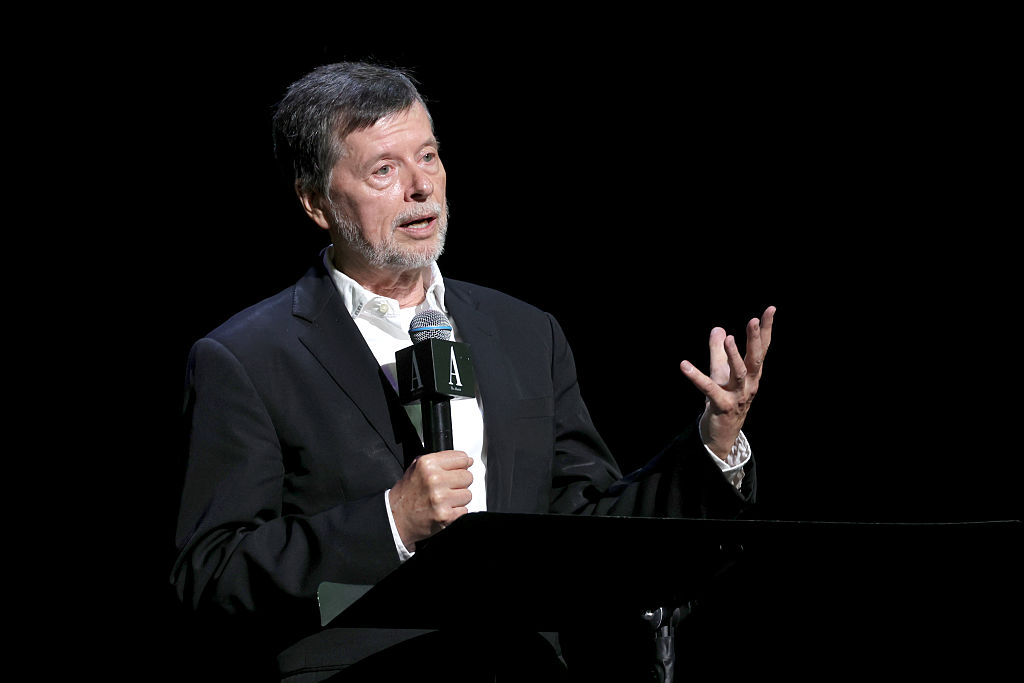
Ken Burns speaking onstage during the New York premiere of PBS’s The American Revolution in New York City. (Michael Loccisano / Getty Images)
Ken Burns, a two-time Oscar nominee and five-time Emmy winner, is arguably America’s greatest documentarian. And with his new six-part, twelve-hour series, The American Revolution — codirected with Sarah Botstein and David Schmidt and written by Geoffrey Ward — audiences finally have Burns’s definitive retelling of the events leading up to, and beyond, “the shot heard ’round the world” at Lexington and Concord. Just in time for America’s two hundred fiftieth anniversary, the series is available to stream and will be rebroadcast in its entirety on July 4, 2026.
Transcending a jingoistic hagiography, the comprehensive series zooms in on the roles played by indigenous nations and enslaved people during the Revolutionary War — here seen as a kind of civil war between Loyalists and Patriots — and the impact of those earth-shattering events on them. At a time when US history is being manicured and purged of unflattering thought crimes under the second Trump administration, Burns’s probing camera boldly presents America, warts and all.
In this interview, Burns discusses his views on America’s Revolution, its flaws and aspirations, what its legacy and place in history really is, and how his team was able to make a cinematic documentary long before the existence of photography.