The War on Terror Enabled Donald Trump’s Authoritarianism
Preemptive war without congressional approval and unchecked executive power were normalized during the “war on terror.” Trump is following the path set by Bush and Obama but pushing it to dangerous extremes, writes CIA whistleblower John Kiriakou.
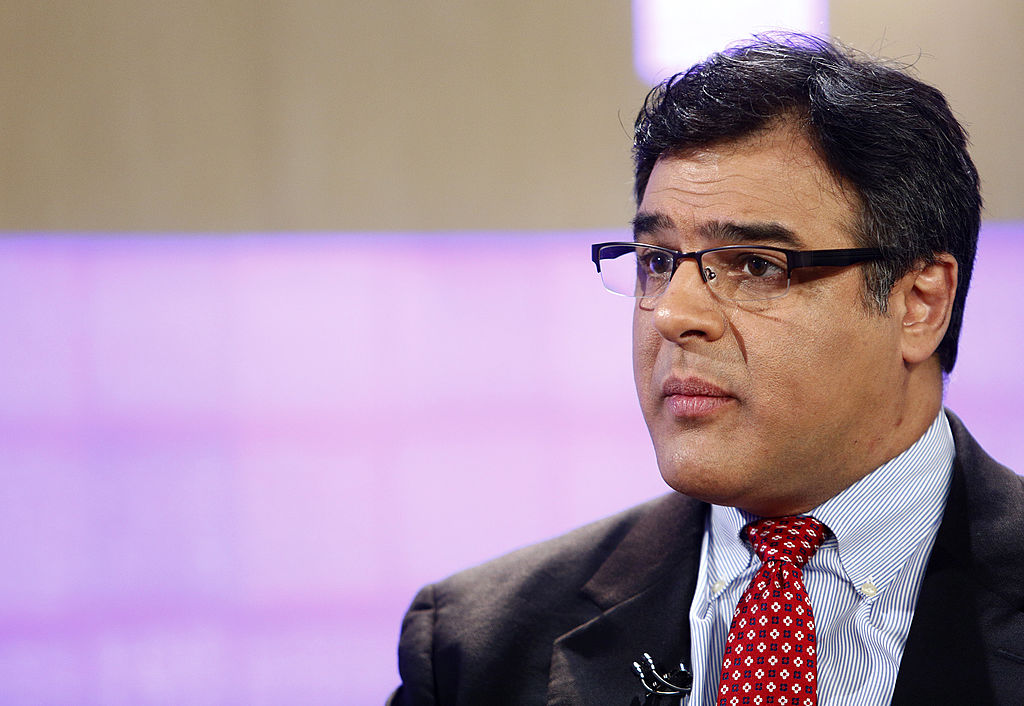
America’s “war on terror” helped remake the Right, explains CIA whistleblower John Kiriakou. It radicalized veterans who would later storm the Capitol and legitimized the idea that the president had the unconstrained right to declare war. (Shawn Thew-Pool / Getty Images)
The September 11, 2001, terrorist attacks marked a paradigm shift in US politics. Following the unprecedented horror and the worst intelligence failure in US history, the United States embarked on the “war on terror:” a sprawling, multifaceted, and in many ways illegal global campaign that profoundly reshaped both foreign and domestic policy. As they waged this offensive, driven by fear, nationalistic fervor, and a desire for revenge, successive US administrations jettisoned liberal democratic norms and legal constraints that had previously defined the American state. In so doing, they sowed the seeds for the authoritarian transformation currently underway.
America’s Descent into Barbarism
I had a front row seat to the CIA’s dismantling of the Constitution. I spent nearly fifteen years at the agency, serving as the chief of counterterrorism operations in Pakistan after 9/11 and then as executive assistant to the CIA’s deputy director for operations during the planning of the Iraq War. It was clear even then that the United States was moving to embrace what Vice President Dick Cheney called the “dark side”: torture, assassinations, secret prisons, and extrajudicial “renditions.” It was equally clear that the Justice Department would sit idly by while the federal judiciary looked the other way. This dismantling of checks and balances, normalization of extrajudicial power, and cultivation of a culture of paranoid militarism laid the ground for the subsequent rise of Donald Trump and the MAGA (Make America Great Again) movement. These forces continue to endanger American democracy, especially as the US far right embraces insurrectionist ideologies.
The Bush administration acted quickly after 9/11 to launch the war on terror with overwhelming bipartisan support. The need for urgency to prevent another attack seemed at the time to justify extraordinary measures that redrew the boundaries of acceptable government conduct. These measures included:
The USA PATRIOT Act, passed by Congress in October 2001, which eroded Fourth Amendment protections by vastly expanding domestic surveillance capabilities, including against US citizens;
Use of the US military base at Guantanamo Bay, Cuba, as a legal no-man’s-land where suspects were indefinitely detained without trial, establishing a precedent for extrajudicial detention;
“Enhanced interrogation techniques,” a euphemism for abuse and torture, which undermined international law and domestic accountability; and
Preemptive war, as in the 2003 invasion of Iraq. This was based on manipulated and utterly false intelligence as well as the logic of “preventive defense” — a profound departure from just war traditions and international consensus.
These policies relied on exceptionalism: the self-serving notion that the United States, thanks to its unique status and threat environment, was singularly entitled to bypass international norms.
Over time, the executive overreach, suspension of habeas corpus, and resort to fear-based rhetoric became normalized. Americans were conditioned to accept a politics of emergency and exception in which the rule of law was no longer paramount but a luxury to be abandoned when times get tough. Consider Guantanamo Bay. This was opened as a makeshift detention camp in January 2002; the CIA filled it within months. At its height, the camp held 684 people. Most Americans had never heard of it; some were vaguely aware that it was a small US military base at the eastern tip of Cuba. I fell into the latter group. But in March 2002, I came face to face with what was really about to happen there.
As the chief of CIA counterterrorism operations in Pakistan, my job after 9/11 was to locate and capture al-Qaeda fighters on the Pakistani side of the Afghan border. This wasn’t hard: they had no money, nowhere to hide, and no way to communicate securely, and they made mistakes. By the first week of March 2002, we had literally filled the jail in Rawalpindi, Pakistan. The Pakistani authorities asked me to move the prisoners out; they didn’t care where. I asked a counterpart in the CIA’s Counterterrorism Center — my home office — what to do. My colleague answered quickly: “Put them on a C-12 (cargo plane), and send them to Guantanamo.” “Cuba?” I queried. “Why would we send them to Cuba?” The response: “We’ve come up with a plan to send all al-Qaeda prisoners to Guantanamo. We’ll hold them there for two or three weeks until we can decide in which federal district court to put them on trial.” That made good sense to me. After all, the 9/11 attacks were still an open criminal investigation, with crimes having taken place in the Eastern District of Virginia, the Southern District of New York, the Western District of Pennsylvania, and the Eastern District of Massachusetts.
The problem arose when Vice President Cheney and his underlings heard about this plan and realized that Guantanamo could serve them as a legal no-man’s land. Cheney instructed the CIA to send almost all al-Qaeda prisoners to Guantanamo and to hold them there indefinitely. Others whom the CIA designated as High-Value Targets — later, High-Value Detainees — were rendered to an archipelago of secret prisons around the world, where they were tortured mercilessly. In the end, almost all the Guantanamo detainees were released. None had been charged with a crime. As of 2025, fifteen prisoners remained there. Six of these have never been charged, while a further seven have not been tried. Most are unlikely to ever go to trial because of policy differences between the military tribunal there and the Office of the Secretary of Defense, which refuses to accept a plea deal.
The Guantanamo detention camp was by no means the only affront to the US Constitution committed as part of the war on terror. The CIA oversaw a prolific torture program for which nobody was ever punished. It ran secret prisons in multiple foreign countries, some of which were established without the knowledge of their presidents or prime ministers, pursuant to handshake deals between CIA director George Tenet and the heads of those countries’ intelligence services. The CIA deployed assassination squads at least through the Obama administration, according to the New Yorker magazine. And it practiced extraordinary rendition, whereby people were captured overseas and then sent to black sites to undergo torture. To be sure, constitutional violations were not confined to the CIA. In 2001, for example, the White House authorized the National Security Agency (NSA) to spy on US citizens in contravention of both the law and the NSA’s own charter. By all accounts, these programs continue.
Abandoning these constraints on the government’s use of force — even lethal force — helped instill a political culture that conflated loyalty to the state with loyalty to a particular ideology: one that prized strength, suspicion, and US supremacy over deliberation, restraint, and diplomatic pluralism. The war on terror did more than erode legal norms; it also reshaped the emotional and psychological terrain of American politics. The post-9/11 years saw a surge of jingoism, Islamophobia, and the public valorization of military and police power. These sentiments provided fertile ground for the emergence of Trumpism:
Paranoia and the “enemy within”: The war on terror targeted threats at home as well as abroad. This fostered a culture in which loyalty was questioned and dissent delegitimized. The same logic now underpins far-right conspiracies about immigrants, Muslims, “leftists,” and even government institutions themselves, as well as far-left conspiracies about conservatives, libertarians, and anti-government “constitutionalist” activists .
Normalized executive power: The bipartisan expansion of presidential powers under George W. Bush continued under Barack Obama, whose administration widened mass surveillance and increased the use of drones for extrajudicial killings abroad. Trump accordingly inherited a system that had already been gutted of serious checks on executive power. He exploited this license to further attack democratic institutions, undermine elections, and improperly empower his political allies. Republicans who had condemned Obama for “ruling by decree” cheered as Trump went on to issue far more executive orders than Obama had .
Militarization: The veneration of the military and law enforcement, alongside a growing popular gun culture, contributed to the normalization of violence in US politics. MAGA’s glorification of militias, police, and military symbolism draws directly from the post-9/11 valorization of force.
Conspiracy and disinformation: The Iraq War was sold on the back of false claims about the Iraqi regime’s purported relationship with al-Qaeda and alleged possession of weapons of mass destruction. The eventual exposure of these falsehoods undermined public faith in established institutions while simultaneously teaching would-be demagogues that emotionally compelling narratives could overwhelm truth. The lesson was not lost on Trump and MAGA leaders, who have constructed an entire parallel reality around false allegations of election fraud, “deep state” enemies, and “globalist” conspiracy.
The war on terror did not merely embolden authoritarian tendencies; it made them seem natural. This dangerous political transformation culminated on January 6, 2021, when right-wing extremists stormed the US Capitol in an attempt to overturn the 2020 presidential election. This insurrection was the logical end point of years of norm-breaking, disinformation, and authoritarian drift. It was also a striking example of how the tools of the war on terror — fear-based politics, mass surveillance, and domestic militarization — had failed to address the most significant threat to American democracy: white nationalist extremism from within. Yet unlike the vigorous post-9/11 mobilization against foreign threats, the state has responded to domestic insurrectionism with caution, even hesitancy. Part of this stems from institutional inertia. But the deeper issue is political: the far right now commands considerable power within one of the two major political parties. Many Republican officials either condoned, minimized, or outright supported the events of January 6. This internal assault on constitutional norms arguably poses a greater threat to American democracy than al-Qaeda ever did.
Matt Kennard’s Irregular Army shows us that this degradation of norms and standards reached into the very heart of the US military, with alarming consequences. By lowering standards to fight endless wars, the Pentagon allowed white supremacists, gang members, and criminals into its ranks, building a chaotic and dangerous army under the flag of the United States. Those who trained in Iraq and Afghanistan would later surface in militias, far-right movements, and, eventually, on the steps of the US Capitol on January 6, 2021. The tools of conquest abroad became the weapons of insurrection at home. The irregular army Kennard revealed is both a symptom and a legacy of this era — a reminder that corruption of the core institutions of state, once normalized, does not remain on distant battlefields but returns home. The stakes of the battle to reverse this dynamic are high: we are talking about the preservation of the Republic itself.