Hungary After Orbán
Viktor Orbán was full of contradictions: a critic of neoliberalism who gave handouts to corporations and a moralist who ended up mired in scandal. But even after his election defeat, it’s unclear how much Hungary will really change.
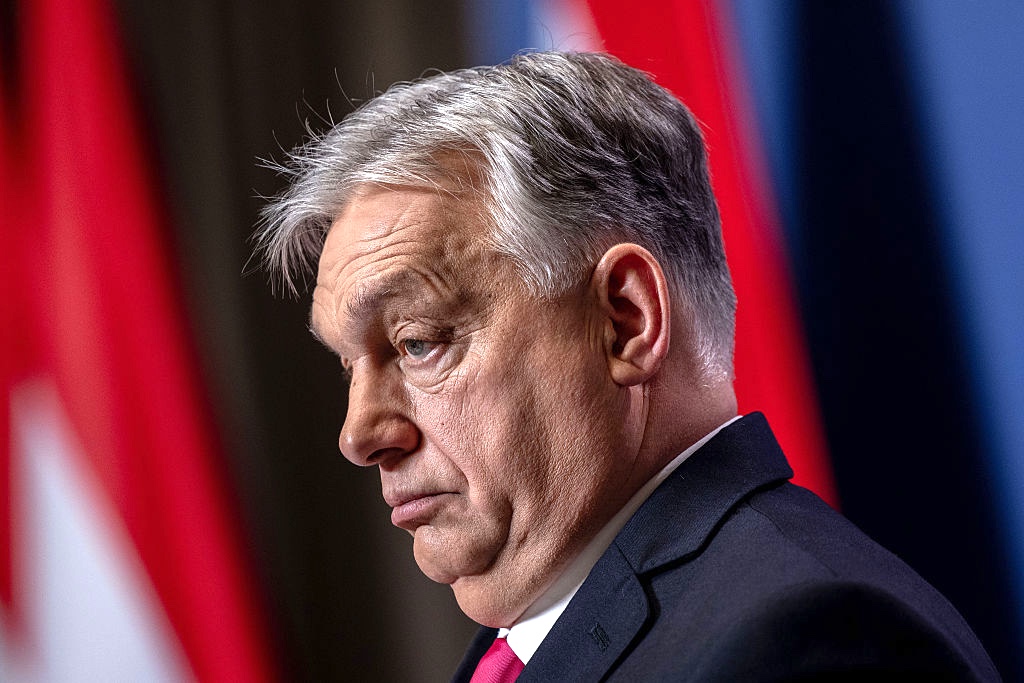
Despite Viktor Orbán’s outsize international profile, this was an election mostly rooted in local realities. (Janos Kummer / Getty Images)
Taunting his defeated opponents on the night of Hungary’s last elections four years ago, Viktor Orbán had boasted that his triumph could be seen from the moon, “or at least, from Brussels.” Four years later — despite the government’s investments in the domestic space program — his opponent Péter Magyar responded: the Hungarian people’s triumph “might not be visible from the moon” but it could be “seen from every Hungarian window.” Gathered along the Danube, his supporters erupted in cheers. A festival-like atmosphere filled Budapest’s streets and much of the country.
Results trickling in throughout the evening confirmed a reversal that had seemed only a distant possibility during much of Orbán’s sixteen-year rule. His Fidesz party was swept aside by the unbalanced electoral system it had devised, which allowed Magyar’s upstart Tisza Party to gain a potentially constitution-altering, absolute majority in parliament. Turnout, at almost 80 percent, was the highest in Hungary’s post-1989 history.
Despite Hungary’s small size and peripheral status, the end of Orbánism made headlines internationally. As right-wing leaders such as Marine Le Pen and Donald Trump eulogized Orbán’s legacy, most of the liberal response has focused on the country’s imminent “return to Europe” and the reestablishment of democratic norms. More tempered voices on the Left pointed out that the new parliament would be entirely right-wing; Magyar himself had been a member of Orbán’s Fidesz party until 2024 and sits with the conservative European People’s Party fraction in the European Parliament. Some claimed that nothing had — or could — change: this was simply Fidesz 2.0.