Viktor Orbán’s Hungarian Model Has Collapsed
Hungarian leader Viktor Orbán combined talk of defending Hungary’s traditions with a promise of prosperity. When he stopped delivering workers good economic news, culture-war messaging wasn’t enough to save him.
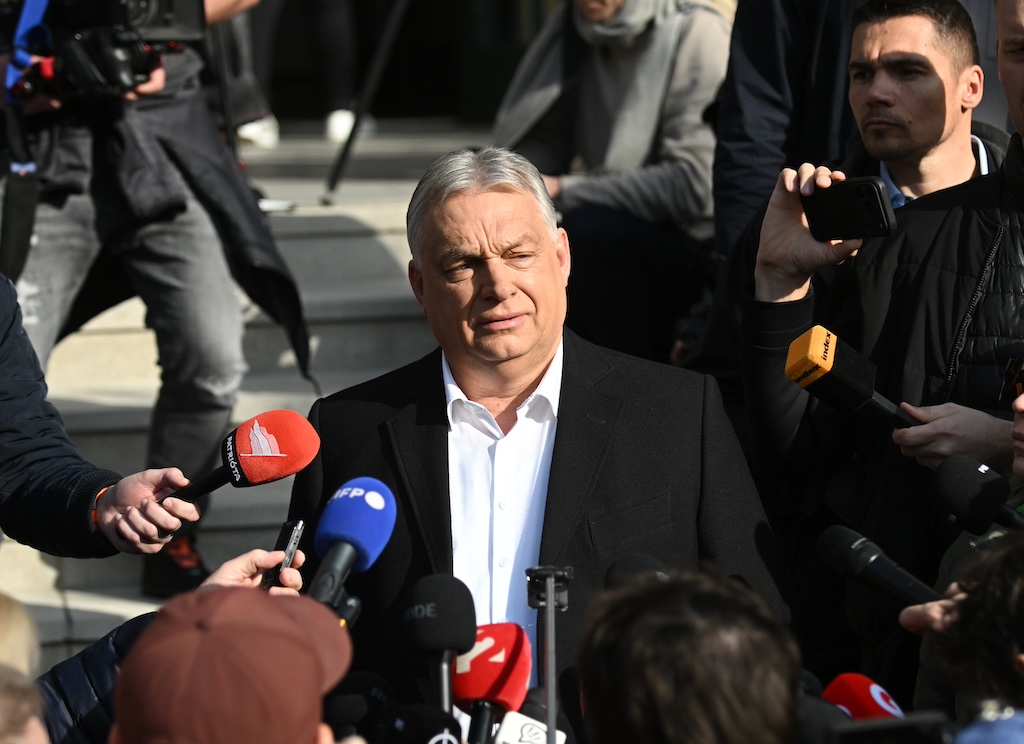
Hungary’s Viktor Orbán lost the election because of splits in his own base. (Balint Szentgallay / NurPhoto via Getty Images)
Reacting to news of Viktor Orbán’s defeat in Sunday’s Hungarian election, many of his admirers insisted that he had, after all, done a good job. Jordan Bardella, president of France’s Rassemblement National, wrote that Orbán had “led Hungary’s economic recovery, promoted family policies that helped maintain the birth rate, and defended his country and Europe’s borders against migration.” Dutch nationalist leader Geert Wilders insisted Orbán was “the only leader with balls in the EU”; for others, the fact that he had admitted defeat proved his democratic spirit.
Many accounts focus on Orbán’s authoritarian hold on power, whether rewriting the state’s Fundamental Law or packing the Constitutional Court. His Fidesz party’s influence on public media and the education system was also an important tool for shaping opinion.
Yet the fact that Orbán has now been ousted at the ballot box tells us that he had relied on a more organic kind of support that has been exhausted. While voter turnout soared on Sunday, his Fidesz party’s base shrank from 3.1 to 2.3 million.