The Spirit of the Americas Against the Donroe Doctrine
New York City’s Avenue of the Americas reflects a New Deal gesture toward hemispheric cooperation. April 14, Día de las Américas, offers a chance to revive that spirit by affirming Pan-American solidarity, self-determination, and social equality.
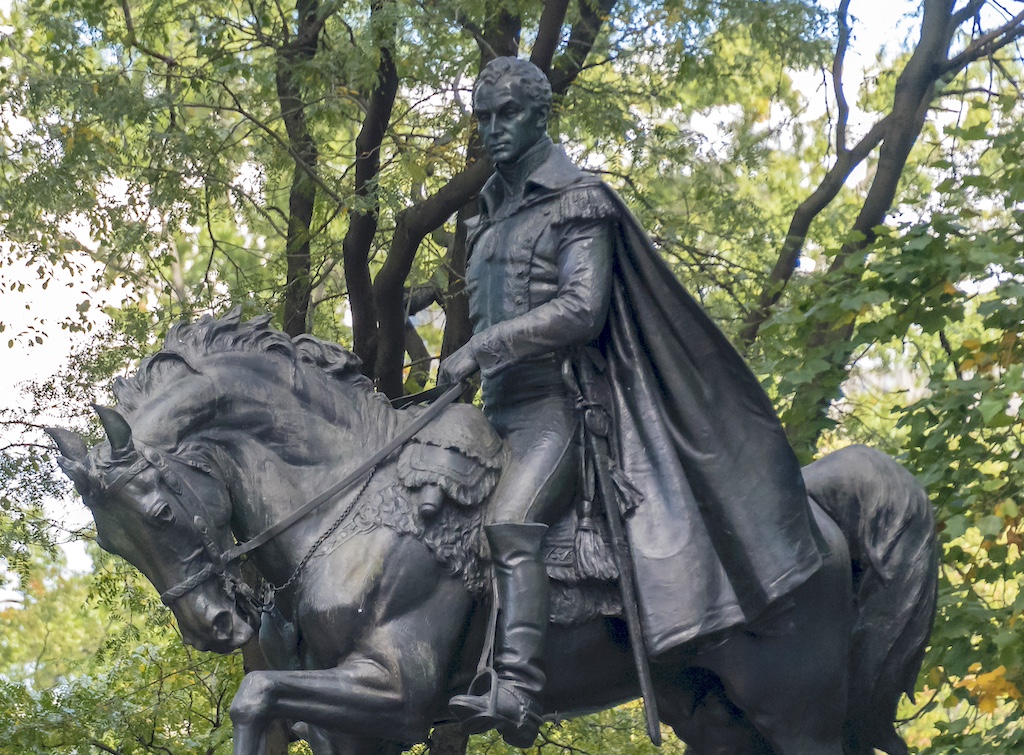
A statue of Simón Bolívar, one of the seven such tributes to Latin American leaders and liberators on the Avenue of the Americas. (Roberto Machado Noa / LightRocket via Getty Images)
On October 2, 1945, Mayor Fiorello La Guardia — whom Zohran Mamdani has consistently cited as his “all-time” favorite New York City mayor — signed into law a city council bill renaming Manhattan’s Sixth Avenue to the Avenue of the Americas. Weeks later, he presided over a grand renaming ceremony, flanked by flags from across the western hemisphere and joined by Chilean president Juan Antonio Ríos, who installed the new street sign himself.
Renaming Sixth Avenue was a hyperlocal policy, but it was designed with geopolitical intent. La Guardia was firmly aligned with President Franklin Delano Roosevelt not only in his domestic New Deal agenda but also with FDR’s progressive foreign policy vision for the western hemisphere. Dubbed the “Good Neighbor Policy,” FDR attempted to reorient US policy in the Americas away from its long history of overt military intervention and toward a vision of cooperation, trade, sovereign equality, and New Deal–style social democratic economics.
The policy intended to forge hemispheric unity in the global struggle against fascism, a cause in which La Guardia fervently believed. Indeed, in addition to his now celebrated anti-fascist radio broadcasts to Italy, La Guardia also had a radio program that aimed to counter German and Italian propaganda in South America.