Why Yemen’s Houthis Opened a New Front in the Iran War
Pushed by Tehran and domestic pressure, Yemen’s Houthis attacked Israel and joined the regional conflict. But they remain wary of reigniting their costly war with Saudi Arabia.
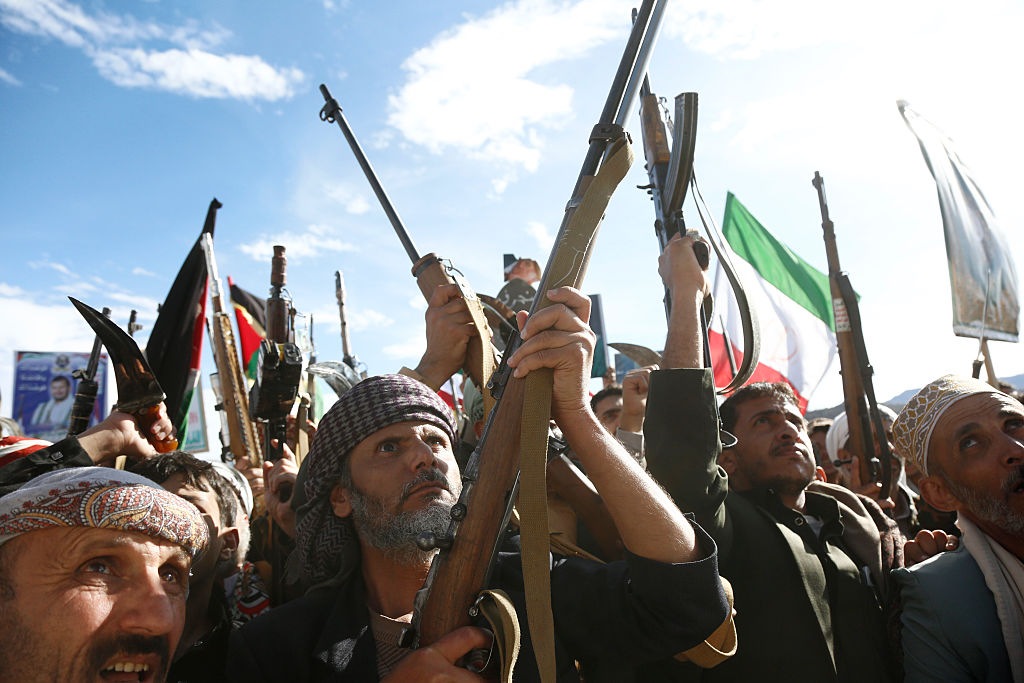
The Houthis have entered the Iran War, launching two ballistic missile attacks on Israel. (Mohammed Hamoud / Getty Images)
In his inaugural speech on March 12, Iran’s new supreme leader, Mojtaba Khamenei, announced that “new fronts” would be opened in Tehran’s war against the United States and Israel. Khamenei singled out Yemen’s “brave and faithful” Houthi movement, which forms part of a now-reduced resistance coalition of Iraqi and Lebanese militia fighting to “shorten the path to eliminating the Zionist sedition.”
On March 26, the Houthis entered the war, launching two ballistic missile attacks over 2,000 kilometers into Israel. The date was selected to fall on the eleventh anniversary of the start of Saudi Arabia’s unsuccessful seven-year-long bombing campaign, launched in 2015, to roll back the Houthi takeover of the capital city Sanaa and much of northern Yemen, territory on which two-thirds of the population live.
In a speech on “the National Day of Steadfastness,” the movement’s leader, Abdul-Malik al-Houthi, made a distinction between the Houthi intervention and the Arab nations in “servitude to the tyranny” of “Zionist Jews and their Western Zionist supporters.”