When German Socialists Mobilized Against Genocide in Namibia
German imperialism was responsible for the first genocide of the 20th century in its Namibian colony. The country’s socialist movement spoke out vehemently against the atrocities, offering solidarity across the barriers of race and geography.
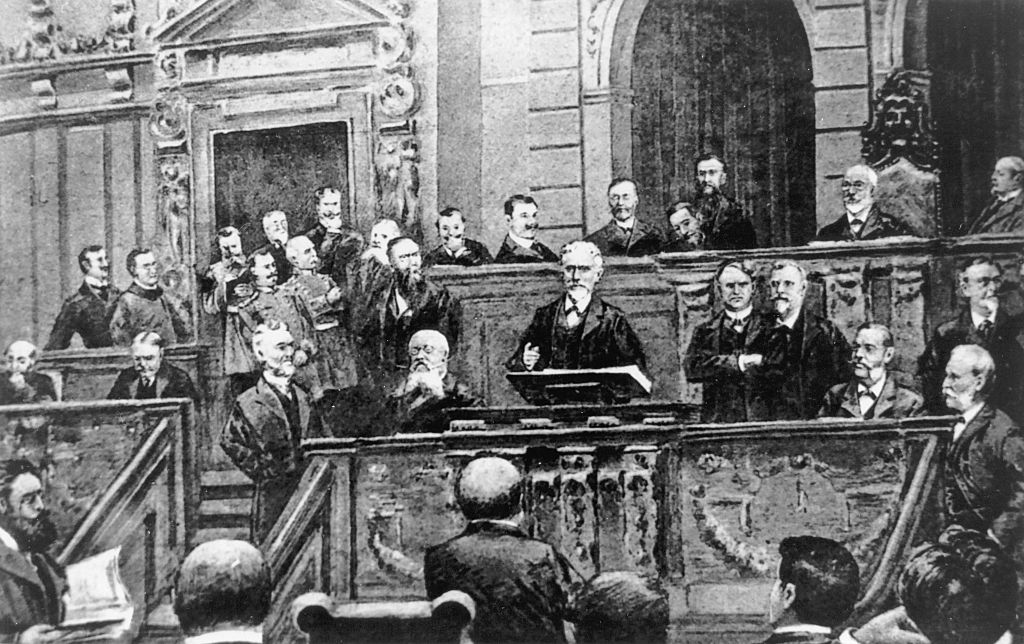
When the people of Namibia rose up against German rule, the socialist leader August Bebel compared them to the ancestors of modern-day Germans who fought against the Roman Empire. His praise for the uprising enraged Germany’s colonial lobby. (Ullstein Bild via Getty Images)
It was the first genocide of the twentieth century.
In January 1904, the Herero people of Southwest Africa (today’s Namibia), who had been under German rule for just twenty years and who were losing control of their lands and cattle to German settlers, rose up against the colonizers, killing about a hundred Germans. The German government responded by sending an expeditionary force under General Lothar von Trotha, a veteran of colonial wars, to reinforce the German garrison in the colony.
By August, Trotha was in a position to attack the lightly armed Hereros with artillery and machine guns, defeating them and driving them into the Kalahari Desert. In October, Trotha issued what became known as his “extermination order,” which included the following words: