The Historic Strike That Transformed the Danish West Indies
In 1916, a mass strike led by black labor organizer David Hamilton Jackson upturned power relations in the Danish West Indies. Its success owed partly to support from Denmark’s labor movement — a true labor internationalism as rare then as it is today.
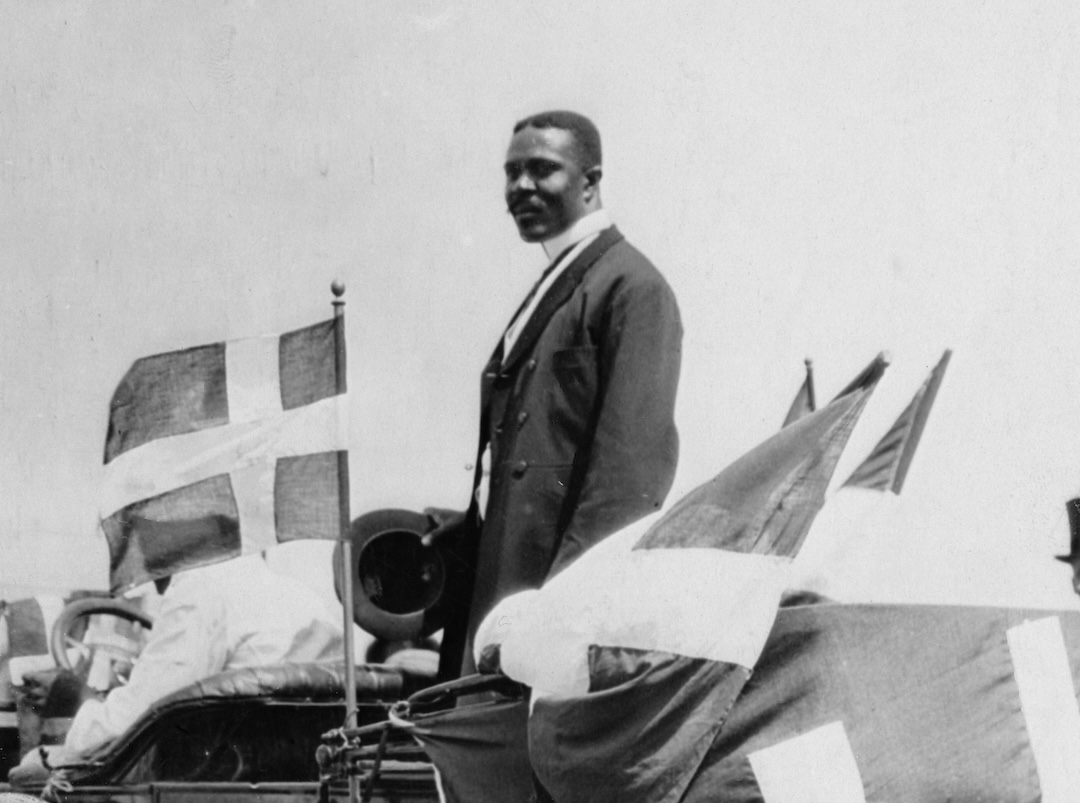
One of the most significant events in the US Virgin Islands’ history has largely escaped historians’ attention: the early 1916 mass strike of plantation workers organized and led by the Danish West Indian labor leader David Hamilton Jackson. (FPG / Getty Images)
That Denmark was once a slave-trading and slaveholding empire remains relatively little known outside of the former Danish West Indies, known since 1917 as the US Virgin Islands. Nor have the Danes been eager to acknowledge a chapter of history rather at odds with national self-understanding.
Two initiatives of the National Archives — a 1999 reorganization and recataloging of the extensive archival material that had long sat undisturbed, and a large-scale digitization project of those records in anticipation of the 2017 centennial of the colony’s sale to the United States — have happily resulted in a wave of new research and, indeed, something of a national reckoning in the public sphere. While this process remains ongoing, a significant victory was achieved in 2018 with the erection in Copenhagen of a monument to Queen Mary, one of the three “Rebel Queens” who led a plantation workers’ revolt in 1878, remembered today as the Fireburn.
Despite this new interest, one of the most significant events in the colony’s history has largely escaped historians’ attention: the early 1916 mass strike of plantation workers organized and led by the Danish West Indian labor leader David Hamilton Jackson. The first successful strike action of non-white workers in Caribbean history, the magnitude of this achievement cannot be overstated. Over the course of just a couple of months, with no real experience of labor organizing, thousands of plantation workers on the sugar-producing island of Sankt Croix (the colonial name of Saint Croix) came together and, just in time for harvest season, laid down their cane knives to a man. And even more astonishingly, in the face of near absolute intransigence from the planters, the workers of the Sankt Croix Labor Union managed to outlast and outwit their opponents.
The events of 1915 and 1916 on Sankt Croix are of broader historical interest in their own right. But a further wrinkle in the story demands just as much attention: the struggle in the Danish West Indies was conducted with the active and productive collaboration of the labor movement back in Denmark, or at least segments of it. Examples of such coordination between colonial and metropolitan organized labor during the first age of globalization are, sadly enough, exceedingly rare, as the much-celebrated internationalism of the Second International more often than not ended at Europe’s borders. And as historian Jonathon Hyslop has demonstrated, relations in the most extensive of the empires of the Belle Epoque, that of the British, were thoroughly infected with the ideology of “white laborism.” For a brief moment, however, matters in the declining Danish Empire proceeded differently.
The Most Humane Colonial Power
What would come to be known as the Danish West Indies was established in the late seventeenth century and consisted primarily of three large islands: Sankt Thomas, Sankt Croix, and Sankt Jan. Chattel slavery was practiced from early on until emancipation in 1848, although Denmark’s status as a decidedly minor imperial power meant that the nature of the Danish West Indian slave economy differed substantially from its more powerful neighbors in two key respects.
First, because Denmark-Norway had neither the surplus population nor the expertise to settle the colony “properly,” the early settlement was drawn largely from neighboring colonies, principally those of Britain, France, and the Netherlands. This gave the colony a highly cosmopolitan character from the start, with Danish migrants never constituting more than a tiny fraction of the white population. And second, the kingdom’s marginality on the imperial stage meant that Denmark was never able to impose the kind of strict mercantilist policies that had turned its rival’s colonies into virtual mints. The colonial economy was thus unusually integrated with the larger regional economy, and the fortunes of Danish sugar production dependent on externalities; periods of boom and bust tended to track closely with events elsewhere in Europe and the Caribbean.
As Scandinavian exceptionalists are always happy to remind us, Denmark was the first to ban the transatlantic slave trade, in 1803, some four years before Britain. Yet slavery would continue on the islands for more than four decades, until a general uprising resulted in an emancipation decree in 1848. By that time, however, there were clear signs of the problem that afflicted so much of slave plantation agriculture across the New World. As many a Yankee soldier learned in the grand march across the Deep South, planters not only abused their “human capital” but also tended to evince similar disregard for the soil on which their slaves toiled. Thus, in addition to suffering the indignity of paying wages, planters had to confront the reality of steadily declining yields for the remainder of Danish rule.
The newly emancipated plantation workers saw little improvement in their material conditions, and in certain respects, conditions actually worsened. Danish officials succeeded in imposing a draconian system of debt peonage upon their only nominally free subjects; particularly odious was the Labor Code introduced in 1849, which compelled workers to sign annual contracts binding them to the very same plantations they had previously worked as slaves. Three decades of stagnation thus resulted in the previously mentioned uprising, the Fireburn of 1878, in which more than eight hundred acres of sugar-producing land on Sankt Croix were burned and its largest town, Frederiksted, was looted. Eventually put down with the assistance of the US, British, and French navies, the uprising put an end to the Labor Code, significantly increasing mobility within the colony — although, in the interest of maintaining a declining labor force, out-migration would remain strictly limited for years to come.
It is also during this period that the enduring myth of Scandinavian colonial exceptionalism took root. No longer a reliable source of income, continued Danish rule of the West Indies was increasingly justified with resort to the pretense of paternalism. As Lill-Ann Körber has argued, this has manifested in a persistent national self-perception of Denmark as “the most humane colonial power,” as a qualitatively distinct practitioner of “innocent colonialism.” And as Kirstin Thisted has recently demonstrated, this is even more so the case with Greenland, which became unprofitable after the commercialization of the kerosene lamp in the mid-nineteenth century.
The near-universal Danish belief that Denmark’s colonial subjects were intellectually and morally little more than children, incapable of self-government and thus in need of the benevolent guiding hand of their Danish rulers, would ironically come back to haunt them when the plantation workers of Sankt Croix began to assert themselves in 1915.
Enter David Hamilton Jackson
One of the handful of emancipated slaves who managed to escape the plantations was Peter Jackson, who settled in Christiansted in the 1860s and found work as a carpenter; his son Wilford, David Hamilton’s father, was appointed as a schoolteacher in 1882, thus ascending to the small black middle class on the island. On his mother’s side, David Hamilton was descended from free blacks of British Antigua, his grandfather having emigrated to Sankt Croix in 1841, also for a teaching position. Born in 1884, just a few years after the Fireburn, David Hamilton thus grew up in a bilingual family of teachers and true to form began work as a teaching assistant at the age of sixteen. Involved in various local reform movements from 1902 forward, Jackson was known to local authorities as a troublemaker, if not a particularly political one.
His rise to prominence began in December 1914 with the appearance of his first newspaper editorial, “Why is not a Negro-Press established in the Danish West Indies?” The subhead read, tellingly, “The Press, and not the Torch, shall make us free.” It is critical to stress here that Jackson could by no means be described as a militant or radical in this early phase of his development, even if his emergence caused considerable unease among the local white elite. And since the article was intended for publication in Denmark, it also demonstrates Jackson’s apparent early belief that the immiseration of the black masses of Sankt Croix was wholly due to local misrule, and that a direct appeal to the Danish state, or even the monarchy, might bring real change.
With the outbreak of World War I, material conditions on Sankt Croix immediately began to deteriorate, as prices for basic necessities, almost all of which were imported, began to skyrocket. That a similar rise in sugar prices, resulting in ballooning profits for the planters, was not accompanied by wage increases pushed the situation to a breaking point. The first few months of 1915 thus saw Jackson’s tone sharpen considerably, as he issued a series of increasingly devastating attacks on the local administration in the somewhat sympathetic white-owned West End News. Primary among his targets were governor general L. C. Helweg-Larsen, police captain N. C. M. Fuglede, and administrative director H. O. Schmiegelow, the latter responsible for enforcing the labor code reforms instituted after the Fireburn.
But it was not long before the West End News turned on Jackson, banning him from its pages. Deprived of a platform for airing the many legitimate grievances of the black population, Jackson launched a public lecture series on “The Right of Natives” in February. It was during these increasingly well-attended meetings that the idea of raising funds for a journey to the Danish capital was floated. After sufficient collections were taken in, Jackson announced his intention to travel to Copenhagen to present a set of demands for reform to Radikale Venstre Finance Minister Edvard Brandes, whose portfolio included colonial affairs.
Jackson Journeys Abroad
Jackson departed for Denmark on April 20, 1915. But first he made an important stop in New York, where he lectured on conditions in the colony before members of the sizable Danish West Indian expatriate community. Among the audience was his childhood friend Hubert Harrison, known to US historians as the “black Socrates” and the lead organizer of black workers for the Socialist Party of America. Another attendee was Caspar Holstein, soon to be king of the Harlem numbers racket as well as, despite his criminal associations, a generous funder of the Harlem Renaissance and a fierce advocate for his native land after its transfer to the United States in 1917. These initial connections with US African American activist circles would prove to be just as valuable as the links Jackson would soon forge with the labor movement in Denmark.
Arriving in Copenhagen on May 13, Jackson was warmly received by Finance Minister Brandes the very next day, where he presented the list of grievances that had been agreed upon back on Sankt Croix. Once again, the essential modesty of Jackson’s proposals must be emphasized. Instead of demanding genuine political representation for the black population, he asked for an extension of the franchise for elections to the colonial council, a largely advisory body with no real power. Instead of pushing for substantive land reform, he requested that squatters be granted two to four acres of unused land, to be paid for in full after three years. Brandes responded with vague promises, with one critical exception: he granted Jackson permission to establish a newspaper back on Sankt Croix, promising to lift restrictions on the colonial press instituted in 1799. This concession would in the long run, as Inge Evald Hansen has noted, more than make up for the rejection of virtually every other demand.
The appearance of a well-educated and articulate black man in the Danish capital would quickly become an object of fascination in the press, with coverage splitting roughly on predictable lines: the social democratic and radical papers generally favorable, those of the conservatives demeaning and racist. His notoriety growing, Jackson was eventually granted an audience with King Christian on June 7. Although little is known of what passed during the brief meeting, there were reports in the colonial press, recently uncovered by the historian Erik Goebel, claiming that the monarch had taken “a great interest in the welfare of the Islands” and that upon his departure the king had shaken Jackson’s hand, hailing him as “the prince of Ethiopia.” The degree to which Jackson was impressed by these gestures, and to which he actually believed in the promises of reform, remains uncertain. What is important is that his interactions with Danish officialdom appear to have occurred well within the bounds of propriety; monarch and minister alike appear to have seen in Jackson something more of the feudal supplicant.
Rather more significant, however, was what took place outside the halls of power. Jackson was greeted in the capital by three remarkable individuals: the social democratic parliamentarian Hans Nielsen, the Southern Jutland activist and fellow schoolteacher Theodor Adler Lund, and a genuine class traitor, Ingeborg Hiort-Lorenzen, daughter of one of Denmark’s most distinguished families. While Lund ensured favorable press coverage, Hiort-Lorenzen’s principal contributions occurred behind the scenes in the form of lobbying and financial support.
But by far the most important was Nielsen, a self-educated former ironworker turned journalist who had been elected to the Folketing in 1909. Nielsen was able to look past the color line, seeing in the miserable conditions described to him by his friend from the colonies something resembling those of his own peasant ancestors, before the grand movement for rural uplift had begun a century before. During Jackson’s two-month stay, Nielsen introduced him to the history of the Danish peasant movement as well as, critically, the strategy and tactics of the contemporary Danish labor movement. While the actual substance of these conversations remains unknown, Nielsen seems to have significantly radicalized Jackson, persuading him that the immense power and intractability of the colonial elite could be met with the power of organized labor.
Nielsen’s other contribution was to arrange party support for a series of open-air lectures, the first of which took place on June 2, marking the very first occasion in which a person of color addressed a Danish audience. As reported in the newspaper Social-Demokraten, no less than two thousand curious Danes attended as Jackson described conditions back home, concluding that if the Danes will not help to address the problems of the colony then they might as well “send a load of dynamite and blow it sky high.”
As important as his lectures were in raising awareness among the Danish public, they were even more critical to raising the initial capital for the newspaper Jackson would soon establish back on Sankt Croix, as ordinary Danes eagerly offered their financial support for the new enterprise. Jackson departed Copenhagen on July 22, again stopping over in New York to reconnect with his allies in the United States, who provided additional capital for the newspaper and helped secure a printing press.
Labor Militancy Flourishes In Sankt Croix
Jackson’s return to Sankt Croix on September 12 was greeted with an outpouring of support from virtually the entire black population. His procession across the island to Christiansted was joined by the great mass of plantation workers as well as two marching bands. Everywhere flew the Dannebrog, the festival concluding with renditions of the Loyalty March and the national song, with Jackson himself leading a hearty ninefold chant of “Long Live King Christian.”
What Jackson actually thought about this curious display of patriotism, cruelly mocked in the Danish press, remains unknown, and yet all of his actions from this point forward suggest that he had lost all hope in help arriving from the Danish state. Immediately the mass meetings were resumed, although now with a very different character. Whereas before Jackson had largely addressed an urban audience, it was now the great mass of plantation workers who turned up, and whereas before he had spoken of relatively modest reform demands, he now began to call for the establishment of a labor union and to raise the possibility of a strike. Behind the scenes, meanwhile, Jackson continued preparations for the newspaper, the Herald, in close collaboration with Social Demokraten back in Copenhagen, which sent an emergency payment in order to ensure delivery of the printing press, which had been impounded by the local authorities. The first official issue of the Herald would be published on November 1 — a date still celebrated in the US Virgin Islands today as Liberty Day, commemorating Jackson and the struggle for press freedom.
Now digitized and readily accessible, the central events of 1915 and 1916 are dramatized within the pages of the Herald. Equally significant, the paper provides a glimpse into the eclectic ideological mix animating the movement Jackson had set in motion. As evident from the paper’s slogan, “Liberty — Equality — Fraternity,” the editors understood themselves to be the inheritors of both the French Revolution and, even more so, the indigenous tradition of anti-colonial resistance manifested in the Haitian Revolution. At the same time, Booker T. Washington’s accommodationism clearly had an influence, as evidenced by the numerous memorials published after his death in November 1915. But more than anything, it was the theory and practice of the militant wing of the Danish social democratic movement that shaped the newspaper’s editorial outlook. This is most evident in the repeated insistence that the myriad of social problems afflicting the black community of Sankt Croix could only be ameliorated by addressing material conditions through collective bargaining.
These developments predictably resulted in a growing panic among the planters. Of particular offense was the mass rally held on the eve of Liberty Day, attended by some seven thousand black Crucians. By all credible accounts, the meeting was entirely peaceful, indeed even joyful — yet the white population, incapable of comprehending the degree of sophistication and organization already present in the movement, saw only the makings of another Fireburn. Already on November 2, the manager of the most notorious plantation on the island, La Grange, sent the following telegram to his boss back in Copenhagen: “Hamilton’s agitation getting dangerous. Strongly recommend ministry send warship two hundred men soon possible. Trouble certain. Consul cabled American warship meanwhile.”
The sender had bypassed official channels, and no reports of pending violence were forthcoming from any source; the ministers concluded that concerns were overblown. What did alarm them was the telegram’s final sentence — that the American consul had already been contacted about sending a warship. Denmark was in the midst of negotiating the sale of the colony to the United States, and an uninvited American military presence on the island threatened to undermine their bargaining position. Two hundred and thirty Danish marines aboard the cruiser Valkyrien accordingly set sail for the West Indies on November 10 — not to put down an uprising but to ensure the Americans didn’t get there first.
But the real reason for the dispatch was kept under wraps, which permitted the colonial elite to continue circulating increasingly hysterical rumors of imminent violence, which were dutifully parroted in the right-wing press back in Denmark. There is good reason to doubt the sincerity of the planters’ claims; in all likelihood, they were less fearful of a bloodbath than of the prospect of the eminently reasonable and entirely just demands of the black population gaining a hearing. Jackson himself understood this sleight of hand all too well. Every provocation from the white press, every rumor of bloodthirsty natives lurking in the shadows, every call for martial law, was met with his sober reminder that no evidence of pending unrest was ever produced. If what you mean by sewing “the seed of discontent,” he noted in an editorial of December 16, is “our efforts to seek for more wages for the people” and “that it is their right to ask” for such, then we are guilty as charged.
The Sankt Croix Strike
Plantation manager Sørensen was correct to observe in his telegram that “trouble” was “certain,” but not of the nature he had foreseen. The Sankt Croix Labor Union, established in November, was growing rapidly and would soon reach four thousand members — some two-thirds of the total plantation labor force. The planters were aware of the mounting threat to the harvest, and efforts to recruit contract replacements in neighboring Barbados were underway. From January 15 onward, daily notices were published in the Herald indicating that the union would resist such efforts. But despite these preparations, the planters remained wholly unprepared for what was to come. They reassured themselves with the delusional belief that Jackson and his multitude of supporters, by virtue of their racial inferiority, were incapable of maintaining the organizational discipline necessary to interrupt the harvest.
The strike began on January 21, the first day of harvest, and in a truly remarkable show of solidarity and organizational skill all work on the plantations had ceased by January 24. Flatly rejecting the union’s demands and refusing to negotiate, the planters immediately employed their most powerful weapon: from January 25 forward, under heavy police presence, the planters began turning workers and their families out of their company-provided homes. If the authorities had expected trouble, if indeed they had secretly hoped for a reason, they were sorely disappointed. Over the course of the week following some four thousand black Crucians, not only workers but women, children, and the elderly, quietly packed their bags and made for the towns.
In Frederiksted and Christiansted, they were welcomed by the urban workers as well as the small black middle class. Temporary shelter had been prearranged in private homes, in tents, and, thanks to the intervention of another sympathetic Dane, Superintendent of Schools Olaf Rübner-Petersen, in schoolhouses. Here they would remain, under the most difficult conditions and constant police harassment, for more than a month. The strike was dependent on international coordination, with critical strike relief provided by US African American organizations as well as, thanks to the intervention of Hans Nielsen, the Danish Trade Union Federation.
One would expect the planters to have the upper hand in the ensuing standoff, given that the union — although in regular contact with Nielsen, who served as an adviser — was the first of its kind in the colony and had no previous experience of strike actions. But the planters, who should have known better given the intensity of class struggle in their home country, would conduct themselves in a manner that can only be described as a comedy of errors.
In the contest for public sympathy, they were wholly outclassed. Back in December, long before the strike was even called, the editor of the right-wing newspaper Vort Land had published an inflammatory article calling on the authorities to do as South Africa had done during an earlier miners’ strike: deport the leaders and the rabble-rousers and be done with it. This evinces the typical Danish attitude toward their black subjects, that they were inherently incapable of any organized activity on their own and could only be stirred to action by demagoguery. In reality, as Jackson would regularly remind them in the Herald, the militancy of the rank and file significantly exceeded that of the leadership. The workers were dug in and prepared to suffer any measure of deprivation for the cause, right up to the brink of starvation.
And then there was the fact that the editor, Paul Jacobsen, had refused to use the Danish term of respect for black people; for this, he was pilloried in the social democratic and radical press. On the island itself, the mass migration of workers and their families to the towns, which swelled their small populations several times over, proved to be a public relations coup, as the white population was compelled to witness the suffering of the turned-out firsthand. Already on February 5, a letter from a sympathetic merchant, lauding the fortitude of the strikers while decrying the intransigence of the planters, appeared in the Herald. Many more would follow.
Refusing direct negotiations, wary planters looked on as the cane fields remained uncut. In mid-February, they made one of their more egregious miscalculations, announcing their intention to burn the harvest. This was meant to send the message that they were prepared to forego what would have been the most profitable harvests in many decades; for once the weather had cooperated, and with war in Europe, prices had skyrocketed. But it was clearly a bluff, as no action was forthcoming, and just a week later, after a few small fires had broken out in the parched fields, the planters turned on a dime and blamed the strikers. The once sympathetic West End News, now a virtual propaganda arm of the planters’ association, immediately issued a hysterical call for the imposition of martial law.
Behind the scenes, the planters were finally ready to talk and arranged a meeting with Jackson through the Haitian vice consul. What actually took place at the meeting was fiercely contested in the local press, but Jackson would claim in a February 18 editorial that Karl Lachmann, the owner and operator of the Bethlehem Sugar Refinery, had effectively offered him and his associates a bribe to depart the island for good; barring that, according to Jackson, Lachmann insinuated they would all be killed. Once again, the planters had dramatically underestimated their adversaries; the strikers, already suffering the effects of hunger, had nothing left to lose and were more than prepared to suffer the consequences of a lost crop. Jackson was not only not the obstacle to a settlement but was in fact the planters’ only hope of saving the crop.
At the breaking point, a new round of informal meetings was arranged, with School Superintendent Rübner-Petersen mediating. At long last, facing financial ruin and an increasingly hostile public opinion, the planters capitulated on the January 26, recognizing the Sankt Croix Labor Union and agreeing to a 40 percent wage increase, a nine-hour day and five-day workweek with overtime pay for additional hours, and the return of the household gardening plots taken away after the Fireburn.
The union’s victory was near absolute, and the concessions won were life-altering for the masses of plantation workers. Just as significant was the historical precedent it set: power relations in the colony were fundamentally transformed. Gone forever was the traditional “we decide, you obey” attitude of Danish colonists toward their black subjects. The workers had been severely tested and had outclassed their opponents in every manner. Jackson, who around this time earned from his people the enduring sobriquet of the “Black Moses,” would put it this way: “The people were nothing; they asked to become something; they have shown themselves worthy and are now a power.”
True Labor Internationalism
The Sankt Croix strike of 1916 stands out as an example of what might have been had labor movements in the metropolitan core followed a more internationalist course. Generally, relations between socialist labor organizations in the major imperial powers and their colonial comrades during the belle epoque could hardly be described as warm. While the Second International, at its London Congress of 1896, had adopted a firm resolution condemning colonialism, the outbreak of the Anglo-Boer War in 1899 revealed serious fractures, as reflected in the Eduard Bernstein–Belfort Bax debate. By the 1907 Stuttgart Congress, a full-on pro-imperial faction had emerged, one delegation even arguing for the legitimacy of something called “socialist colonial policy”; a proposal to overturn the 1896 resolution was only narrowly defeated
As previously noted, the disease of “white laborism” was generally the rule rather than the exception during the first age of globalization. In the vast British Empire, this is most clearly evident in relations between the British Labour Party and the Trinidadian Workingmen’s Association (TWA). The first labor union founded by non-European workers in the Caribbean, the TWA’s roots stretch all the way back to 1893, when it was established as a colonial arm of the British Workingmen’s Association. While the TWA did at least formally affiliate with Labour in 1906, examples of collaboration between metropole and colony were few and far between. More important, when matters came to a head in the mass Trinidadian rolling strikes of 1919, Labour was nowhere to be found, this despite the fact that workers in Britain itself were everywhere on the march. As one labor historian puts it, matters may have turned out differently if Felix Hercules, the great Trinidadian Pan-Africanist, had upon his return from London in 1919 brought “greetings from socialist workers and messages of support from militant trade unionists in Britain.”
While the precise reasons for this curious historical anomaly remain subject to debate, what happened on Sankt Croix is clearly of a qualitatively different order. Coordination with the Danish labor movement and the US African American movement at every stage of the struggle was critical to the union’s eventual triumph. Whatever credit is due the Danish side belongs almost entirely to the singular figure of Hans Nielsen, who in the pages of the Herald was likened to abolitionist luminaries Thomas Fowell Buxton and Wendell Phillips. While sympathy for the strikers among the Danish working class was broadly distributed, no solidarity strikes or mass demonstrations of support took place in the streets of Copenhagen. Nielsen and a handful of allies acted largely behind the scenes, drumming up support in the press, quietly lobbying public officials, extending financial support to the relief fund, and providing strategic advice.
But this only magnifies the immensity of the achievement of the black masses of Sankt Croix; in the end, it was the courage and the discipline and the steadfastness of the rank and file, together with the masterful leadership of David Hamilton Jackson, that won the day. If ever we are to confront planetary capital, if ever we are to realize the long-dormant dream of a truly international labor internationalism, we will need figures like these two extraordinary men, whose friendship stands out as a model of interracial class solidarity.