Glen Powell’s How to Make a Killing Is Too Squeamish to Land
How to Make a Killing, starring Glen Powell, is a modern-day remake of a 1949 British black comedy classic. But whereas the original found comedy in the ruthless murder of a nasty aristocracy, this remake is far too timid for our times.

Glen Powell in How to Make a Killing. (StudioCanal)
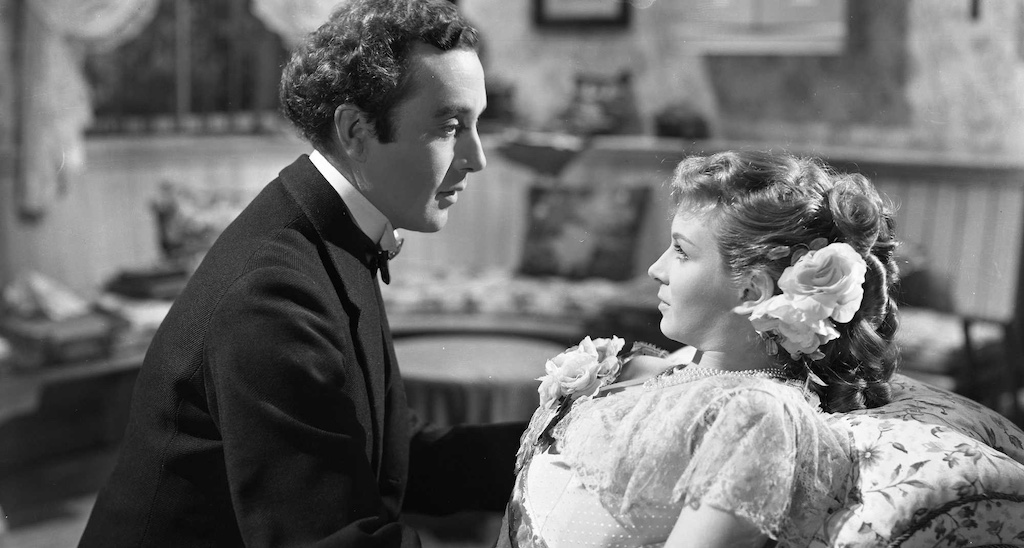
I was a big fan of John Patton Ford’s Emily the Criminal (2022), a compelling drama about working-class life in the United States, which showcased Aubrey Plaza’s remarkable range. And I love the Ealing Studios black comedy masterpiece Kind Hearts and Coronets (1949), directed by Robert Hamer and starring Dennis Price as an acidly intelligent young Brit whose mother was cruelly disowned by her wealthy aristocratic family (all members played by Alec Guinness), so he sets out vengefully to inherit the dukedom by murdering them all.
Based on these inducements, I turned out for Ford’s How to Make a Killing, a very loose A24 remake of Kind Hearts and Coronets set in the contemporary US. It’s now playing in theaters and getting very bad reviews and almost no attention from the viewing public.
In How to Make a Killing, there’s still a young working-class man, this time an American named Becket Redfellow, played by Glen Powell. His mother, Mary (Nell Williams), was ruthlessly disowned by the Redfellows, her vile billionaire family, played by a variety of actors, including Ed Harris, Topher Grace, Bill Camp, and Zach Woods.
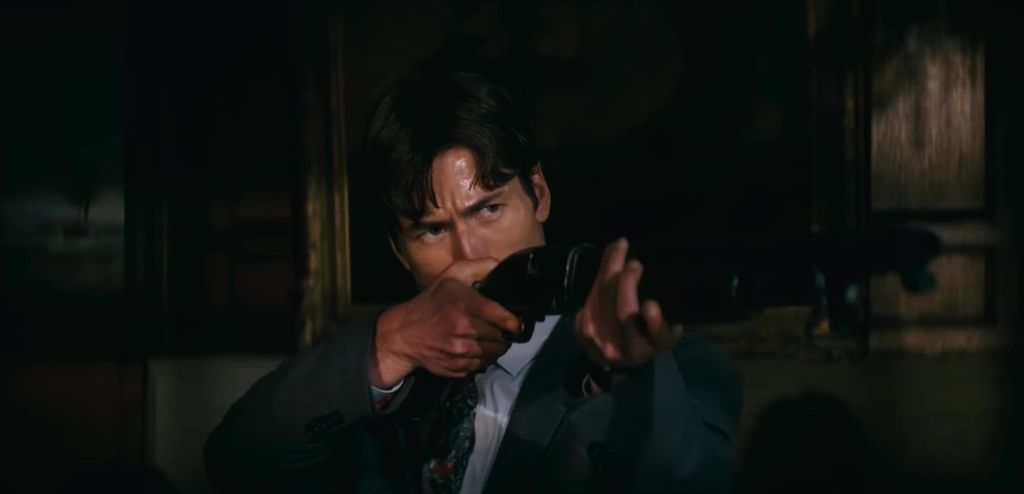
For some vague reason that overrules his mother having been disowned, Becket is still in line to inherit the family fortune if seven despicable relatives should happen to expire. Plus, his mother’s dying wish is that Becket should find “the right kind of life” for him. And though she ended up a member of the working poor in New Jersey, she raised him as much as possible to appreciate the finer things in life — he’s trained in archery, for example, which comes in handy at a crucial point. So he decides to take matters into his own hands, get creative, and murder them all.
In making films about American characters desperate to get somewhere in life against what seems like overwhelming odds, Ford acknowledges his own personal kinship with them:
After school, I struggled for a long, long time. Now, I’m a white guy with an education; I can only fail so hard. So I don’t mean to paint a picture like I had it rough, but I wasn’t getting to do what I wanted to do for a long, long time.
I was living off of an incredibly low amount of money a year in LA, and I don’t even know how I did that for so long. It seeped into my pores and took over my personality. . . . So I was willing to do whatever it took to get my career going, and hey, big surprise, I make movies about similar people.
Ford nearly got this film made in 2019 under the title The Rothschilds, with Shia LaBeouf and Mel Gibson set to star. But the title referring to the actual banking dynasty was controversial, and the casting was troubling, which derailed the project for years. Then the great word-of-mouth praise for Emily the Criminal — which Ford claims took him twelve years to get made — plus a few Independent Spirit Award nominations put pressure on Ford to come up with a second film project fast.
The sophomore slump is a sadly typical experience for independent film directors who get noticed for a promising low-budget film debut and then hustled into their second film at a much higher budget level with much bigger stars. Though he’s had it in a drawer for quite a while, Ford’s script seems half-baked. He’s used the basic premise of Kind Hearts and Coronets as an inspiration, but he hasn’t really reckoned with the plot’s extremity. It requires a pitch-black comic wit to carry off the scathing and surreal murder of seven heirs to a fortune. In that film, for example, the Oscar Wildean antihero, Louis, notes the social awkwardness of his murderous scheme by saying, “It is so difficult to make a neat job of killing people with whom one is not on friendly terms.”
But in the original, Louis sets about it with great dedication and cleverness, and if he can’t cultivate the society of one of his victims, he finds a long-distance way of handling the job. He dispatches Lady Agatha D’Ascoyne (played by Alec Guinness in drag), a dedicated suffragette who’s leafletting in support of women’s votes from a hot-air balloon over London, by shooting her down with a bow and arrow. Then, echoing Henry Wadsworth Longfellow, his narrating voice recites an ironic poem: “I shot an arrow in the air/She fell to earth in Berkeley Square.”
But in How to Make a Killing, Ford goes in the opposite direction, trying to normalize the tone of the piece, to make his antihero a much more ordinary guy. And no ordinary guy is going to set out on such a quest in the first place. In order to get him to look the part, Ford had Glen Powell, who’s famous as a jacked blonde Hollywood heartthrob, go brown-haired and lose some muscle mass through a drastic bone broth diet. And his Becket character is certainly no cold-blooded wit like Louis, so his voice-over narration loses its hilarious flights of fancy and sticks to the straight business of tracking Becket’s emotions and motivations as he navigates his epic killing spree.
Much time is spent on his earnest romance with Ruth (Jessica Henwick), a fashion designer unhappily involved with inept artist Noah Redfellow (Zach Woods in a hilarious performance). Ruth realizes how nasty the fashion business is and, once she’s freed from the late Noah, is eager to become a teacher. Astonishingly, Ford plays this entirely straight, as if anyone decides to be a teacher nowadays without recking with the misery of working within a collapsing education system at poverty wages.
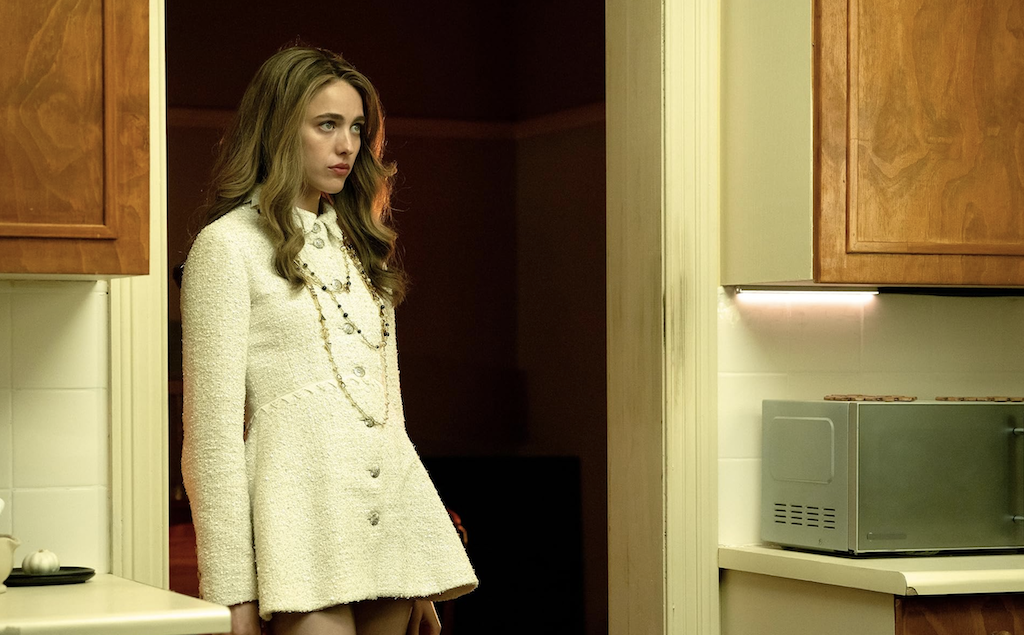
Dropping the satire when dealing with this romance makes these scenes even tamer than the general, dampening tameness of the movie overall. And the other woman in Becket’s life never has any significant hold on him in the early scenes. That’s Becket’s childhood friend Julia Steinway (Margaret Qualley), who keeps turning up in his adult life to offer a jolt of seductiveness while indicating in cryptic ways that she knows about his homicidal spree. It’s obvious from early on that her long con is going to be smarter than his, but since he’s kept his distance from her throughout, there’s no big jolt when this development manifests itself.
Compare that again to Kind Hearts and Coronets, in which Louis is equally drawn to opposed women who appeal to different aspects of his tricky character. Edith (Valerie Hobson), the widow of one of the D’Ascoynes he’s killed, is elegant, beautiful, and a relentlessly virtuous do-gooder who believes he’s just as high-minded as she is. Whereas childhood playmate Sibella (Joan Greenwood), who understands Louis all too well, grows up to be lowdown, sexy, and sly. He’s torn between them in a way that will prove fatal, noting ruefully, “While I never admired Edith as much as when I was with Sibella, I never longed for Sibella as much as when I was with Edith.”
It’s too bad that Ford couldn’t find a livelier way to make his film work, and I hope it doesn’t prevent him from getting a third movie going. He’s got some good stuff in him, and he’s inclined to return consistently to the galling ways class works in the United States. For example, in writing How to Make a Killing, he drew on one of his own bleak employment experiences, when he got a “sociopathic” directive on a sales job: “They said [the sales pitch] like it was a lesson that we needed to learn: ‘Your only enemy is your own conscience. If you can turn that off, you can actually succeed.’”
Ford puts a slicker, darker version of that line into the mouth of the evil patriarch Whitelaw Redfellow (Ed Harris), suggesting he’s encapsulating the philosophy of the rich that is avidly absorbed by the relentlessly upwardly mobile as well. Ford was anxious to avoid stereotypes, noting, “I didn’t want to have a movie that says, ‘Rich people are bad, period,’ and that’s it.”
But he picked the wrong era as well as the wrong film to adapt if he wanted to go for smaller, more nuanced and normalizing effects. Rich people who are publicly known these days are so ridiculously evil, you can’t caricature them beyond the ways they’ve already caricatured themselves. What billionaires, utterly convinced of their own superiority, worries about having to kill their consciences in their pointless, world-destroying pursuit of ever greater wealth? That’s for small-timers on the make.
It’s possible that Ford is too much of a naïf, still, to adapt Kind Hearts and Coronets. It figures that his timid version is disappearing rapidly from theaters, having made no deep impression on anybody. It’s too soft and pallid for our bloody screeching times.