Fifty Years Ago, the Supreme Court Said Money Is Speech

Last week was the 50th anniversary of the Supreme Court decision enshrining the idea that money in politics is not corruption, but constitutionally protected speech. States and cities across the US are battling the rotten legacy of that decision.
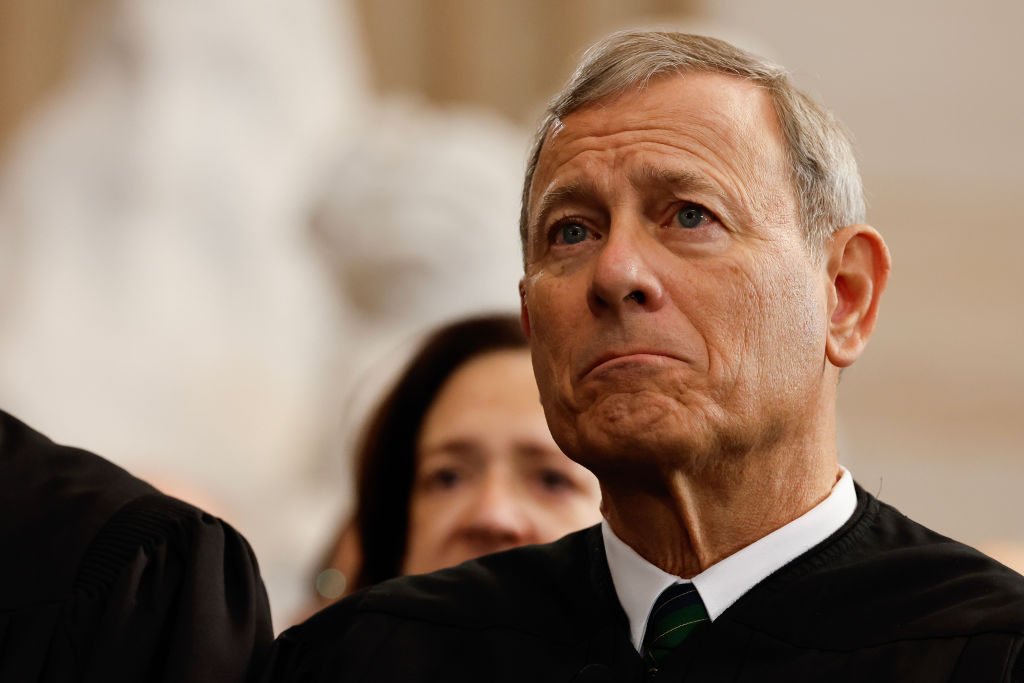
Two current cases — including one originally spearheaded by Vice President J. D. Vance — may give John Roberts’s Supreme Court the opportunity to go even further than the Citizens United decision. (Chip Somodevilla / Getty Images)

Last week marked the fifty-year anniversary of the US Supreme Court decision enshrining the absurd idea that money in politics is not corruption, but constitutionally protected speech.

As the Lever unearthed in our recent audio series and book Master Plan, that once radical concept was pioneered by soon-to-be federal judge Ralph Winter and a young John Bolton in a booklet for the American Enterprise Institute (AEI) — and the ill-fated Buckley v. Valeo case was bankrolled in part by GOP mega-influencer and donor Charles Koch.
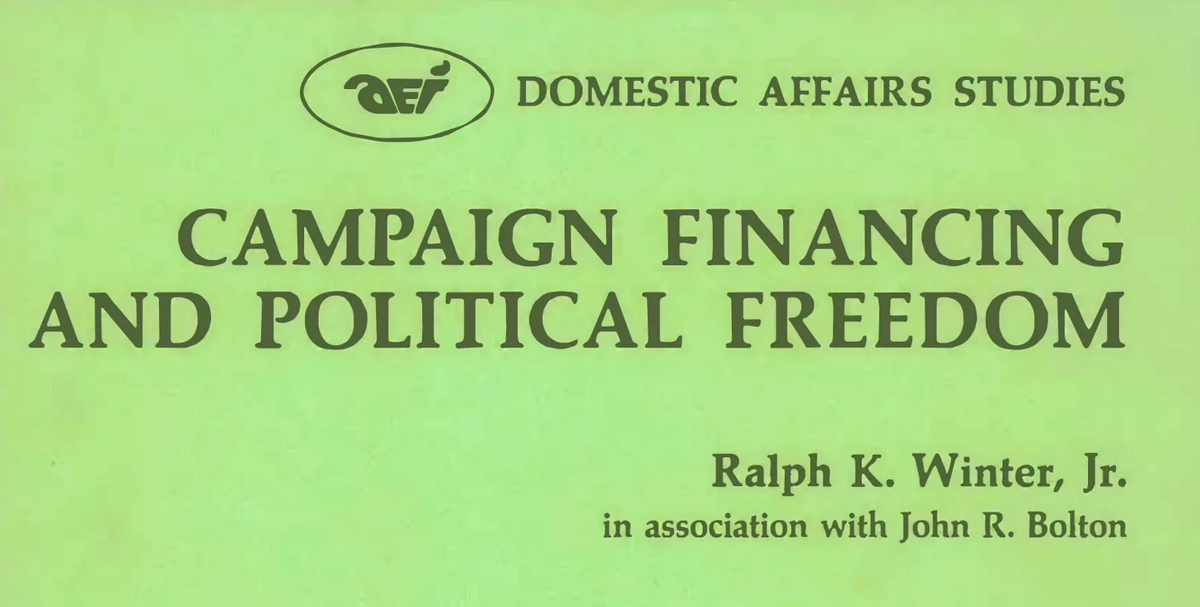
A 1973 booklet written for AEI by Ralph Winter and John Bolton. (Lever)

Since that decision — which provided the foundation of the subsequent Citizens United decision opening up the floodgate to unlimited corporate meddling in US elections — the United States has experienced a half-century of oligarchs, corporations, and master planners buying elections, politicians, public policy, regulations, and basically everything else at every level of government.

The one small piece of good news on this depressing topic is that amid such endemic corruption, most Americans now understand that the Buckley decision’s “money is speech” doctrine is ridiculous, and very few Americans believe that buying elections is a First Amendment right, according to new polling data from Ipsos and American Promise.

Fewer than one in five Americans believe that “spending unlimited amounts of money on political campaigns” is an example of free speech protected by the First Amendment. So yes, the electorate understands how fraudulent the money-is-speech legal fiction really is.

Despite that public outcry, this may still be the master planners’ moment thanks to two current cases — including one originally spearheaded by Vice President J. D. Vance — designed to give John Roberts’s Supreme Court the opportunity to go even further than the Citizens United decision.

But all is not lost, even if Washington, DC, is right now. There is still plenty of action possible at the state and local government level.

In states and cities across the country, this can be a moment to replicate Arizona’s dark money disclosure law, New York City’s publicly funded elections system, Maine’s law regulating super PACs, and Montana’s proposal to use state incorporation law to limit Citizens United’s effects. And all of those initiatives work to restore power to everyday voters within the confines of the current Supreme Court’s own precedents.

The challenge is less legal than political. The master planners very much benefit from the existing system that lets billionaires and corporations buy elections, often in anonymity. And those master planners wield power inside both political parties at all levels of politics. They are relying on Americans presuming that corruption is so pervasive that it is now not even prosecutable or preventable. In other words, they are relying on voters accepting that flagrant corruption is just normal politics.

We don’t have to accept that.