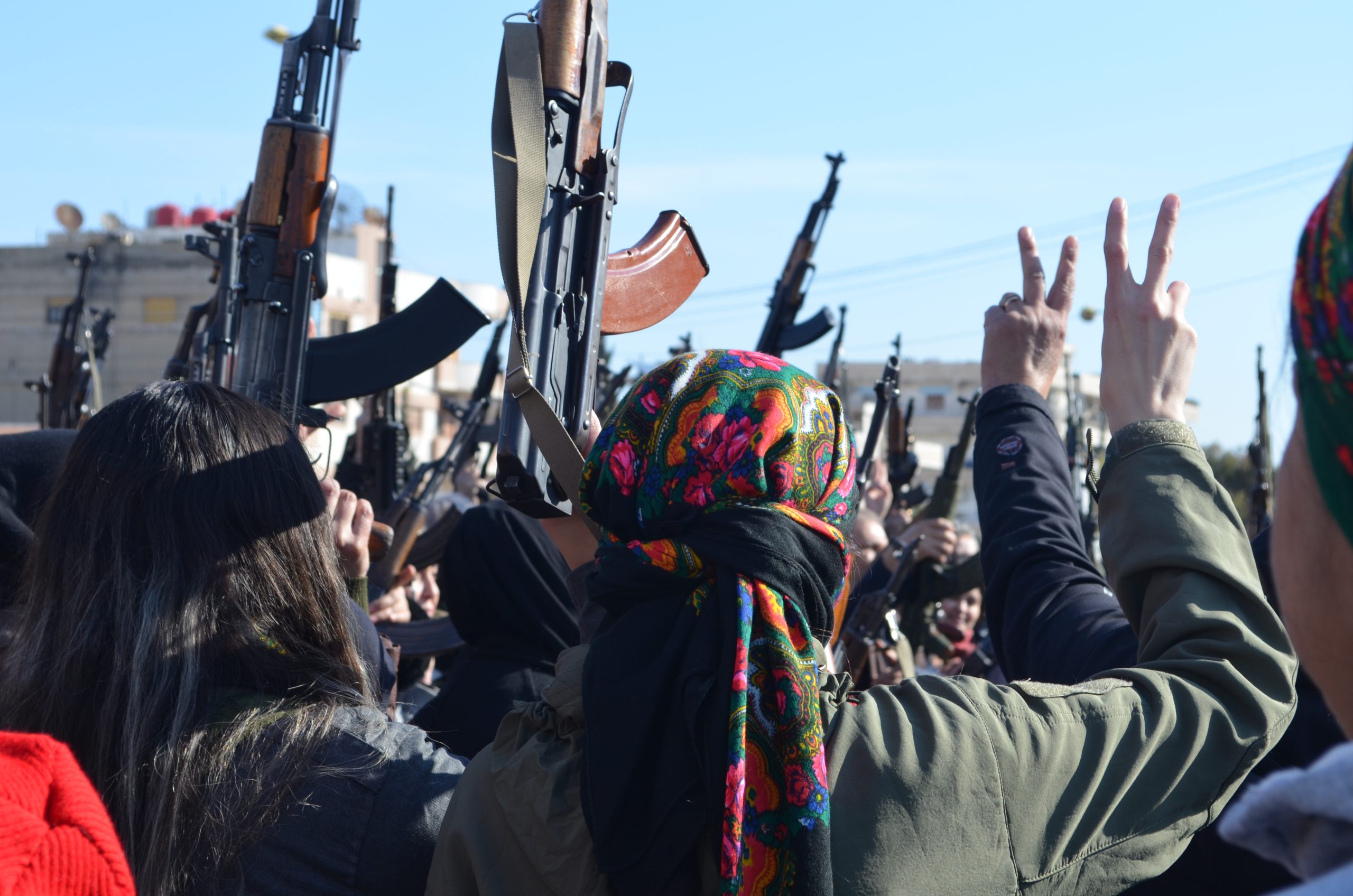
Kurds Resist Syrian Government Attack on Rojava
The Kurdish-led Syrian Democratic Forces played a key role in defeating ISIS. Now they are again forced to fight for their survival, as former jihadist Ahmed al-Sharaa’s transitional government seeks to crush Syria’s minorities.
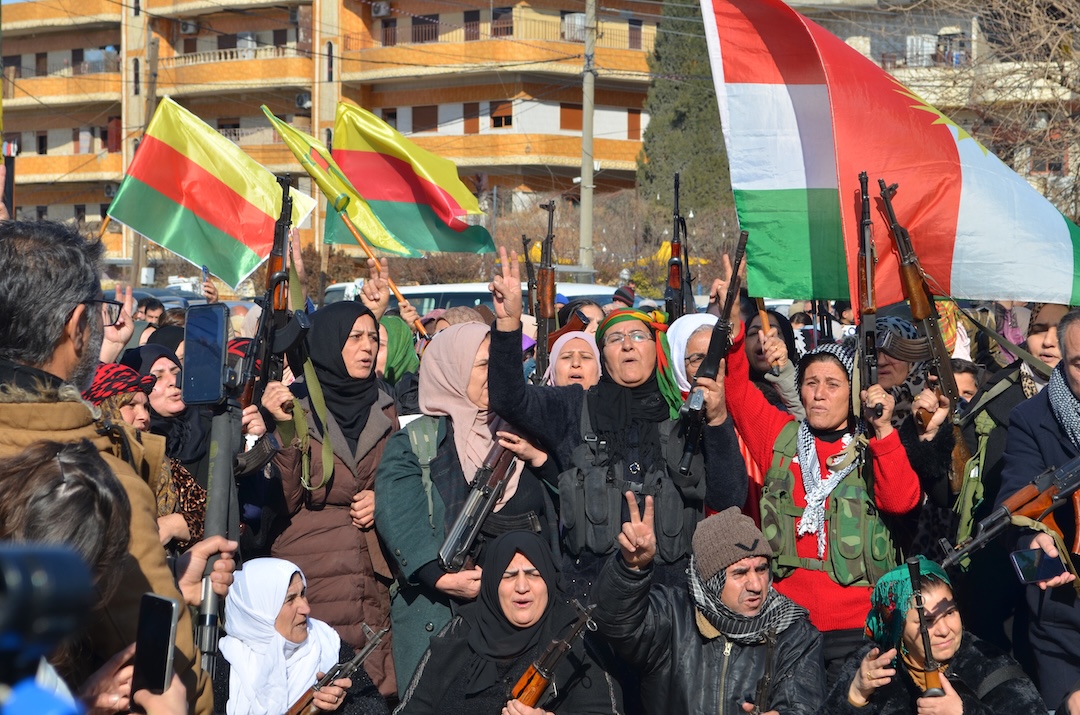
Western leaders used to consider Ahmed al-Sharaa a jihadist terrorist but now paint his Syrian transitional government as a moderate ally. Emboldened by this support, al-Sharaa is now trying to crush Kurdish autonomy by force. (Rojava Information Center)
It’s not often a whole city comes out to celebrate something, and still less to cheer the start of a military confrontation. Yet on Monday night, this was exactly why the Northeast Syrian city of Qamishli (in Kurdish, Qamişlo) came alive. “It’s crazy; they’re celebrating going to war,” remarked a friend in amazement as we headed into the city streets. Yet this isn’t just a war. It’s also about defending a revolution that many, including myself, had considered finished, only the day previously. “Resistance is life,” goes a popular Kurdish saying, and on Monday night Qamişlo showed that spirit in full.
In early January, Syrian transitional government (STG) forces under President Ahmed al-Sharaa attacked the Kurdish enclave of Sheikh Maqsoud and Ashrafiyeh in northern Aleppo. The people resisted but were overwhelmed by the STG. For two weeks now, the Kurdish-led Syrian Democratic Forces (SDF) have been in retreat, first losing the land west of the Euphrates and then east when they withdrew from the Arab regions of Raqqa and Deir ez-Zor. Thousands of Arab fighters defected from the SDF; tribes with whom the SDF had enjoyed good relations for years turned their backs and joined President al-Sharaa’s side. The government advance drove deep into the SDF’s territory known as Rojava. Then came the announcement that SDF commander general Mazloum Abdi had signed a ceasefire deal that, if implemented, would have been a complete capitulation returning all the gains the revolution made in the last fourteen years.