The Sorcerer’s Apprentice Problem in the Age of AI
AI is understood to be an unstoppable force, but it is still wholly dependent on human labor to function. Whether these technologies liberate or create misery will depend on who controls their development and deployment.
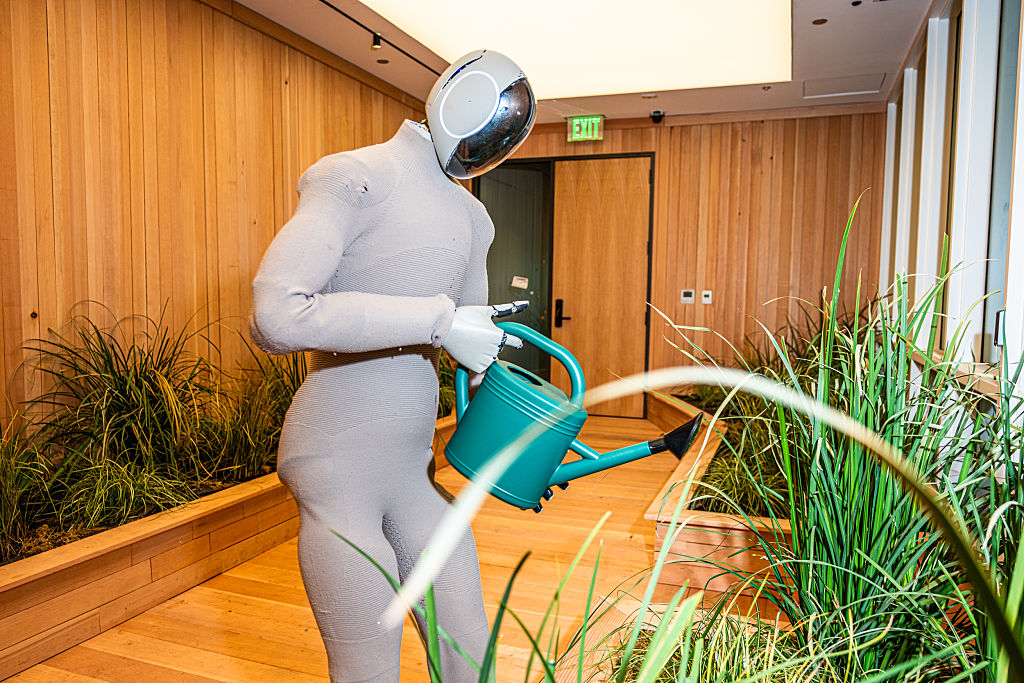
Neo, a humanoid robot that “can be both autonomous and driven remotely” by an operator, demonstrates watering plants in the 1X office in Palo Alto, California. (Camille Cohen / The Washington Post via Getty Images)
Talk of the artificial intelligence revolution tends to skip over workers unless it’s a warning that the new technologies will disempower and displace human labor. That the klaxons should be sounding louder and louder is a given — but they are the sort that encourages a collective shrug. After all, what can you do? It’s the great sweep of technology, of history, of progress. History will sort it out. It always does.
History, in fact, does sort it out. But never in the way promised. Technological revolutions of the past did not eliminate labor, but they very much transformed it. This process of transformation does generate new work — as tech advocates often claim — but it is work that is more fragmented, more surveilled, and more alienated. Early mechanization de-skilled craftspeople, concentrating control over production even as employment expanded. Sure, from clerical automation to platform logistics, technological innovation does create “new jobs,” but worker autonomy takes hit after hit as labor is reorganized around ever more tightly managed systems.
The fatalism surrounding AI contributes to a shared complicity in the potential social, political, and economic collapse that threatens to accompany mass unemployment brought about by AI adoption. However, there’s a further dimension to the labor-technology dynamic that’s ignored or downplayed in assessments of these great leaps forward: the role workers play in training and otherwise enabling these new technologies.