The Poisoned Lives That US Bombs Leave Behind
Reporting from Fallujah, Jacobin documents how US-made weapons laced with toxic metals and depleted uranium have turned cities razed by war into biohazards. Soil, bodies, and whole generations are being poisoned in their wake.
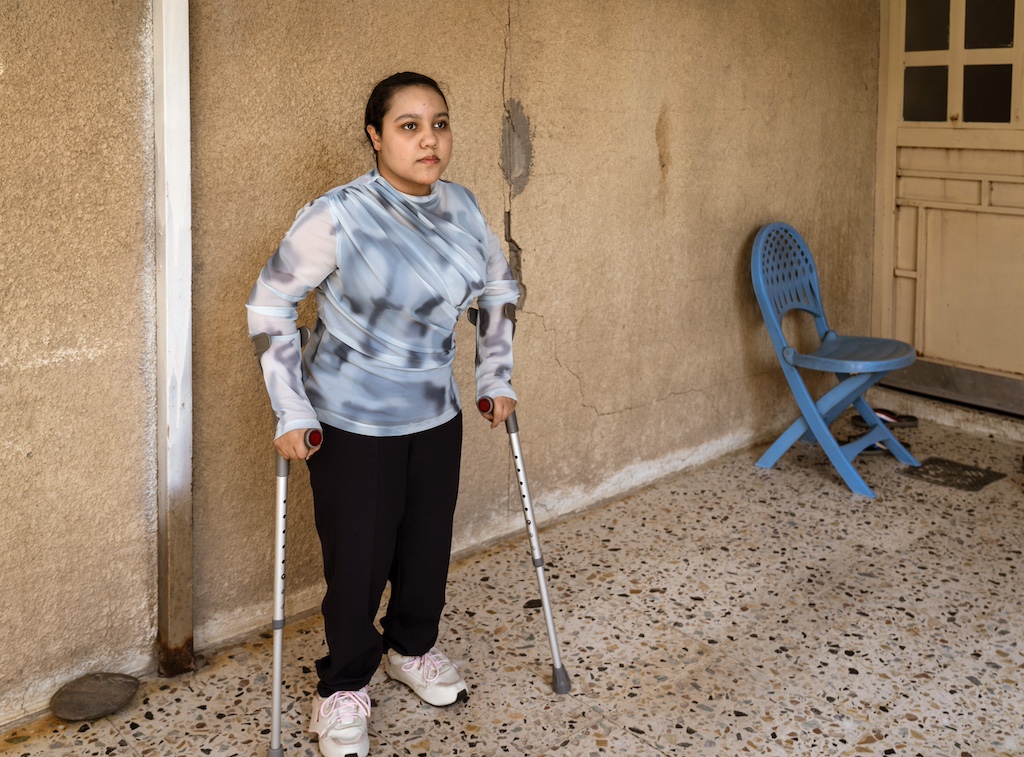
Lubna Thaer, an artist who was born with deformities, pictured outside her home in Fallujah. (Jaclynn Ashly / Jacobin)
Shukria Mahmoud, age sixty-two, was two months pregnant when the United States launched a brutal, house-to-house assault on the central Iraqi city of Fallujah in 2004 — a campaign against insurgent and anti-occupation militants that left much of the city in ruins.
In the Second Battle of Fallujah that November, US forces, supported by a British battalion on the ground, bombarded the city for about six weeks. They used precision bombs, rockets, missiles, nearly one hundred thousand rounds of aircraft fire, and white phosphorus, killing hundreds of civilians.
Shukria was one of the few who escaped after the fighting began, slipping past street battles and coalition checkpoints that had sealed the city. She joined nearly the entire population of Fallujah — about three hundred thousand people — in fleeing the city, taking temporary refuge in a camp in Amiriyah, south of Fallujah.