The Economics of Donald Trump’s Mass Deportations
Donald Trump’s mass deportations will do little to improve the lives of American workers. But he is fueling a deportation-industrial complex that funnels billions of dollars into the hands of private companies.
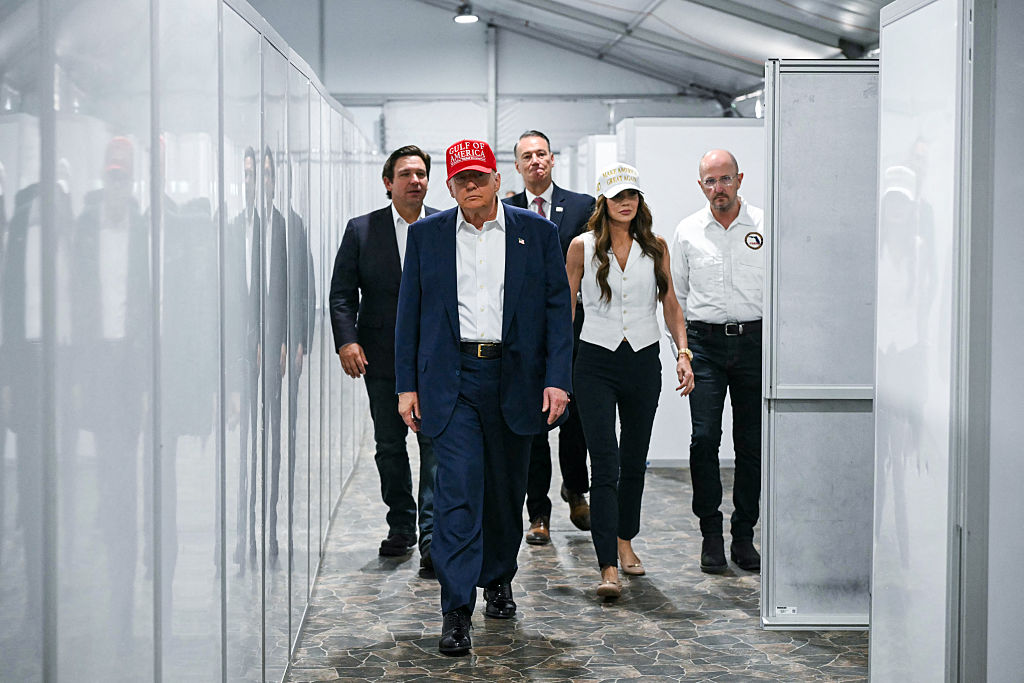
Immigration restrictions could impose a two to five times larger “cost” than Donald Trump’s proposed protectionist policies. (Andrew Caballero-Reynolds / AFP via Getty Images)
On September 4, Immigration and Customs Enforcement (ICE) raided a Hyundai plant in Georgia and arrested about 475 mostly South Korean nationals. Images of them shackled by the wrists and ankles have caused outrage. The workers were engineers and equipment installers brought in for highly specialized jobs requiring skills that, according to the plant manager, are in short supply. This episode has exposed a tension between the Republican Party’s political agenda and the realities of America’s political economy.
There is a general consensus that mass deportations and the broader fear that they instill shrink GDP, lower overall employment for American workers, reduce wages, and drain local and state tax revenues. Last Friday’s highly anticipated employment report from the Bureau of Labor Statistics underlined growing recession concerns. There are fewer job openings, a slight rise in unemployment, and slowing wage growth. These bleak numbers make a Fed interest rate cut at the next Federal Open Market Committee, the Fed’s rate-setting body, almost inevitable. According to a FedWatch tool run by investors, the odds of a quarter-point cut are north of 96 percent. The administration’s hard-line immigration regime is one of the causes of the economic slowdown to which the potential Fed rate cut is a response.
Economists who have modeled possible deportation scenarios based on Donald Trump’s agenda project multi–percentage point losses in GDP and employment, a higher federal deficit, and rising inflation. Immigration restrictions, they estimate, could actually impose a two to five times larger “cost” than Trump’s proposed protectionist policies, such as tariffs.