Childcare Is Not Just an Economic Fix. It’s a Social Good.
Even strong defenders of childcare sometimes rely on the economic case that childcare programs keep workers in the labor force. While it’s not wrong, that argument misses the true role of childcare: social infrastructure that keeps families connected.
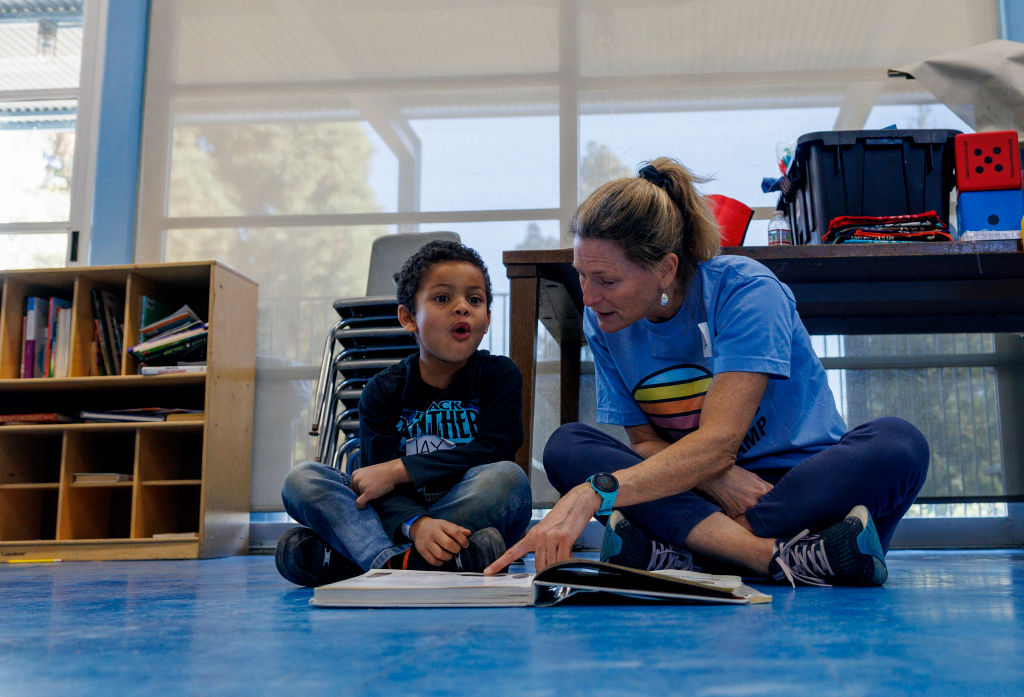
Volunteer counselor Ann McNamee reads a book with a child who attends Project Camp, which provided free childcare to families impacted by wildfires, at Eagle Rock Recreation Center on January 15, 2025, in Los Angeles, California. (Gina Ferazzi / Los Angeles Times via Getty Images)
If there’s one thing Democratic and Republican politicians can agree on, it’s that childcare is the workforce behind the workforce. “Our child care workers are the workforce behind the workforce, risking their health and safety on the front lines to ensure that parents can go to work,” then House Speaker Nancy Pelosi said in 2020. Republican representative Ashley Hinson echoed Pelosi in 2024, asserting that childcare staff “are the workforce behind the workforce, and I don’t want to see parents having to make that choice between working or staying home because of the availability” of slots.
Yes, childcare helps the economy hum. But childcare does so much more than just keep parents participating in the labor force. It is an essential piece of social infrastructure. As social cohesion declines, so too does the American quality of life — and this trend hits parents hard, with two-thirds of parents reporting feeling socially disconnected. Childcare centers are one of the few supports available to connect parents of young children to each other and their broader communities, easing the burden of isolation. The “workforce behind the workforce” line misses that richness and sets the childcare system on the path to corporatization.
According to former US surgeon general Vivek Murthy, the country is going through an epidemic of loneliness, and parents in particular are struggling. Their “disproportionately high levels of loneliness,” Murthy has said, “compound the day-to-day challenges they face.” When people become isolated and disconnected, community bonds fray and it becomes much harder to forge the solidaristic movements needed to improve conditions for all.